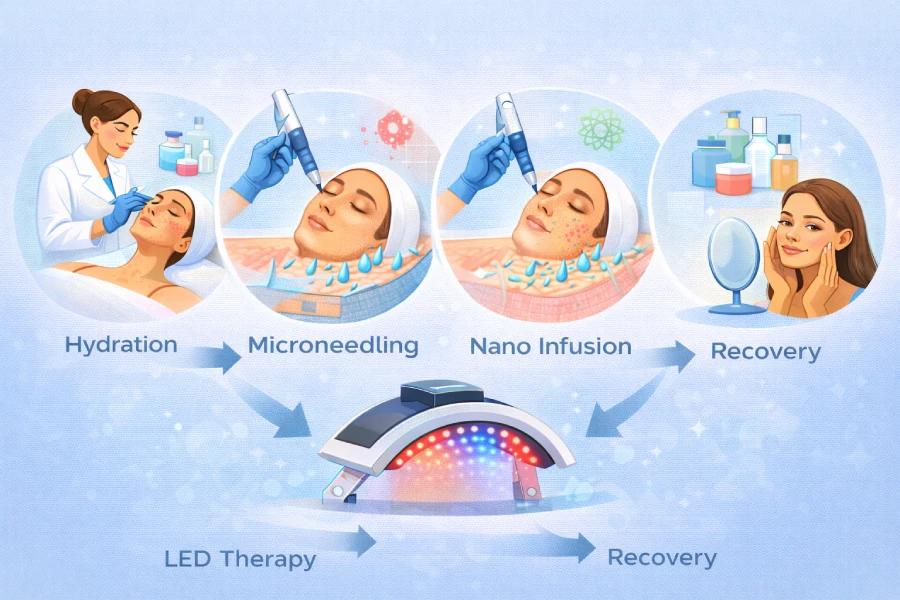
What Are Professional Facial Treatments?
Professional facial treatments are structured esthetic services designed to improve skin health, appearance, comfort, and recovery through a planned combination of cleansing, exfoliation, targeted ingredients, advanced devices, hydration support, and post-treatment care. Unlike a basic facial, a professional treatment is selected based on the client’s skin condition, treatment goal, sensitivity level, barrier health, and expected downtime.
Quick Answer: What Professional Facial Treatments Should Estheticians Understand?
Professional facial treatments include hydration facials, microneedling, nano infusion, LED light therapy, acne-support protocols, anti-aging services, brightening treatments, and barrier repair care. The best treatment choice depends on the client’s skin goal, current barrier condition, sensitivity, lifestyle, and recovery needs. Estheticians create stronger results when they combine treatment selection with proper consultation, sequencing, calming support, and home-care education.
What Every Esthetician Should Know About Professional Facial Treatments
- Professional facial treatments should be chosen based on skin goals, not trends alone.
- Hydration and barrier support are important in almost every professional treatment plan.
- Microneedling and nano infusion support different levels of skin renewal and ingredient delivery.
- LED light therapy can support calming, acne care, collagen-focused protocols, and post-treatment recovery.
- Post-treatment care is part of the service, not an optional extra.
- Clear client education helps improve comfort, trust, treatment consistency, and long-term results.
Why Professional Facial Treatments Matter in Esthetic Practice
Professional facial treatments are one of the most important services in an esthetic practice because they help clients address visible concerns while also supporting skin comfort, confidence, and long-term skin health. Clients may book a facial for glow, dryness, acne, texture, aging, pigmentation, sensitivity, or post-treatment recovery. The esthetician’s role is to identify the real skin priority and design a protocol that supports it safely.
A strong facial treatment is not only about the products used during the appointment. It includes consultation, skin analysis, contraindication screening, treatment selection, device choice, ingredient compatibility, recovery support, and clear aftercare guidance. This is what separates a professional protocol from a simple spa service.
How Estheticians Should Choose the Right Facial Treatment
The best treatment choice begins with the client’s skin goal and current skin condition. A client with dehydration may need a hydration-focused facial before advanced exfoliation. A client with sensitivity may need barrier repair before corrective treatments. A client concerned with texture or acne scars may benefit from microneedling, but only when the skin is ready and properly supported.
Before choosing a treatment, estheticians should consider:
Primary Skin Concern
The client’s primary concern, such as dryness, acne, aging, dullness, pigmentation, or texture.
Barrier Condition
The current condition of the skin barrier and whether the skin is resilient enough for an active protocol.
Recent Skin Stress
Recent treatments, medications, sun exposure, or irritation that may affect treatment suitability.
Downtime Tolerance
The client’s willingness and practical ability to tolerate visible recovery or temporary sensitivity.
Home-Care Routine
The client’s current home-care routine and ability to follow professional aftercare instructions.
Support Tools
The most appropriate support tools, including hydration masks, targeted ampoules, LED therapy, or recovery products.
Hydration-Focused Facial Treatments
Hydration-focused facials are useful for many skin types because dehydration can make the skin appear dull, tight, rough, tired, or more sensitive. These treatments are often used for clients who need comfort, glow, barrier support, or recovery after more active services.
A professional hydration facial may include gentle cleansing, mild exfoliation when appropriate, targeted hydrating ingredients, calming massage, a hydration mask, and finishing products that help reduce water loss. Poly-Luronic™ HydroGlo Jelly Masks fit naturally into this type of protocol because they support the cooling, comforting, and moisture-retaining phase of the treatment.
Microneedling and Collagen Induction Therapy
Microneedling is a professional skin renewal treatment used to support the appearance of acne scars, uneven texture, fine lines, and signs of aging. It is often described as collagen induction therapy because the controlled treatment process encourages the skin’s natural repair response.
For estheticians, microneedling should be approached as a complete treatment system, not just a device service. The outcome depends on proper consultation, safe technique, professional sanitation, correct treatment depth where allowed by scope of practice, calming support, and post-treatment recovery. The ILUMIPEN can be positioned as a professional tool for practices that want flexibility across microneedling and nano infusion-style protocols.
Nano Infusion and Microchanneling Treatments
Nano infusion and microchanneling-style treatments are often selected when the client wants a refreshed, hydrated, and smoother-looking appearance with less downtime than more intensive procedures. These treatments can support glow, topical ingredient delivery, and maintenance between corrective appointments.
Nano infusion is especially useful for clients who want visible freshness but may not be ready for deeper treatments. It can also fit well into facial menus as a premium upgrade for hydration, brightening, and anti-aging support.
LED Light Therapy in Professional Facial Protocols
LED light therapy is commonly used in professional skincare to support calming, recovery, acne-focused care, and collagen-supportive treatment plans. It can be used as a stand-alone service, an add-on, or part of a broader protocol depending on the client’s goal.
Red light is often associated with collagen and recovery-focused protocols, while blue light is commonly used in acne-supportive treatments. The ILUMILUX 2.0 can also support treatment consistency beyond the facial room when estheticians want to recommend a premium light therapy option for ongoing client care.
Barrier Repair and Post-Treatment Recovery
Recovery is one of the most important parts of a professional facial treatment plan. Even when a treatment is performed correctly, the client’s final experience depends heavily on how the skin is supported afterward. Tightness, dryness, redness, heat, and sensitivity can often be improved with the right calming and hydration-focused recovery steps.
Post-treatment support may include cooling masks, barrier-supportive ingredients, gentle hydration, LED therapy, and clear instructions about sun protection, exfoliation avoidance, active ingredient pauses, and proper home care. Estheticians who prioritize recovery often create a better client experience and stronger treatment confidence.
Active Treatment + Recovery Support = Complete Service
A treatment protocol should not end with the active correction step. Consultation, treatment selection, sequencing, hydration, barrier support, and aftercare education work together as one system. This is especially important when exfoliation, devices, microneedling, nano infusion, or other advanced modalities are used.
Common Professional Facial Treatment Goals
Most professional facial treatments can be organized around a few common client goals. This makes the treatment menu easier to understand and helps clients choose the right service with professional guidance.
Hydration and Glow
Best for dull, tight, dehydrated, or tired-looking skin.
Acne Support
Best for congestion, oil imbalance, breakouts, and calming-focused care.
Anti-Aging Support
Best for fine lines, firmness concerns, and collagen-focused protocols.
Texture Improvement
Best for roughness, uneven skin surface, and acne-scar appearance.
Brightening Support
Best for dull tone, uneven appearance, and pigmentation-focused routines.
Barrier Recovery
Best for sensitive, compromised, dry, or post-treatment skin.
How to Build a Better Professional Treatment Menu
A strong treatment menu should be easy for clients to understand and easy for estheticians to customize. Instead of listing many disconnected facial names, organize services by skin goals and treatment intensity. This helps clients understand why one service is recommended over another.
For example, a professional menu may include a hydration facial for first-time or sensitive clients, LED therapy for calming or acne support, nano infusion for glow and maintenance, microneedling for texture and collagen-focused goals, and recovery-focused treatments after more active procedures.
Treatment results depend on sequencing. The order of treatment steps matters. A client may need hydration and barrier support before advanced correction. Another client may need LED calming after an active treatment. A strong protocol does not simply add more steps; it uses the right steps in the right order for the client’s skin condition and treatment goal.
Where Luminous Skin Lab Products Fit in Professional Protocols
Luminous Skin Lab products can support professional facial protocols when they are used with clear treatment intent. HydroGlo Jelly Masks fit naturally into hydration, cooling, and recovery-focused facials. Targeted ampoules can support specific treatment goals. The ILUMIPEN can support microneedling and nano infusion-style services. The ILUMILUX 2.0 can support LED-based treatment plans and ongoing skin maintenance.
The key is to present each product as part of a professional protocol, not as a random add-on. When estheticians understand why a tool or product belongs in the treatment plan, the service becomes more educational, more consistent, and easier for the client to trust.
The strongest professional facial protocols are built around treatment intent rather than the number of steps performed. Consultation establishes the skin priority, treatment selection determines the appropriate level of correction, sequencing controls how the skin is exposed to active modalities, and recovery support helps complete the service. Hydration masks, targeted ampoules, LED therapy, microneedling, and nano infusion are most useful when each element has a clear role within that broader treatment plan.
Frequently Asked Questions: Professional Facial Treatments
What professional facial treatments are most important for estheticians to understand?
Estheticians should understand hydration facials, acne-supportive treatments, anti-aging facials, microneedling, nano infusion, LED light therapy, barrier repair care, and post-treatment recovery protocols. These categories address many of the most common client concerns seen in professional skincare.
How does an esthetician choose the right facial treatment?
The right treatment is selected after reviewing the client’s skin goal, barrier condition, sensitivity, recent treatments, contraindications, lifestyle, downtime tolerance, and home-care routine. Professional treatment planning should always be based on skin assessment rather than trend-based service selection.
Why is hydration important in professional facial treatments?
Hydration supports comfort, barrier function, skin softness, and post-treatment recovery. Even corrective treatments often perform better when the skin is properly hydrated and supported before and after the active treatment step.
What is the difference between microneedling and nano infusion?
Microneedling is generally used for deeper skin renewal goals such as texture, acne-scar appearance, and collagen support. Nano infusion is typically used for lower-downtime glow, hydration, and topical delivery support. The right option depends on the client’s skin condition, goal, and recovery tolerance.
Why should facial treatments include recovery support?
Recovery support helps reduce discomfort, dryness, tightness, and visible irritation after professional treatments. A complete facial protocol should support the skin during and after the service, especially when exfoliation, devices, microneedling, or active ingredients are used.
How can Luminous Skin Lab products fit into professional facial protocols?
HydroGlo Jelly Masks can support hydration and cooling recovery, targeted ampoules can support specific treatment goals, The ILUMIPEN can support microneedling and nano infusion-style protocols, and ILUMILUX 2.0 can support LED-based care and treatment maintenance.
Professional Facial Treatments Work Best as Structured Protocols
Professional facial treatments are most effective when each service is selected according to the client’s skin condition, treatment goal, sensitivity, barrier health, and recovery needs. Hydration facials, microneedling, nano infusion, LED therapy, acne support, brightening care, and barrier-focused treatments all have different roles within professional esthetic practice.
By combining proper consultation, treatment selection, thoughtful sequencing, recovery support, and clear home-care education, estheticians can create treatment plans that are easier for clients to understand and more consistent to deliver across an evolving professional service menu.
Continue Your Professional Education
Professional Education from Luminous Skin Lab
This guide is part of the Luminous Skin Lab esthetician education library, created to help skincare professionals understand treatment planning, product selection, skin recovery, and professional protocol design with more confidence.