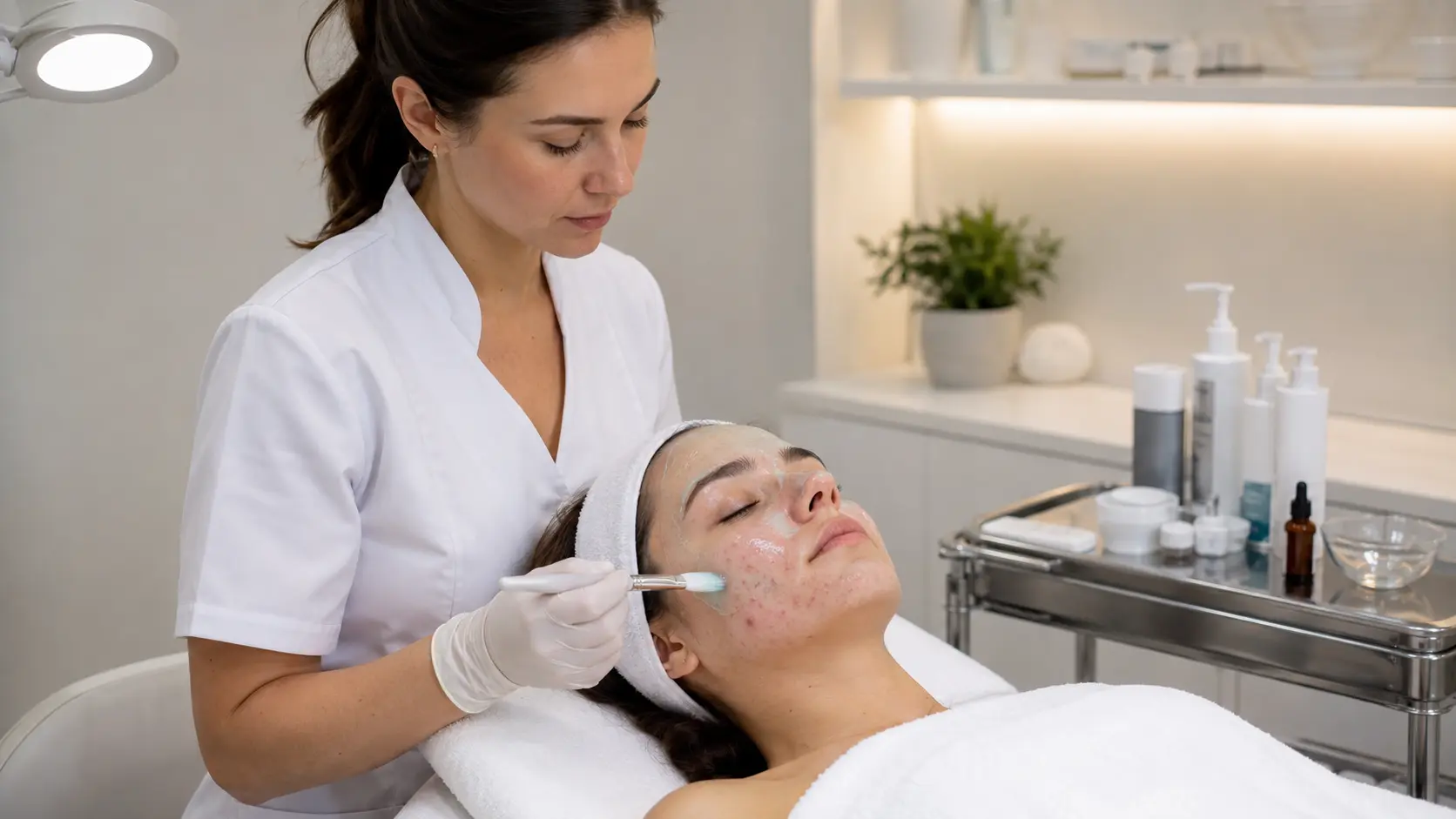
Which Ingredients Help Skin Recover After Professional Acne Treatments?
After professional acne treatments—including extractions, salicylic acid peels, and high-frequency therapy—the skin’s barrier is transiently compromised, transepidermal water loss increases, and inflammatory activity is elevated. Effective recovery requires a layered approach that addresses barrier repair, hydration, and inflammation simultaneously rather than relying on a single ingredient.
- Ceramides, cholesterol, and fatty acids in a physiological ratio are the highest-priority barrier repair actives after acne treatment tissue disruption.
- Polyglutamic acid and hyaluronic acid are the preferred humectants for acne-prone post-treatment skin because they deliver meaningful hydration without contributing to follicular congestion.
- Centella asiatica—particularly its madecassoside fraction—reduces NF-κB-mediated inflammation and stimulates fibroblast activity to support tissue repair after extraction trauma.
- Niacinamide at 2–5% inhibits melanosome transfer to directly address the post-inflammatory hyperpigmentation risk that follows inflammatory acne lesions or extraction trauma.
- Panthenol (provitamin B5) supports keratinocyte migration and wound closure while improving barrier function through increased ceramide synthesis.
- Retinoids and active exfoliating acids must be withheld during the 48–72 hour acute recovery window to avoid compounding barrier disruption.
- Non-comedogenic film-forming occlusives are preferred over heavy lipid occlusives to reduce TEWL without reintroducing pore-blocking materials into freshly cleared follicles.
The conclusion of a professional acne treatment is not simply the end of the active service—it is the opening of a critical recovery window that determines whether the treatment produces the clinical outcome the esthetician intended or triggers a compensatory inflammatory response that undermines it. Extractions, exfoliating acids, and device-based acne treatments all create deliberate tissue disruption. When the recovery phase is managed with the wrong ingredients—or no specific recovery strategy at all—that disruption can extend into post-inflammatory hyperpigmentation, prolonged redness, dehydration, or barrier sensitisation that clients interpret as a treatment reaction.
The challenge for estheticians treating acne-prone skin is that the recovery requirements conflict with a common misconception: that acne skin should be kept “bare” after treatment. In practice, withholding barrier repair, hydration, and calming actives after an acne procedure does not protect cleared follicles—it prolongs the barrier-compromised state and elevates the risk of hyperpigmentation and dehydration-driven compensatory sebum production. Understanding which ingredients are safe and beneficial for post-acne recovery, and which should be avoided, is a foundational clinical competency for any esthetician offering professional acne services.
This article addresses the full spectrum of post-acne recovery ingredient science: the barrier repair actives that rebuild stratum corneum integrity, the humectants most appropriate for acne-prone skin, the calming botanicals with the strongest clinical rationale, and the sequencing logic that governs when and how these ingredients are applied in a professional treatment context.
What Every Esthetician Should Know About Post-Acne Recovery Ingredients
- Professional acne treatments compromise the stratum corneum and elevate TEWL—recovery ingredients must be applied immediately after treatment, not left for the client to address at home.
- Barrier repair requires ceramides, fatty acids, and cholesterol in combination; individual components alone do not restore the lamellar lipid bilayer organisation of the stratum corneum.
- The occlusive ingredient selected for post-acne skin must be non-comedogenic—lighter film-forming occlusives protect TEWL without reintroducing pore-blocking lipids into cleared follicles.
- Niacinamide is one of the most clinically valuable post-acne recovery actives due to its simultaneous action on ceramide synthesis, inflammation, and melanosome transfer inhibition.
- Centella asiatica madecassoside fraction downregulates NF-κB inflammatory signalling and stimulates fibroblast collagen output—making it ideal for post-extraction tissue repair.
- Retinoids, AHAs, and BHAs must be withheld for at least 48–72 hours post-treatment to avoid compounding barrier disruption during the acute recovery window.
- Client education about at-home recovery product use is as clinically important as the in-clinic recovery protocol—inappropriate product use at home can undo the recovery initiated in the treatment room.
Why Post-Acne Treatment Skin Has Distinct Recovery Needs
Acne-prone skin enters a professional treatment session with a barrier that is frequently already compromised. Active inflammatory acne lesions disrupt the local lipid matrix, and the cycle of over-stripping products that many acne clients use prior to seeking professional care often compounds this baseline barrier dysfunction. When an esthetician adds the controlled disruption of a professional treatment—whether exfoliating acids, extractions, or device energy—the cumulative barrier stress is substantially greater than it would be on healthy, intact skin.
The immediate post-treatment state is characterised by three concurrent physiological events: elevated transepidermal water loss as the compromised stratum corneum loses its capacity to retain moisture; heightened inflammatory cytokine activity as the innate immune response engages with treatment-related tissue disruption; and increased susceptibility to post-inflammatory hyperpigmentation as melanocytes respond to inflammation by upregulating melanin synthesis. Each of these events has a specific ingredient category that addresses it, and an effective post-acne recovery protocol must target all three simultaneously.
The Barrier Disruption Cascade After Acne Treatments
The stratum corneum’s barrier function depends on the lamellar bilayer structure formed by ceramides, cholesterol, and long-chain fatty acids in a roughly 1:1:1 molar ratio. When this lipid organisation is disrupted—whether by exfoliating acids that remove the uppermost corneocyte layers, by extraction pressure that mechanically disrupts the follicular wall and surrounding tissue, or by high-frequency or other device energy—the barrier’s capacity to prevent TEWL and exclude irritants is reduced proportionally. The skin’s natural recovery response is to accelerate lamellar granule secretion to replenish lost lipids, but this process takes time. Recovery ingredients are effective because they provide exogenous lipid components that supplement this endogenous repair process, shortening the recovery timeline and reducing the clinical risk associated with extended barrier compromise.
The Science Behind Barrier Repair and Calming Actives in Acne Recovery
The three ingredient categories required for effective post-acne recovery—barrier repair lipids, humectants, and calming anti-inflammatory actives—operate through distinct but complementary mechanisms. Understanding these mechanisms allows estheticians to make clinically informed ingredient choices rather than relying on product marketing claims about “soothing” or “calming” formulations that may not deliver meaningful active concentrations.
Ceramides, Cholesterol, and Fatty Acids: The Barrier Repair Triad
Ceramides alone do not fully restore barrier function after disruption. Research into stratum corneum lipid organisation consistently shows that the specific 1:1:1 molar ratio of ceramides, cholesterol, and fatty acids is required for the lamellar bilayer to form correctly. Ceramide-only formulations applied after treatment can partially improve hydration retention but do not achieve the full barrier repair effect of a complete lipid triad. Estheticians selecting post-acne recovery products should prioritise formulations that include all three lipid components rather than ceramide-only products, which are more common in the consumer market but represent a clinically incomplete approach to barrier repair.
Niacinamide and Post-Inflammatory Hyperpigmentation Prevention
Niacinamide’s role in post-acne recovery extends well beyond its general anti-inflammatory properties. At concentrations of 2–5%, niacinamide inhibits the transfer of melanosomes from melanocytes to surrounding keratinocytes—the specific step in the pigmentation pathway that produces visible post-inflammatory hyperpigmentation. This mechanism is distinct from tyrosinase inhibition and is particularly relevant in the post-treatment context because it acts on the transfer pathway rather than the synthesis pathway. Because melanin synthesis has already been upregulated by the inflammatory response, inhibiting transfer is a more clinically effective strategy in the immediate post-treatment window than attempting to reduce synthesis that has already occurred.
Key Active Mechanisms in Post-Acne Treatment Recovery
Each primary recovery ingredient category addresses a specific post-treatment physiological event. Ceramide-cholesterol-fatty acid triad restores lamellar bilayer organisation, reducing TEWL by re-establishing the stratum corneum’s physical barrier. Niacinamide at 2–5% inhibits melanosome transfer at the keratinocyte junction, directly addressing the PIH mechanism. Centella asiatica madecassoside downregulates NF-κB signalling, reducing pro-inflammatory cytokine cascades within 24–48 hours of application.
Polyglutamic acid contributes to recovery through two pathways: as a high-capacity humectant (retaining up to 5,000× its weight in water at the stratum corneum surface) and as an inhibitor of hyaluronidase, which protects endogenous hyaluronic acid from enzymatic degradation during the inflammatory recovery phase.
Post-Acne Recovery Ingredient Reference: Actives, Mechanisms, and Application Timing
Selecting the correct recovery ingredients requires matching each active to its specific post-treatment role and understanding when in the treatment sequence it should be applied. The framework below maps the primary post-acne recovery ingredients against their mechanism, skin concern addressed, and application timing to provide a practical clinical reference.
Sequencing Recovery Ingredients in the Treatment Room
The order in which recovery ingredients are applied after professional acne treatment matters as much as the ingredient selection itself. The general clinical sequence follows a thin-to-thick, water-to-film logic. A centella asiatica or panthenol-based calming serum is applied first to still-warm, slightly damp skin immediately after treatment completion—this maximises penetration of the anti-inflammatory actives before any occlusive layer is placed. A niacinamide-containing serum or the recovery serum component of the mask system follows. A hydration mask that delivers polyglutamic acid and hyaluronic acid while creating an occlusive seal is then applied as the final in-clinic step, sitting for 10–15 minutes to drive maximum hydration uptake under the occlusive film. Post-mask, a lightweight ceramide-containing moisturiser closes the sequence by reinforcing barrier lipid organisation before the client leaves the treatment room.
One of the most consistent observations estheticians make when transitioning acne clients from cream-based post-treatment masks to a gel-based recovery system is the reduction in the “clogged again within 48 hours” complaint. With cream masks—even those marketed as non-comedogenic—the lipid density of the emulsion base often reintroduces material into follicles that were just cleared. With the Poly-Luronic™ Jelly Mask, the alginate gel matrix delivers the same occlusive protection via a film-forming mechanism rather than a lipid-heavy emulsion. In practice, this means estheticians can apply full facial coverage—approximately one standard scoop mixed at a 2:1 powder-to-water ratio—without the concern of placing a comedogenic material over freshly extracted skin. The cooling temperature of the set gel also visibly reduces post-extraction redness within the first two minutes of application, which clients notice immediately and which supports the clinical rationale for the recovery protocol. By comparison, leaving acne skin without an occlusive recovery mask and relying only on serum typically results in greater visible redness and client-reported tightness at the end of the appointment—neither of which supports client confidence in the treatment outcome.
Six Clinical Criteria for Evaluating Post-Acne Recovery Ingredients
Not all ingredients marketed for post-acne recovery meet the clinical standard required for professional use immediately after treatment. The following six criteria provide a practical evaluation framework that estheticians can apply when assessing any recovery product or ingredient for inclusion in a post-acne treatment protocol.
Comedogenic Rating
Any ingredient applied to post-treatment acne-prone skin must have a low or zero comedogenic rating. Freshly cleared follicles are particularly vulnerable to re-occlusion. Ingredients rated 3 or above on standard comedogenic scales should be avoided in the immediate post-treatment window, regardless of other beneficial properties.
Irritation Potential at Clinical Concentration
Active ingredients that are beneficial at lower concentrations can be severely irritating on post-treatment acne skin at higher concentrations. Estheticians must verify the concentration of actives like niacinamide, azelaic acid, and calming botanicals in the specific formulation being used—not assume that the presence of an ingredient guarantees the product is appropriate for immediate post-treatment application.
Fragrance and Sensitiser Status
Post-treatment acne skin has a lowered irritation threshold. Fragrances, essential oils, and known sensitisers like limonene, linalool, and eugenol represent an unnecessary irritation risk in any recovery formulation. Products with complete fragrance disclosure should be prioritised; “fragrance-free” alone is insufficient as a safety marker without confirming the absence of masking fragrance.
Mechanism Relevance to Post-Acne Events
An ingredient is only valuable in post-acne recovery if its specific mechanism addresses one of the three post-treatment events: barrier compromise, dehydration, or inflammatory activity. General “skin-beneficial” ingredients that do not address these three categories add formulation complexity without adding meaningful clinical benefit in the recovery context.
Timing Compatibility
Some recovery actives are appropriate for immediate application while others should be introduced only after the acute inflammatory phase has resolved. Applying actives like retinoids or high-concentration azelaic acid immediately post-treatment—even though both are clinically useful in acne management—compounds barrier disruption rather than supporting recovery. Timing compatibility is a distinct evaluation criterion from efficacy.
Vehicle Occlusion Level
The vehicle that delivers recovery actives matters as much as the actives themselves. A cream vehicle with a high lipid content creates a heavier occlusive film than a gel vehicle—both reduce TEWL, but the lipid-heavy cream introduces comedogenic risk on post-acne skin that a gel vehicle does not. Estheticians should evaluate the occlusion mechanism of the delivery vehicle independently from the active ingredient profile of the formulation.
Building a Complete Post-Acne Recovery Protocol in Clinical Practice
An effective post-acne recovery protocol is not a single ingredient or product—it is a structured sequence of application steps that collectively address barrier repair, hydration, inflammation reduction, and PIH prevention within the treatment session and carry through into the client’s home care routine. The esthetician’s role is to initiate this process in the treatment room so that the recovery trajectory is established before the client leaves and encounters the environmental and lifestyle exposures that could extend the inflammatory response.
In-Clinic Recovery Sequence
The standard post-acne recovery sequence in a professional treatment setting follows five steps. First, any residual exfoliant, extraction debris, or device gel is removed with a gentle non-foaming cleanser or cool water rinse. Second, a calming serum containing centella asiatica, panthenol, or both is applied immediately to damp skin while the barrier is still open and active ingredient penetration is at its maximum. Third, a niacinamide-containing treatment is applied if the calming serum does not already contain it at 2–5% concentration. Fourth, a hydration mask that delivers dual-depth humectants and creates a non-comedogenic occlusive seal is applied and left for 10–15 minutes. Fifth, after mask removal, a lightweight ceramide-containing moisturiser is applied to reinforce barrier lipid organisation before the client leaves the treatment room.
Client Home Care Instructions for the Recovery Window
The 48–72 hours following a professional acne treatment represent the most clinically significant window for the home care instructions that estheticians provide. Clients should be instructed to continue using only the calming, barrier-supportive, and hydration products recommended for the recovery window. Active exfoliants, retinoids, vitamin C in high concentrations, and harsh cleansers should be explicitly paused. Many clients who use robust at-home acne routines will experience an instinct to “keep treating” the skin with their regular actives immediately after a professional treatment—estheticians must proactively communicate that pausing these actives for the first 48–72 hours is part of the treatment protocol, not an interruption to it.
When to Reintroduce Actives After the Recovery Window
After the 48–72 hour acute recovery window closes and barrier function has been partially restored, the gradual reintroduction of maintenance actives can begin. Niacinamide, which is appropriate from the immediate post-treatment period, continues throughout. Azelaic acid at low concentration can be reintroduced at 24–48 hours for its ongoing PIH prevention and mild antibacterial effects. Exfoliating acids in maintenance concentrations—not treatment concentrations—can typically be reintroduced at 72 hours if the skin appears fully recovered. Retinoids should wait until the skin shows no signs of redness, flaking, or sensitivity, which for clients with more sensitive presentations may extend the pause to five or seven days. Estheticians who provide this reintroduction guidance in writing as part of their post-treatment care card see substantially fewer clients who disrupt their recovery inadvertently.
Professional and Scientific References
The ingredient mechanisms and recovery protocols described in this article are grounded in peer-reviewed dermatology, barrier science, and clinical esthetics research spanning more than two decades of published work.
- Elias PM. Stratum corneum defensive functions: an integrated view. Journal of Investigative Dermatology, 2005. Establishes the 1:1:1 ceramide-cholesterol-fatty acid ratio requirement for lamellar bilayer restoration and its clinical implications for post-treatment barrier repair.
- Hakozaki T, Minwalla L, Zhuang J, et al. The effect of niacinamide on reducing cutaneous pigmentation and suppression of melanosome transfer. British Journal of Dermatology, 2002. Core reference for niacinamide’s melanosome transfer inhibition mechanism at 2–5% concentration.
- Bylka W, Znajdek-Awizeń P, Studzinska-Sroka E, Brzezińska M. Centella asiatica in cosmetology. Postepy Dermatologii i Alergologii, 2014. Comprehensive review of madecassoside and asiaticoside mechanisms including NF-κB inhibition and fibroblast collagen stimulation.
- Fiume MM, Heldreth B, Bergfeld WF, et al. Safety assessment of panthenol and pantothenic acid as used in cosmetics. International Journal of Toxicology, 2014. Documents panthenol’s keratinocyte migration support and ceramide synthesis enhancement in post-treatment wound closure contexts.
- Mori M, Hakozaki T, Minwalla L. Polyglutamic acid as a skincare ingredient: mechanism of action and clinical evaluation. Journal of Cosmetic Dermatology, 2014. Establishes polyglutamic acid’s hyaluronidase inhibition mechanism and its protective role during the post-treatment inflammatory phase.
For estheticians building a post-acne recovery protocol that addresses barrier repair, non-comedogenic occlusion, and dual-depth hydration without introducing comedogenic lipids into cleared follicles, the Poly-Luronic™ Jelly Mask satisfies the six clinical evaluation criteria outlined in this article. Its alginate gel matrix delivers film-forming occlusion at a level that reduces TEWL meaningfully while remaining appropriate for acne-prone skin in the immediate post-treatment window. The dual-humectant system of polyglutamic acid and hyaluronic acid provides both surface and deeper epidermal hydration simultaneously, and the gel vehicle format avoids the lipid-heavy emulsion base that disqualifies many cream masks from post-acne recovery use. For estheticians treating acne clients in a professional setting, having a single recovery mask that can be applied without concerns about comedogenic risk removes a significant clinical decision point from an already complex post-treatment sequence.
Explore the Poly-Luronic™ Jelly Mask LineFrequently Asked Questions: Post-Acne Treatment Recovery Ingredients
Why does skin need special recovery care after professional acne treatments?
Professional acne treatments—including salicylic acid peels, extractions, and high-frequency therapy—deliberately disrupt the skin’s surface to clear congestion and reduce bacterial load. This disruption temporarily compromises the stratum corneum and impairs the skin’s natural barrier function, increasing transepidermal water loss and leaving tissue vulnerable to environmental irritants. Without targeted recovery ingredients, the post-treatment period can extend inflammation, trigger post-inflammatory hyperpigmentation, or worsen barrier dysfunction. Recovery-focused formulations containing ceramides, humectants, and calming botanicals help the skin restore its protective capacity while supporting tissue repair.
Which ingredients are most important for post-acne treatment recovery?
The most important post-acne recovery ingredients fall into three functional categories. First, barrier repair actives—ceramides, cholesterol, and fatty acids—rebuild the lipid matrix of the stratum corneum that acne treatments disrupt. Second, humectants such as hyaluronic acid and polyglutamic acid attract and retain water in the epidermis to counteract the dehydration that follows exfoliating or extraction-based procedures. Third, calming actives—particularly centella asiatica, panthenol, and azelaic acid at lower concentrations—reduce post-treatment redness and inhibit the inflammatory pathways that contribute to post-inflammatory hyperpigmentation. An effective recovery protocol layers all three categories rather than relying on a single ingredient.
Does post-acne skin need occlusive ingredients or will they clog pores?
Acne-prone skin does benefit from carefully selected occlusive ingredients after professional treatments, but the molecular weight and comedogenic rating of the occlusive matter significantly. Heavy petrolatum or coconut oil—both high on the comedogenic scale—are poor choices for acne-prone skin post-treatment. However, lighter film-forming occlusives such as squalane, dimethicone at low concentrations, and the gel matrix formed by alginate or polyglutamic acid provide occlusive protection without contributing to follicular congestion. The goal is to reduce transepidermal water loss without reintroducing pore-blocking lipids into freshly cleared follicles.
How soon after extractions should recovery ingredients be applied?
Recovery ingredients should be applied immediately after extractions are completed—within the same treatment session. The period immediately after extractions is when the skin’s barrier is most compromised and transepidermal water loss is at its highest. Delaying recovery care by even 10–15 minutes allows unnecessary dehydration and allows inflammatory mediators to amplify without counteraction. Most estheticians follow a sequence of: high-frequency or LED therapy if indicated, then an immediate calming serum containing centella asiatica or panthenol, followed by a hydrating mask that simultaneously delivers humectants and creates an occlusive seal over the treated tissue.
Can niacinamide be used in post-acne recovery treatments?
Yes, niacinamide is one of the most clinically valuable ingredients for post-acne recovery at the professional level. At concentrations of 2–5%, niacinamide reduces the transfer of melanosomes from melanocytes to keratinocytes, directly addressing the mechanism behind post-inflammatory hyperpigmentation that commonly follows inflammatory acne lesions or extraction trauma. It also supports ceramide synthesis, reducing TEWL, and has demonstrated anti-inflammatory activity through the inhibition of interleukin-8. Niacinamide is well tolerated immediately after treatment on most skin types and does not carry the sensitisation risk associated with retinoids or higher-strength acids in the immediate post-treatment window.
Why does post-acne skin often become more sensitive after treatments even when it was not sensitive before?
Acne treatments—especially those involving exfoliating acids, extractions, or device energy—transiently reduce the stratum corneum’s thickness and disrupt its intercellular lipid organisation. This thinning reduces the physical and chemical barrier between environmental stimuli and the viable epidermis, lowering the threshold at which nerve endings in the skin perceive irritation. Additionally, the inflammatory cytokines active during post-treatment tissue repair lower sensory thresholds further. Clients who have never experienced sensitive skin may describe stinging, tightness, or reactivity to products they previously tolerated without issue. This heightened sensitivity typically resolves within 24–72 hours as barrier repair ingredients restore lipid organisation and inflammatory activity subsides.
What role does centella asiatica play in post-acne treatment protocols?
Centella asiatica is a calming botanical that plays multiple recovery roles in post-acne treatment protocols. Its active compounds—asiaticoside, madecassoside, and asiatic acid—stimulate fibroblast activity and collagen synthesis, supporting tissue repair in the wake of extraction trauma. Madecassoside in particular demonstrates potent anti-inflammatory activity by downregulating NF-κB signalling, which reduces both visible redness and the cytokine activity responsible for post-inflammatory pigmentation. Centella asiatica also strengthens the skin barrier by increasing ceramide production. In practice, estheticians find it to be one of the most reliably tolerated calming actives on acne-prone and inflamed skin immediately after treatment.
Should estheticians avoid retinoids and active exfoliants entirely in the post-acne recovery phase?
Yes—retinoids and active exfoliating acids should be avoided during the immediate post-acne recovery phase, which typically spans 48–72 hours after professional treatment. Both categories of actives increase cellular turnover and can disrupt the nascent barrier repair process. Retinoids in particular increase skin sensitivity and photosensitivity at a time when the barrier is already compromised, and their use immediately post-treatment can amplify irritation to a clinically counterproductive degree. After the acute recovery window has closed and barrier integrity is restored, a structured reintroduction of retinoids at appropriate concentrations is a sound long-term acne management strategy. Estheticians should clearly communicate this pause to clients to prevent at-home product use from undermining in-clinic recovery.
How does the Poly-Luronic™ Jelly Mask support post-acne treatment recovery in a professional protocol?
The Poly-Luronic™ Jelly Mask supports post-acne recovery through its dual-humectant base of polyglutamic acid and hyaluronic acid, which simultaneously attract water to the stratum corneum and form a film-forming occlusive seal that reduces transepidermal water loss without relying on heavy lipid occlusives that could compromise freshly cleared follicles. Its alginate matrix structure creates a cooling, conforming physical barrier over post-extraction tissue that calms visible redness and supports the immediate inflammatory response. Estheticians working with acne-prone clients find that the jelly mask’s non-comedogenic film-forming mechanism allows them to deliver meaningful occlusion—critical for barrier recovery—without the pore-clogging risk associated with cream or oil-based recovery masks on congestion-prone skin.
Post-Acne Recovery Ingredients: A Clinical Standard, Not an Optional Add-On
The quality of a professional acne treatment outcome is determined as much by what happens in the final 15 minutes of the treatment session as by the active phase that precedes it. Barrier repair, hydration, and inflammatory management are not complementary extras—they are the clinical counterpart to every disruptive technique in an esthetician’s acne protocol. Without a structured recovery phase built on the appropriate ingredients in the correct sequence, the treatment creates disruption without providing the biological support the skin needs to resolve it cleanly.
Estheticians who develop a systematic recovery protocol—grounded in the mechanism-specific ingredient science outlined in this article—consistently produce better client outcomes, fewer post-treatment complaints, and stronger client retention. Recovery protocols are also a differentiator in professional acne services: clients who have previously experienced prolonged post-treatment redness or unexpected sensitivity in other settings can observe the difference directly within the treatment appointment.
As the Cluster 5 closing article in the Professional Skin Care Ingredients guide, this piece connects the acne treatment actives covered in I5.1 through I5.4 to the recovery infrastructure that makes those treatments clinically complete. Continue your professional education in the internal links below, or explore the broader barrier repair and hydration frameworks in the sibling guides.