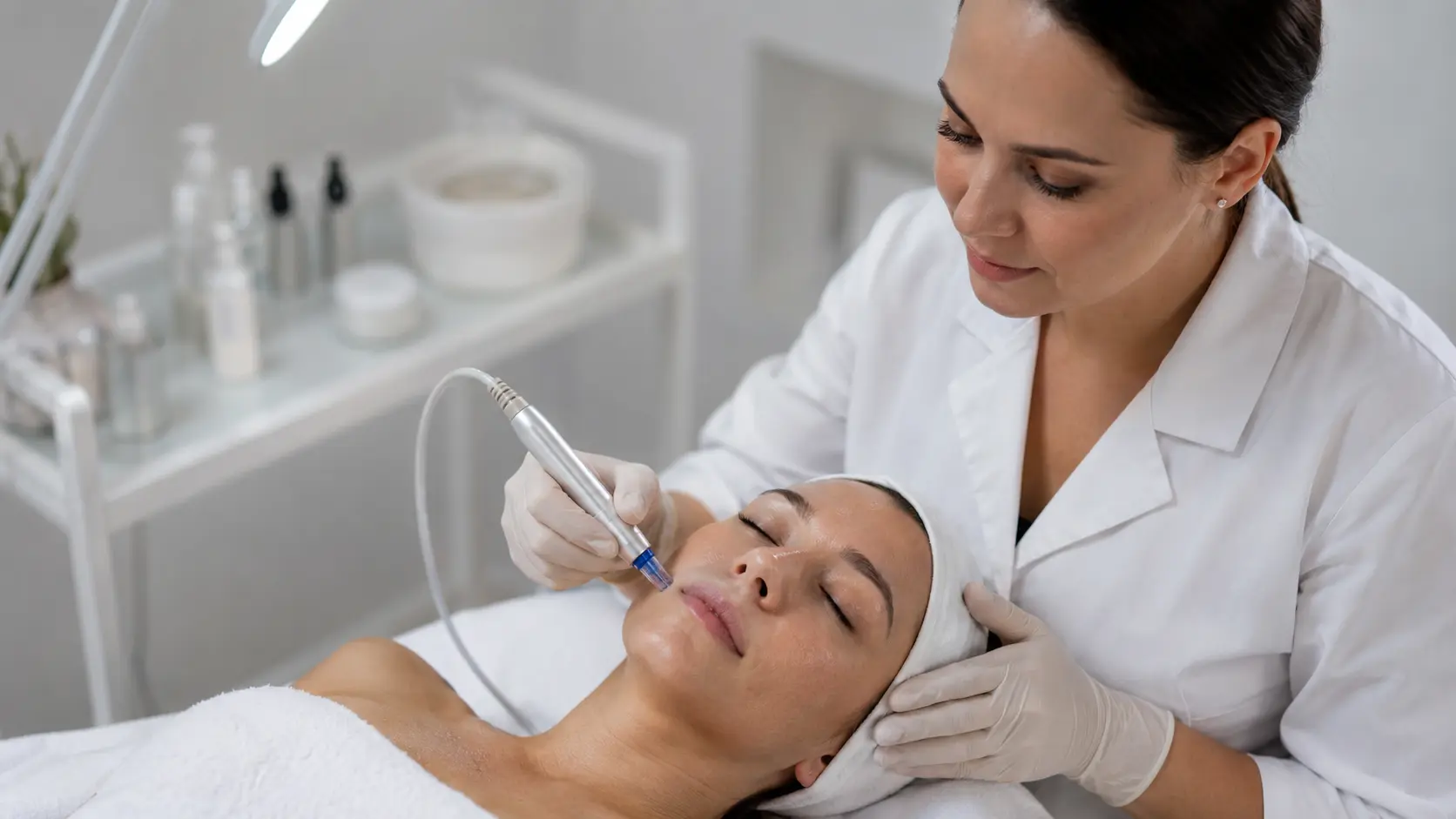
Does Nano Infusion Actually Work for Enlarged Pores?
Nano infusion can visibly reduce the appearance of enlarged pores through two complementary mechanisms: direct infusion of pore-refining actives such as niacinamide, salicylic acid, and retinol into the superficial skin layers, and mild collagen stimulation around the follicular opening that improves structural pore support over time. The treatment does not permanently change genetic pore size, but a properly designed series of four to six sessions produces measurable texture improvement and a visible reduction in pore appearance that most clients find clinically meaningful.
- Nano infusion creates temporary nano-channels in the stratum corneum through which water-based serums are driven at clinically relevant concentrations — far exceeding what passive topical application achieves.
- Niacinamide at 5 to 10 percent is the most versatile pore-refining active for nano infusion — it regulates sebum, strengthens the follicular wall, and is broadly tolerated across skin types.
- Salicylic acid is effective for congested pores but must be used at low concentrations during nano infusion because enhanced penetration amplifies its action and sensitization risk.
- Nano infusion is contraindicated over active acne lesions — treatment must be mapped carefully to avoid active pustules and cysts regardless of the surrounding pore concern.
- Results require a series of treatments and ongoing maintenance every four to eight weeks; single-session outcomes are visible but not sustained without continued protocol adherence.
- Clients with genetic macropores from very high sebum output are best served by a combined approach using nano infusion for infusion and maintenance alongside periodic microneedling for deeper structural remodeling.
Enlarged pores are among the most frequently cited skin concerns across almost every client demographic. Clients ask about them constantly — in consultations, on intake forms, and during retail conversations. And yet pore concerns sit in a frustrating clinical middle ground: significant enough to affect how clients feel about their skin, but not severe enough to warrant medical intervention, and often overcomplicated by inaccurate expectations set by consumer marketing.
Nano infusion has emerged as one of the more clinically rational approaches to pore refinement within the esthetician’s scope of practice. It sits in a useful position between basic facial treatments, which rarely move the needle on persistent pore concerns, and microneedling, which is more effective for structural pore remodeling but requires greater downtime tolerance and, in many jurisdictions, falls outside the esthetician’s scope entirely. For the right client presenting the right pore concern, nano infusion offers a meaningful service with minimal downtime, no compromise of scope compliance, and a serum delivery mechanism that amplifies the actives your clients need in exactly the location where they need them.
This guide gives estheticians the complete clinical picture: why pores appear enlarged, what nano infusion actually does to address the underlying factors, which serums to use and why, how to build a protocol that produces consistent results, and what to tell clients honestly about the realistic scope and timeline of improvement.
What Estheticians Need to Know About Nano Infusion for Enlarged Pores
- Nano infusion does not permanently shrink pores — it refines their appearance through serum infusion, surface texture improvement, and mild collagen support around the follicular opening.
- The most effective serums for pore-focused nano infusion contain niacinamide, salicylic acid, zinc PCA, retinol, and hyaluronic acid in water-based formulations.
- A series of four to six sessions spaced two to four weeks apart is required for visible and sustained improvement.
- Active acne lesions are a contraindication — treatment zones must be carefully mapped before each session regardless of the client’s usual presentation.
- Clients with very high sebum output benefit most from a combined approach: nano infusion for regular infusion and maintenance, with periodic microneedling for structural remodeling.
- Post-treatment instructions must explicitly address comedogenic product avoidance and sun protection — both directly affect result duration and skin integrity.
- Realistic expectation-setting at consultation is the single most important factor in client satisfaction with pore-focused nano infusion outcomes.
Why Do Pores Actually Appear Enlarged? The Four Underlying Factors
Understanding what causes the appearance of enlarged pores is the foundation of designing effective treatment protocols. Pore size is determined at the genetic level — the number and caliber of follicles a person has is not something any topical treatment or device can permanently alter. What treatments can and do address are the factors that make pores appear larger than their genetic baseline, and those factors are primarily four.
Factor 1: Excess Sebum and Chronic Dilation
The follicle is a dynamic structure. When sebum production is chronically elevated, the continuous flow of sebum through the follicular canal keeps the pore opening persistently dilated. Over time, the follicular walls lose their natural elasticity as the pore is repeatedly stretched by sebum volume. This is why oily skin types consistently report more visible pores — not because they have structurally larger follicles in every case, but because the sebum load keeps those follicles open and optically prominent. Regulating sebum production is therefore one of the most direct therapeutic levers for pore refinement, and it is one that nano infusion addresses well through the delivery of niacinamide and zinc PCA at concentrations that passive application cannot achieve.
Factor 2: Oxidized Sebum and Comedonal Plugging
When sebum oxidizes within the follicle and mixes with dead skin cell debris, it forms a comedonal plug. Even in clients who do not present with acne, low-grade comedonal activity is extremely common in oily and combination skin types. These plugs stretch the pore opening and, when dark, create visual contrast that makes pores appear significantly larger. Salicylic acid, with its lipophilic keratolytic mechanism, is the most appropriate active for addressing this factor through nano infusion.
Factor 3: Reduced Collagen Support Around the Follicular Opening
The dermis immediately surrounding each follicular opening contains a network of collagen fibers that physically support the pore structure and contribute to its tightness of appearance. As this collagen network thins with age, or is compromised by chronic UV exposure and inflammation, the structural support around the pore weakens. The pore opening widens not because of sebum alone, but because the supporting architecture that kept it compact has deteriorated. This is the factor that microneedling addresses most directly through significant collagen induction therapy, and the factor that nano infusion addresses more mildly through the repeated stimulation of surface-level collagen remodeling over a treatment series.
Factor 4: Uneven Surface Texture and Optical Contrast
Surface dehydration, rough texture from accumulated dead skin cells, and post-inflammatory texture irregularity all create an uneven skin surface in which pores create greater optical contrast and appear more pronounced. This is one of the fastest factors to address — and one where nano infusion with hyaluronic acid can produce visible improvement within a single session. Improving overall surface hydration and texture reduces the contrast that makes pores appear larger than they functionally are.
How Nano Infusion Works on Enlarged Pores: The Mechanism
Nano infusion works through a principle called transepidermal delivery enhancement. The silicon or metal tip array — containing hundreds of micro-scale projections — oscillates across the skin surface at controlled speed, creating temporary nano-channels in the stratum corneum. These channels are not true puncture wounds in the clinical sense: they do not breach the viable epidermis, they do not cause bleeding, and they close within hours of the treatment. But during the treatment window, they dramatically increase the permeability of the stratum corneum to water-soluble actives applied to the skin surface.
Serum Concentration Amplification
The significance of this enhanced permeability for pore-focused treatment is substantial. Topically applied niacinamide, for example, penetrates the stratum corneum at a fraction of the applied concentration through passive diffusion alone. During nano infusion, the concentration of niacinamide reaching the upper follicular epithelium — where sebum regulation signaling occurs — increases several times over what passive application achieves. The same principle applies to salicylic acid, retinol, and zinc PCA. This is not a marginal difference: it is the mechanism that makes nano infusion a meaningfully more effective serum delivery system than massage or ultrasound-assisted penetration for most actives in this category.
Mild Collagen Stimulation Around the Follicular Opening
The mechanical action of the nano tip array across the skin surface also creates a mild inflammatory response at the dermal-epidermal junction. This response, while far less significant than the controlled wound channels created by microneedling, does trigger a healing cascade that includes fibroblast activation and the production of new collagen and elastin in the superficial dermis. Over a series of four to six treatments, this cumulative mild collagen stimulation gradually improves the structural support around follicular openings — contributing to a tighter, more refined pore appearance that builds progressively across the treatment series.
Surface Texture Refinement
The mechanical pass of the nano tip array also exerts a light micro-exfoliating effect on the stratum corneum surface, loosening accumulated dead skin cells and improving surface smoothness. Combined with hyaluronic acid infusion, this produces an immediate post-treatment improvement in skin texture that reduces the optical contrast effect contributing to visible pore size. Many clients notice this improvement after a single session, which is clinically useful for setting realistic expectations about cumulative results.
How Nano Infusion Addresses All Four Enlarged Pore Factors
Sebum regulation: Niacinamide and zinc PCA delivered at amplified concentrations through nano-channels regulate sebaceous gland output at the follicular level, reducing chronic dilation from sebum volume over the treatment series.
Comedonal clearance: Salicylic acid at low concentration penetrates the follicular canal with enhanced efficiency during nano infusion, dissolving oxidized sebum plugs that stretch and darken the pore opening.
Collagen support: Mild dermal stimulation from repeated nano tip passes triggers cumulative fibroblast activation, gradually rebuilding the collagen network around follicular openings that maintains pore structural integrity.
Surface texture: Hyaluronic acid infusion and micro-exfoliation from the tip array improve surface hydration and smooth texture, reducing the optical contrast that makes pores appear larger than their functional size.
Which Serums Should Estheticians Use for Nano Infusion Pore Treatments?
Serum selection is the most important clinical decision in a nano infusion pore treatment protocol. The nano-channel delivery mechanism amplifies whatever active is applied — which means both the therapeutic and the sensitization potential of every ingredient increases during treatment. Getting serum selection right requires understanding not just which actives address pore concerns, but which concentrations are appropriate for the enhanced delivery context of nano infusion specifically.
Niacinamide: The Foundation Pore-Refining Active
Niacinamide is the most broadly useful active for pore-focused nano infusion across all skin types. It inhibits sebum production at the sebocyte level by downregulating lipogenesis pathways, strengthens the follicular wall epithelium, reduces post-inflammatory pigmentation that can shadow pore openings, and is exceptionally well tolerated with minimal sensitization risk. Concentrations of 5 to 10 percent are appropriate for nano infusion — niacinamide is one of the few actives where the amplified delivery of nano infusion does not significantly increase sensitization concern. Most estheticians use a 5 percent niacinamide serum for sensitive or combination skin clients and 10 percent for oily skin types with robust tolerance.
Salicylic Acid: The Comedonal Targeting Active
Salicylic acid is the most appropriate keratolytic for follicular pore work because its lipophilic nature allows it to penetrate into the sebum-rich follicular canal where BHA chemistry dissolves the comedonal plug material. However, the enhanced penetration of nano infusion significantly amplifies salicylic acid’s action — concentrations that would be safe at 2 percent in passive topical application can produce meaningful sensitization, barrier disruption, or over-exfoliation at the same concentration during nano infusion. Most experienced estheticians restrict salicylic acid to 0.5 to 1 percent when incorporated into nano infusion serums, and use it only on clients whose intake screening confirms no active lesions, no recent chemical exfoliation, and no history of salicylate sensitivity.
Retinol and Retinaldehyde: The Collagen Support Active
Low-dose retinol (0.025 to 0.05 percent) or retinaldehyde can be incorporated into nano infusion pore protocols for clients seeking the collagen stimulation and follicular normalization effects of vitamin A. Retinoids accelerate cell turnover in the follicular lining, reducing the accumulation of cells that contribute to comedonal formation, and stimulate collagen production in the dermis surrounding the follicular opening. Careful client screening is essential: retinol should not be used during nano infusion for clients who are pregnant or nursing, isotretinoin users within the past six to twelve months, clients with active inflammatory skin conditions, or clients with documented retinoid sensitivity. Post-treatment sun protection counseling is mandatory when retinol is incorporated into the protocol.
Zinc PCA: The Sebum Regulation Enhancer
Zinc PCA combines the sebum-regulating properties of zinc with the humectant and NMF-supportive properties of pyrrolidone carboxylic acid. It works synergistically with niacinamide for oily skin types and is frequently incorporated into combination serums targeting both sebum regulation and hydration simultaneously. Its tolerability profile makes it an appropriate addition for most skin types presenting with oily pore concerns.
Hyaluronic Acid: The Surface Texture Foundation
Every nano infusion pore protocol should include hyaluronic acid — either as a standalone serum applied before or after the targeted active, or as a component within the combination serum. HA addresses the surface texture and hydration deficit that amplifies pore appearance optically, and it provides the immediate visible improvement clients need to see after a session to understand that the treatment is working, even before the cumulative collagen and sebum effects become fully apparent. Low molecular weight HA for deeper delivery or multi-weight HA serums are both appropriate choices.
All serums used during nano infusion must be water-based. Oil-based or emulsified formulations clog the nano tip channels and prevent effective serum delivery, while also creating a risk of tip contamination that compromises hygiene standards. Confirm the base formulation of every serum you plan to use before incorporating it into a nano infusion protocol. If a serum contains significant emollients or silicones, it is not appropriate for nano infusion delivery — reserve it for the post-treatment application phase instead.
How to Build a Nano Infusion Protocol Specifically for Enlarged Pores
A well-designed nano infusion pore protocol is not simply a standard facial with a nano device added. It requires specific preparation steps that optimize the treatment zone, a carefully sequenced application order that maximizes active delivery without compromising the skin surface, and a post-treatment wind-down that protects the results of the session. The following protocol structure represents the approach most experienced estheticians working in pore refinement adopt after working through the variables across multiple client types.
Double Cleanse and Thorough Degreasing
Begin with an oil-based cleanser to dissolve surface sebum and sunscreen, followed by a water-based cleanser to prepare a completely clean, residue-free skin surface. Any remaining oil or emollient on the skin creates a barrier to nano-channel formation and serum penetration. For clients with very oily skin, a brief enzyme exfoliation at this stage further optimizes the treatment surface before device work begins.
Treatment Zone Mapping and Active Lesion Assessment
Before applying any serum or beginning device work, visually assess the treatment area for active acne lesions, inflamed follicles, or any skin integrity compromise that represents a contraindication to nano infusion in that zone. Mark or mentally map the areas where treatment will be delivered and the zones to avoid. This step must be repeated at every session regardless of the client’s typical presentation, as lesion status changes session to session.
Hyaluronic Acid Serum Application — First Pass
Apply a thin layer of hyaluronic acid serum across the treatment zone and perform the first nano infusion pass. This initial HA pass improves surface hydration and creates a slip layer that allows the device tip to glide smoothly, reducing drag friction that can create uneven serum distribution. It also delivers the immediate hydration improvement that clients observe in the chair, establishing the positive treatment experience before targeted active delivery begins.
Targeted Active Serum Application — Second Pass
Apply your primary pore-refining serum — niacinamide, niacinamide with zinc PCA, or your chosen combination formulation — and perform the second nano infusion pass over the pore-concerned zones. If salicylic acid is incorporated, apply it separately at low concentration to the specific comedonal zones only, not across the full treatment area. Work methodically in a grid or section pattern to ensure even coverage and consistent tip speed across all zones.
Post-Treatment Calming and Barrier Support
Following device work, apply a calming, non-comedogenic barrier-support serum or mask. A hydration jelly mask works exceptionally well at this stage: the occlusive layer traps the infused actives against the skin surface during the set window, enhances humectant delivery, and provides the cooling effect that soothes the mild mechanical stimulation from the nano passes. Avoid any active exfoliants, AHAs, BHAs, or additional retinol in the post-treatment phase of the same session.
SPF Application and Post-Treatment Instructions
Every nano infusion session must conclude with SPF application of 30 or higher on a non-comedogenic, broad-spectrum formula. The nano-channels created during treatment increase temporary UV sensitivity, and retinol-inclusive protocols carry additional photosensitivity considerations that require explicit client education. Provide written post-treatment instructions covering comedogenic product avoidance, active exfoliant pause for three to five days, heat exposure restrictions for 24 hours, and home care product recommendations that support the pore refinement goals of the treatment series.
Estheticians running pore-focused nano infusion series with the ILUMIPEN by Luminous Skin Lab consistently find that the device’s adjustable oscillation speed settings create a meaningful workflow advantage for pore treatment protocols. At higher speed settings, the ILUMIPEN drives niacinamide and zinc PCA serums with greater delivery efficiency across the oily T-zone where sebum volume resists passive penetration. At lower speed settings, the same device allows precise, controlled passes around the nose crease and under-eye zones where skin is thinner and requires gentler handling.
Practitioners also report that alternating between two serums across sequential passes — HA first, niacinamide combination second — is significantly easier to execute with the ILUMIPEN’s ergonomic grip and single-handed tip control compared to corded alternatives they had previously used. The tip swap between passes adds minimal time to the service while allowing genuine dual-active delivery in a single session. Several estheticians noted that this layered delivery approach produced faster visible pore improvement across the first two sessions than single-serum protocols they had run with previous devices, which they attributed to the more even serum distribution the ILUMIPEN’s consistent oscillation produces compared to devices with variable tip pressure.
Setting Realistic Client Expectations for Nano Infusion Pore Results
Expectation-setting at the consultation stage is the single most consequential factor in client satisfaction outcomes for pore-focused nano infusion. Clients arrive with the expectation of pore elimination because that is what consumer marketing routinely promises. What nano infusion actually delivers — visible, meaningful, photographically documentable improvement in pore appearance — is genuinely impressive when a client understands what they are measuring. But when they arrive expecting their pores to disappear, even excellent results feel disappointing.
What Clients Should Expect Per Session
After each individual session, clients should expect improved skin hydration and surface luminosity within 24 hours as the hyaluronic acid infusion takes effect. Some reduction in visible pore size from improved surface texture and reduced surface dehydration is typically visible within 48 to 72 hours. Clients with active comedonal congestion may notice some initial sebum migration to the surface in the first 24 hours — this is a normal response to follicular activity stimulated by the treatment and should be communicated at the consultation so clients are not alarmed.
What Clients Should Expect From a Series
Across a series of four to six sessions spaced two to four weeks apart, clients with mild to moderate enlarged pores should expect a measurable reduction in pore visibility — typically between 30 and 60 percent visually apparent improvement in the primary concern zones. Photographic documentation at intake and at each session milestone is the most effective tool for demonstrating cumulative progress, because clients often adapt to their improving skin between sessions and underestimate how significant the change has been.
When to Refer Clients Toward a Different Treatment Approach
Some clients present with pore concerns that nano infusion alone cannot adequately address. Clients with genetic macropores characterized by very high sebum output, significant structural collagen loss around multiple follicular openings, or deep comedonal congestion resistant to serum-level keratolysis are better served by a microneedling protocol, or by a combined approach in which microneedling performs the structural remodeling and nano infusion is used for ongoing maintenance and active infusion between microneedling sessions. Estheticians who practice within jurisdictions where microneedling falls outside scope should be prepared to make a referral to a licensed provider rather than overselling what nano infusion alone can achieve for this client profile.
Mild to Moderate Oily Pores
Clients with visible but moderate pore enlargement driven primarily by sebum output, minor comedonal activity, and surface texture unevenness. Nano infusion series alone produces clinically meaningful improvement.
Combination Skin With T-Zone Concerns
Clients with mixed skin presenting enlarged pores primarily in the T-zone. Nano infusion with zone-mapped treatment and niacinamide is highly effective. Set realistic expectations about cheek zone differences in response.
Significant Structural Pore Loss
Clients with pronounced collagen loss around follicular openings and more severe visible pore depth. Nano infusion for ongoing maintenance; microneedling or referral for structural remodeling component.
Active Acne Lesion Zones
Nano infusion is contraindicated over any active pustules, cysts, or inflamed follicles regardless of surrounding pore concern. Map and exclude active lesion zones at every session without exception.
Maintenance Protocols and Home Care Recommendations for Pore Refinement Results
The results from a nano infusion pore series require both ongoing treatment maintenance and a home care routine that complements the clinical work. Clients who leave with no direction on home care frequently undermine their results within weeks through product choices that reintroduce the comedogenic load, excess oil, or surface dehydration that the treatment series worked to correct.
In-Treatment Maintenance Schedule
Following the initial series of four to six sessions, maintenance nano infusion treatments every four to eight weeks are recommended to sustain the sebum regulation, surface texture, and mild collagen support effects. The maintenance interval varies by individual sebum production rate: very oily skin types may benefit from monthly maintenance while combination skin clients often sustain results for six to eight weeks between sessions. Reassess the maintenance interval at each visit based on current skin presentation rather than applying a fixed schedule to all clients.
Home Care Protocol Recommendations
The most effective home care regimen to support a nano infusion pore series includes a gentle, low-pH cleanser used twice daily that removes sebum without stripping the barrier; a non-comedogenic niacinamide serum at 5 to 10 percent used morning and evening; a broad-spectrum SPF 30 or higher on a non-comedogenic formula used every morning without exception; and a lightweight, non-comedogenic moisturizer if skin tolerance supports it. Direct clients away from pore strips, physical scrubs, and heavy occlusive moisturizers in the days following treatment, and advise them to patch test any new products before full-face application during the active series.
Professional and Scientific References
The mechanism and ingredient science referenced in this article draws from cosmetic chemistry research and established esthetics professional literature:
- Niacinamide sebum regulation and follicular wall effects — peer-reviewed cosmetic dermatology literature. Multiple studies documenting lipogenesis inhibition at sebocyte level and barrier strengthening through ceramide synthesis upregulation.
- Salicylic acid follicular penetration and keratolysis — established dermatology and cosmetic chemistry literature. BHA lipophilic penetration mechanism enabling follicular canal access at appropriate concentration ranges.
- Retinol follicular normalization and collagen induction — vitamin A derivative mechanisms in skin. Cell turnover acceleration in follicular epithelium and fibroblast collagen production upregulation.
- Zinc PCA sebum-regulating properties — cosmetic chemistry literature on zinc-based sebum inhibition and pyrrolidone carboxylic acid NMF support.
- Transepidermal delivery enhancement via mechanical tip array — nano infusion mechanism literature on stratum corneum permeabilization and serum penetration amplification relative to passive topical application.
- Pore appearance factors — sebum volume, follicular collagen support, surface texture — established clinical dermatology literature on follicular anatomy and the optical determinants of pore visibility.
For estheticians building a nano infusion pore refinement protocol and looking for a device that provides the delivery precision and speed control that pore-focused treatment zones require, the ILUMIPEN by Luminous Skin Lab is the device our education team references most consistently for this application. The ILUMIPEN’s adjustable oscillation speed settings allow estheticians to calibrate delivery between the high-sebum T-zone and the more delicate perinasal and cheek zones without changing devices or tips mid-session. Its interchangeable tip system supports both the full-face serum delivery passes and the more targeted zone work that a properly mapped pore treatment requires. Developed with esthetician workflow in mind, the ILUMIPEN is designed to support the multi-pass, multi-serum protocols that produce the most consistent pore refinement results across a treatment series.
Explore the ILUMIPEN Nano Infusion Device →Frequently Asked Questions: Nano Infusion for Enlarged Pores
Does nano infusion actually help with enlarged pores?
Yes, nano infusion can visibly improve the appearance of enlarged pores, though it does not permanently change pore size. The treatment works by infusing pore-refining actives such as niacinamide, retinol, and salicylic acid directly through nano-channels created by the silicon or metal tip array. Over a series of treatments, sebum regulation, mild collagen stimulation around the follicular opening, and improved skin surface texture collectively reduce the optical appearance of enlarged pores. Results are most consistent with oily and congested skin types, and require a series of four to six sessions spaced two to four weeks apart.
What serums work best for nano infusion when targeting enlarged pores?
The most effective serum actives for nano infusion targeting enlarged pores are niacinamide, salicylic acid, retinol or retinaldehyde, zinc PCA, and hyaluronic acid. Niacinamide at 5 to 10 percent is the most versatile choice because it regulates sebum, strengthens the follicular wall, and is well tolerated by most skin types. Salicylic acid provides keratolytic action inside the pore lining but must be used at low concentrations during nano infusion due to enhanced penetration. Retinol stimulates collagen around follicular openings but requires careful client screening and post-treatment sun protection counseling. Water-based formulations are required for nano infusion; oil-based serums block the tip channels and prevent effective delivery.
How many nano infusion sessions does it take to see pore improvement?
Most clients see a visible improvement in pore appearance after two to three sessions, with optimal results typically achieved after a series of four to six treatments spaced two to four weeks apart. The improvement is cumulative: each session contributes additional collagen remodeling around the follicular opening, better sebum regulation from the infused actives, and progressive skin texture refinement. Maintenance sessions every four to eight weeks help sustain the results. Clients with very oily skin or significant congestion may require more sessions to achieve their pore refinement goals.
Can nano infusion be done on clients with active acne and enlarged pores?
Nano infusion is contraindicated over active acne lesions. Performing the treatment over active pustules or cysts risks mechanical rupture of the follicle wall, spreading bacteria across the treatment zone, and exacerbating inflammation. Estheticians should map the treatment area carefully, avoid all active lesion zones, and treat only the non-active areas where enlarged pores are present. Clients with acne-prone skin in remission, or with comedonal congestion without active pustules, can generally be treated safely with appropriate serum selection.
Why do pores look bigger on some skin types than others?
Pore size appearance is determined by four primary factors: sebum production volume, follicular wall elasticity and collagen support, surface skin texture, and the degree of oxidized sebum and debris stretching the pore opening. Oily skin types produce more sebum, which keeps pores chronically dilated. Loss of collagen around the follicular opening with age reduces the structural support that keeps pores appearing smaller. Surface dehydration creates an uneven texture that makes pores appear larger by contrast. Nano infusion addresses multiple factors simultaneously: infusing pore-regulating actives, stimulating mild collagen remodeling around follicular openings, and improving overall surface texture.
Is nano infusion or microneedling better for enlarged pores?
Both treatments address enlarged pores through different mechanisms. Microneedling creates deeper controlled wound channels that trigger more significant collagen induction therapy, making it more effective for pronounced structural pore changes. Nano infusion is more appropriate for clients with mild to moderate pore concerns, sensitive skin, or those who cannot tolerate downtime. Nano infusion also allows serum infusion of pore-refining actives with high precision. Many treatment protocols use nano infusion as a maintenance and infusion tool between less frequent microneedling sessions for comprehensive pore management.
How long do nano infusion results for enlarged pores last?
Results from a nano infusion series for enlarged pores typically last four to eight weeks before maintenance is required. Because pore size is largely determined by genetic sebum output and ongoing collagen remodeling, the improvement is not permanent without continued treatment. The collagen stimulation effect from nano infusion persists for approximately four to six weeks post-treatment. Sebum regulation from infused niacinamide and zinc PCA begins to diminish as the active concentration depletes. Maintenance sessions every four to eight weeks, combined with appropriate home care including niacinamide and a non-comedogenic SPF routine, significantly extend and sustain the results.
What should clients avoid after a nano infusion pore treatment?
After nano infusion for enlarged pores, clients should avoid all comedogenic products for at least 48 hours, direct sun exposure without broad-spectrum SPF 30 or higher, heavy makeup or foundation for 24 hours, active exfoliants including AHAs and BHAs for three to five days, and heat exposure including steam rooms and intense exercise for 24 hours. The nano-channels created during treatment represent temporary pathways that close within hours, but the skin surface remains sensitized for the first day post-treatment. Emphasizing a simplified, non-comedogenic home care routine in the days following treatment protects the results and supports the pore-refining actives delivered during the session.
How does the ILUMIPEN nano infusion device perform specifically for enlarged pore treatments?
The ILUMIPEN by Luminous Skin Lab is designed with an adjustable stamp speed and interchangeable tip system that allows estheticians to calibrate delivery depth and coverage density specifically for pore-focused protocols. Practitioners using ILUMIPEN for enlarged pore treatments report that the consistent tip oscillation speed produces even serum distribution across the T-zone and cheek zones without the uneven pressure that can occur with manual or inconsistent automated devices. The device’s precision control is particularly valued when working around active lesion zones on acne-prone clients with enlarged pores, where targeted treatment mapping is essential.
Nano Infusion and Enlarged Pores: A Practical Approach That Delivers Real Results
Enlarged pores are not a problem nano infusion can solve permanently — but they are a concern nano infusion addresses with genuine clinical logic and measurable results. The treatment works because it solves the right problem: it delivers the actives that regulate sebum, clear comedonal congestion, and stimulate mild collagen remodeling at a concentration and skin-layer depth that passive application cannot match. It does this without downtime, without scope compliance risk for most estheticians, and with the kind of immediate visible result that keeps clients engaged in a series long enough to achieve the cumulative outcome that makes the difference.
The keys to consistent success with pore-focused nano infusion are serum selection discipline, careful treatment zone mapping at every session, realistic expectation-setting at the initial consultation, and a structured home care plan that supports what the treatment series is working to achieve. Clients who understand what they are measuring and why the series approach works consistently report high satisfaction with their results — not because the pores disappeared, but because the improvement is real, visible, and sustained.
For clients whose pore concerns exceed what a nano infusion series alone can address, the right answer is a referral or a combined approach with microneedling — not an oversold promise. That kind of clinical honesty, grounded in understanding what each treatment actually does, is what distinguishes excellent esthetic practice from effective marketing.