Does Nano Infusion Actually Work for Dehydrated Skin?
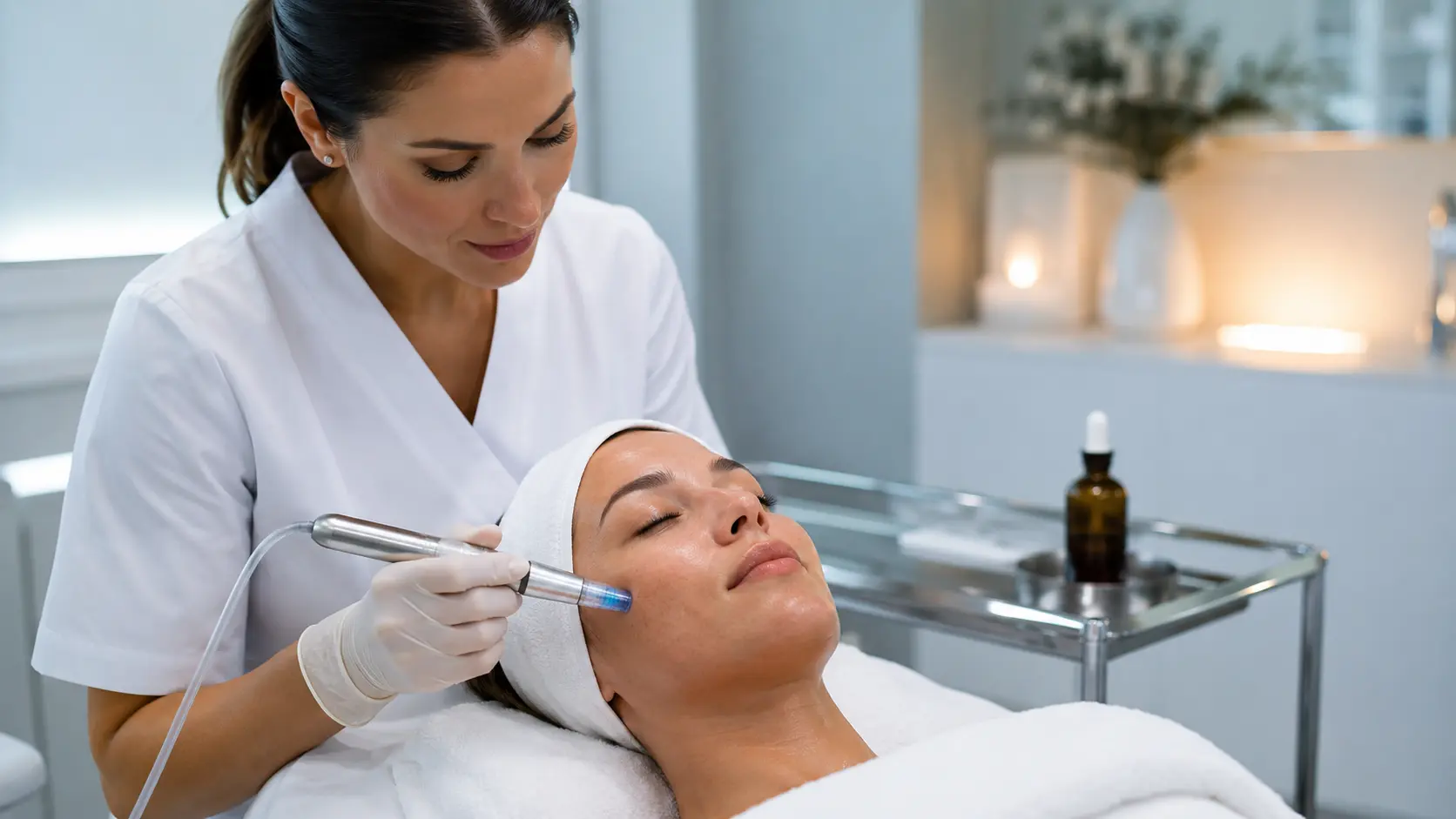
Nano infusion is one of the most clinically effective professional treatments for dehydrated skin. By creating temporary microchannels through the stratum corneum with nano-scale tips, nano infusion devices allow water-based hydration serums to bypass the skin’s natural surface barrier and penetrate significantly more deeply than topical application alone can achieve. The result is immediate visible improvement in skin plumpness, texture, and luminosity — alongside a cumulative improvement in the skin’s intrinsic water-retention capacity over a treatment series.
- Dehydration is a water-content deficit in the skin, not a skin type — it affects oily, combination, and dry skin equally and responds specifically to humectant delivery treatments.
- Nano infusion microchannels temporarily increase skin permeability, allowing hyaluronic acid and other humectants to penetrate past the stratum corneum where they cannot reach through standard topical application.
- Only water-based, low-viscosity serums should be used with nano infusion devices — oil-based formulations impede channel formation and can damage nano tip cartridges.
- Most clients see visible improvement after a single session, but lasting correction of chronic dehydration requires a series of four to six treatments spaced one to two weeks apart.
- Nano infusion is considered needle-free and appropriate for sensitive, reactive, or dehydrated skin in most states without medical oversight — making it an accessible advanced service for licensed estheticians.
- Pairing nano infusion with an occlusive post-treatment mask amplifies and extends the hydration result by sealing infused actives against transepidermal water loss during the recovery window.
Dehydrated skin is one of the most commonly misunderstood conditions in the treatment room. Clients frequently describe their skin as “just dry” — and many have tried every moisturizer they can find without lasting improvement. What they are often experiencing is not a dry skin type but a dehydration condition: a deficit of water content within the skin structure that surface moisturizers alone cannot meaningfully address because the stratum corneum barrier prevents adequate penetration of topically applied humectants.
This is precisely where nano infusion offers a compelling clinical advantage. By mechanically opening temporary microchannels through the outermost skin layers, nano infusion creates a brief but significant window during which water-based hydration serums can bypass the barrier and deliver active humectants into the viable epidermis. The result is a depth and durability of hydration that topical application cannot replicate — and a client experience that makes the improvement immediately visible and tactile on the treatment table.
This guide provides estheticians with a complete clinical framework for using nano infusion to treat dehydrated skin: the science of why the approach works, how to select serums for maximum hydration delivery, how to design a protocol for dehydrated clients, what results to expect and communicate, and how to build a cumulative treatment series that produces lasting improvement. For estheticians who have been looking for a non-invasive treatment to genuinely address chronic client dehydration, this is a foundational read.
What Every Esthetician Should Know About Nano Infusion and Dehydrated Skin
- Dehydration is a water-deficit condition, not a skin type — it is present in oily, combination, and dry skin and is directly addressable through humectant delivery.
- The stratum corneum is the primary barrier blocking topical humectant penetration — nano infusion temporarily bypasses it without compromising barrier integrity long-term.
- Only water-based, low-viscosity, pH-appropriate serums belong in a nano infusion protocol for dehydration — multi-molecular-weight hyaluronic acid and polyglutamic acid are the most evidence-supported choices.
- Set client expectations around both immediate results and cumulative series outcomes — one session produces visible improvement, a series produces lasting change.
- The post-treatment recovery window immediately after nano infusion is the highest-value hydration delivery window in the entire session — an occlusive mask at this stage amplifies the result significantly.
- Home care compliance between sessions determines how quickly and durably dehydration correction develops — prescribe specifically, not generically.
- Nano infusion is appropriate for sensitive dehydrated skin — the absence of dermal penetration and inflammatory cascade makes it suitable where microneedling is not.
Understanding Dehydration: Why Topical Moisturizers Often Fail Where Nano Infusion Succeeds
Dry Skin vs. Dehydrated Skin: A Clinical Distinction That Changes Everything
The most important conceptual foundation for any nano infusion dehydration protocol is the clinical distinction between dry skin and dehydrated skin. They look similar and clients often describe them interchangeably, but they are fundamentally different conditions with different treatment targets.
Dry skin is a skin type — it is characterized by insufficient sebum production. The lipid barrier is functionally reduced, the skin feels rough and tight, and it benefits from occlusive and emollient products that replace missing surface lipids. Dry skin is genetic and chronic. Cosmetic treatments can manage it but not cure it.
Dehydrated skin is a skin condition — it is characterized by insufficient water content within the skin structure, specifically in the stratum corneum and viable epidermis. Dehydrated skin can occur in every skin type, including oily skin, and is often caused or worsened by environmental factors (low humidity, air travel, heated environments), barrier disruption from over-exfoliation or harsh cleansers, inadequate water intake, or active treatment procedures that temporarily compromise barrier function. Dehydrated skin presents with fine surface lines that appear when the skin is gently stretched, a dull or flat-texture appearance, occasional tightness despite apparent oiliness, and a skin feel that seems simultaneously tight and congested.
The treatment target for dehydration is water replenishment via humectant delivery. This is precisely what nano infusion — paired with the right serum selection — is designed to accomplish.
Why the Stratum Corneum Blocks Topical Hydration
The stratum corneum is the outermost layer of the epidermis, composed of flattened, keratin-filled corneocytes embedded in a lipid matrix. It is the body’s primary barrier against transepidermal water loss and, simultaneously, the primary barrier against the penetration of topically applied ingredients. This creates the central clinical problem of topical dehydration treatment: the barrier that needs to be bypassed in order to deliver water-binding actives into the skin is the same barrier preventing those actives from getting there.
Hyaluronic acid molecules, for example — the most commonly used and most clinically effective topical humectant — are too large to passively penetrate the intact stratum corneum in standard serum formulations. They sit at the surface, attract ambient moisture, and improve the surface feel of the skin, but they do not meaningfully address the water deficit in deeper skin layers where dehydration damage accumulates. Even low-molecular-weight HA fractions have limited penetration through an intact and competent barrier.
Nano infusion solves this by mechanically creating temporary, microscopic channels through the stratum corneum — allowing the serum applied during treatment to be driven into the skin rather than sitting on top of it.
How Nano Infusion Creates the Hydration Delivery Advantage
Nano infusion devices use cartridges fitted with arrays of nano-scale silicone or titanium-coated tips — typically between 81 and 121 individual tips per cartridge — that oscillate at high frequency against the skin surface. The tips are sized in the range of 0.1 to 0.15 millimeters — significantly smaller than traditional microneedling cartridge needle gauges, and critically, not long enough to penetrate into the dermis. The mechanical action of the tips against the skin surface creates temporary micro-openings in the stratum corneum through which the applied serum is drawn during treatment.
This creates a temporary but clinically meaningful permeability window. During the treatment pass and for a brief period afterward, the skin is significantly more permeable to water-based active ingredients than in its normal state. Humectants like hyaluronic acid — which cannot meaningfully penetrate an intact stratum corneum during standard topical application — are carried into the epidermal layers during this window. The depth of delivery is sufficient to address the water deficit in the viable epidermis where it genuinely affects skin function and appearance.
Serum Selection for Dehydrated Skin: What Works, What Doesn’t, and Why
Serum selection is the single most consequential decision in a nano infusion dehydration protocol. The mechanical delivery mechanism of nano infusion is only as effective as the ingredients being delivered. Choosing the wrong serum formulation produces disappointing results and can damage nano tip cartridges — an expensive and preventable error.
The Non-Negotiable Rules for Nano Infusion Serums
Before evaluating any serum for compatibility with nano infusion on dehydrated skin, every candidate must pass three baseline criteria:
- Water-based, not oil-based. Oil-based serums do not flow through nano tip arrays. They can clog tip channels, impede channel formation, and leave lipid residue that compromises the mechanical action of the device. Any serum containing significant lipid or oil fractions should not be used during nano infusion. Save oil-based formulations for post-treatment application after the device protocol is complete.
- Low viscosity. The serum needs to flow freely under the nano tip array and into the microchannels as they form. Thick gel formulations, high-viscosity creams, or heavily cross-linked HA gels do not behave correctly during nano infusion. Choose lightweight, fluid serums with a water-like to thin-serum consistency.
- pH between 5.0 and 7.0. Serums outside this range — particularly highly acidic formulations containing AHAs, BHAs, or vitamin C at low pH — are contraindicated for nano infusion on dehydrated, compromised skin because they will cause stinging, sensitization, and barrier disruption during the treatment window when the skin is temporarily more permeable.
The Best Humectant Actives for Nano Infusion on Dehydrated Skin
Within the constraints above, certain active ingredients are particularly well-suited to nano infusion delivery for dehydrated skin:
Multi-molecular-weight hyaluronic acid is the foundational choice. Serums containing HA at multiple molecular weights are significantly more effective in a nano infusion context than single-weight HA formulations. Low-molecular-weight HA fractions (50–300 kDa) penetrate further into the epidermis and deliver moisture to deeper layers. High-molecular-weight HA (1,000–1,500 kDa) provides surface film formation and immediate plumping. Mid-weight fractions contribute at intermediate skin depths. A well-formulated multi-weight HA serum delivered through nano infusion creates a cascade of hydration at multiple epidermal depths simultaneously.
Polyglutamic acid (PGA) is a fermentation-derived biopolymer with a moisture-binding capacity of up to 5,000 times its weight in water — exceeding that of hyaluronic acid by a factor of four or more. PGA also inhibits hyaluronidase, the enzyme that breaks down the skin’s own HA, protecting both the infused HA and the skin’s naturally produced HA reserves during and after treatment. In a nano infusion serum context, PGA functions both as a high-performance humectant and as a HA-protective film agent. Look for serums that combine PGA with multi-molecular-weight HA for maximum synergistic hydration delivery.
Panthenol (provitamin B5) is an excellent complementary ingredient in nano infusion hydration serums. It is water-soluble, low-viscosity, and well-tolerated on compromised and dehydrated skin. Panthenol acts as a humectant and a barrier-supportive agent — it penetrates readily and supports epidermal cell proliferation and barrier repair. Including panthenol in the nano infusion serum stack addresses both the immediate water deficit and the barrier dysfunction that typically underlies chronic dehydration.
Sodium PCA (sodium pyrrolidone carboxylate) is a component of the skin’s natural moisturizing factor (NMF) and an exceptionally effective water-attracting humectant. As a naturally occurring skin hydration molecule, it integrates particularly well into post-nano-infusion dehydrated skin recovery and is well-tolerated even on sensitized or reactive skin types.
Why Nano Infusion Changes the Hydration Delivery Equation
Standard topical application of a hyaluronic acid serum delivers humectants to the surface of the stratum corneum — producing improved surface feel and some atmospheric moisture attraction, but not meaningfully addressing water deficit in the viable epidermis where cellular hydration occurs.
Nano infusion with the same serum delivers HA through temporary stratum corneum microchannels into the epidermal layers — where it binds water within the skin structure rather than at the surface. This changes the mechanism from surface hydration to intra-epidermal hydration.
The clinical difference is visible and measurable: clients whose skin showed only modest improvement with topical HA serums consistently report a visually distinct improvement in skin plumpness, reduction in surface fine dehydration lines, and improved luminosity immediately following nano infusion with the same humectant actives.
Serums and Ingredients to Avoid During Nano Infusion on Dehydrated Skin
Equally important as knowing what to infuse is knowing what to exclude. The following categories are contraindicated for use during nano infusion on dehydrated clients:
- Alpha hydroxy acids (glycolic, lactic, mandelic) and beta hydroxy acids (salicylic acid) at active concentrations — the increased permeability during nano infusion amplifies their potential to cause irritation, stinging, and barrier compromise.
- Retinol and retinoid formulations — similarly, enhanced penetration during nano infusion can cause severe sensitization and post-inflammatory response.
- Vitamin C at low pH (below 4.0) — the stinging and oxidative potential is amplified during the treatment window.
- Any serum containing synthetic fragrances or known sensitizers — dehydrated skin is often already compromised, and enhanced penetration during nano infusion increases sensitization risk from these ingredients significantly.
- Oil-based carrier systems including squalane-heavy, rosehip oil, marula oil, or any formulation with a visible oil phase — mechanical contraindication for device function as described above.
How Dehydration Presents Clinically: Recognizing and Assessing the Condition Before Treatment
Accurate assessment of dehydration before designing a nano infusion protocol protects both the client and the treatment outcome. Estheticians who cannot confidently distinguish dehydration from other skin conditions risk designing protocols that miss the primary target.
Key Assessment Techniques for Dehydrated Skin
The most reliable assessment approach combines visual analysis, tactile assessment, and client history. Key indicators to evaluate:
- Skin pinch test: Gently pinch a small amount of skin on the cheek or back of the hand. Dehydrated skin will hold the pinch shape for a moment before releasing smoothly back — a slower return indicates reduced water content in the tissue. Normally hydrated skin springs back immediately. This test provides a quick but reliable directional signal in the treatment room.
- Surface fine line pattern under magnification: Dehydration produces a characteristic network of very fine surface lines — not deep wrinkles, but shallow, closely spaced lines that appear across the entire treatment area rather than at expression-line locations. These are typically most visible on the cheeks and are sometimes described by clients as “crepey” texture.
- Skin feel under steam or mist: Dehydrated skin characteristically feels tighter and drier after steam or mist evaporates — water evaporation from the surface pulls moisture from the skin rather than leaving it feeling refreshed. This response pattern is diagnostically useful during the cleansing phase of a facial.
- Client history: Ask about recent long-haul air travel, dietary changes, increased caffeine or alcohol intake, changes in humidity (seasonal or geographic), recent use of new cleansers or exfoliants, or recent professional treatments. These are the most common acute triggers of dehydration in otherwise well-managed skin.
Distinguishing Dehydration from Barrier Damage in the Assessment
Dehydration and barrier damage frequently coexist but are not the same condition. Barrier damage (characterized by compromised intercellular lipid matrix and elevated TEWL) is often the underlying mechanism driving chronic dehydration — the damaged barrier cannot retain water effectively, so water evaporates faster than it can be replenished. When assessing a client with apparent dehydration, consider whether the dehydration is likely primary (caused directly by external water loss factors, insufficient hydrating home care, or temporary environmental conditions) or secondary to barrier disruption (caused by over-exfoliation, aggressive cleansing, or previous treatment damage).
The distinction matters for protocol design because: primary dehydration responds most directly to humectant delivery via nano infusion; secondary dehydration requires a protocol that also includes barrier repair actives — panthenol, ceramides, and niacinamide — applied in the post-treatment phase. In both cases, nano infusion is an effective tool, but the serum selection and post-treatment care differ meaningfully.
Building a Professional Nano Infusion Protocol for Dehydrated Skin
A well-designed nano infusion protocol for dehydrated skin moves through a defined sequence that prepares the skin, maximizes serum delivery, and locks in results during the post-treatment recovery window. Each phase has a clinical rationale — not just a procedural sequence.
-
Thorough Double Cleanse — Surface PreparationBegin with a gentle micellar or oil-cleanse pass to remove makeup and SPF, followed by a low-pH, non-stripping water-based cleanser. For dehydrated skin, avoid cleansers with SLS, high fragrance load, or foaming agents that strip residual NMF. Residual makeup, sunscreen, or sebum on the skin surface impedes nano tip contact and reduces channel formation effectiveness. The skin surface must be clean, balanced, and free from product residue before nano infusion begins.
-
Dehydration Assessment and Skin AnalysisUnder good lighting and magnification, perform your full skin analysis before any serum application. Assess for dehydration severity, visible fine line network, presence of concomitant barrier damage, sensitivity indicators (reactive vessels, redness, or existing compromise), and any contraindications for nano infusion. Document your findings in the client record. This step establishes your protocol decisions and allows you to set specific, accurate client expectations before the treatment begins.
-
Exfoliation Pass (Optional — Dehydrated Skin Specific Cautions)Enzyme exfoliation (bromelain or papain-based) may be appropriate before nano infusion on dehydrated skin with significant surface cell buildup, as removing excess corneocyte accumulation improves nano tip contact and channel formation. Chemical acid exfoliants (AHAs, BHAs) should be avoided pre-nano-infusion on dehydrated skin because they further compromise an already-stressed barrier and create sensitization risk during the enhanced permeability window. Dermaplaning is a suitable mechanical exfoliation option when appropriate for the client. If the skin is acutely compromised or sensitized, skip exfoliation entirely and proceed directly to nano infusion.
-
Pre-Nano Infusion Serum Application — Hydration Prime LayerApply a light layer of your chosen water-based humectant serum to the skin surface before beginning the nano infusion pass. This creates a lubrication layer that allows the nano tips to glide without friction, protects the skin from mechanical drag, and begins the hydration delivery process from the moment treatment starts. Do not apply so much serum that it pools or runs — a thin, even application is correct. The serum should be continuously replenished during the nano infusion pass as it is absorbed into the microchannels.
-
Nano Infusion Pass — Systematic Treatment TechniqueWork systematically across the entire face using either a stamp motion or slow, overlapping gliding passes depending on your device’s manufacturer guidance. Keep the device at approximately 90 degrees to the skin surface for optimal nano tip contact. Maintain a consistent, unhurried pace — moving too quickly reduces effective channel formation time per area; moving too slowly in one area can cause unnecessary mechanical friction. Continuously apply small amounts of serum ahead of the device to ensure the skin surface stays lubricated and serum-coated throughout the pass. Complete two to three overlapping passes across the full face for dehydration protocols, paying particular attention to areas of greatest dehydration severity identified during assessment.
-
Immediate Post-Infusion Serum Layer — Open Channel Delivery WindowImmediately after completing the nano infusion pass, apply a generous layer of the same (or complementary) humectant serum to the skin surface. The microchannels created during treatment remain temporarily open for several minutes post-procedure, representing the highest-value passive delivery window of the entire session. This serum layer is absorbed into the open channels by capillary action without any additional mechanical action required. Do not rush this step — allow the serum to sit on the skin for 60 to 90 seconds before proceeding to the mask phase.
-
Occlusive Recovery Mask — Sealing and Amplifying the Hydration ResultApply an occlusive post-treatment mask over the serum layer. This is one of the most clinically significant steps in the nano infusion dehydration protocol. The occlusive mask seals the infused humectants against transepidermal water loss during the recovery window, dramatically extending the hydration benefit and allowing the deeply delivered HA and PGA to bind and retain water within the epidermal structure rather than being lost through TEWL evaporation. A professional jelly mask is particularly well-suited to this step — the alginate-based occlusive layer, combined with the cooling effect, supports both serum retention and the mild skin reactivity response that can follow nano infusion on dehydrated skin.
-
Barrier-Supportive Finishing Serum and SPFAfter mask removal, apply a barrier-supportive finishing serum containing ceramides, niacinamide, or panthenol to seal and protect the freshly treated and temporarily more permeable skin surface. Finish with a broad-spectrum SPF 30 or higher. For acutely dehydrated clients, recommend they avoid active exfoliants (retinol, AHAs, BHAs) for 24 to 48 hours post-treatment to allow barrier normalization before reintroducing any active ingredients that may stress the skin surface.
Estheticians incorporating the ILUMIPEN by Luminous Skin Lab into dedicated dehydration treatment workflows consistently note that the transition point between the nano infusion pass and the post-infusion serum application step is where technique matters most. The most common beginner error is moving too quickly through this transition — moving straight to the mask application before the open-channel window has been used for passive serum absorption. In practice, the 60-to-90-second post-infusion serum hold step, during which the serum visibly disappears into the skin surface, produces a noticeably superior immediate result compared to skipping directly to masking. Clients whose skin shows visible plumpness and luminosity before the mask is even removed are almost universally the result of estheticians who respect this window.
On dehydrated clients presenting with concomitant sensitivity, practitioners using the ILUMIPEN report that beginning the nano infusion pass on the forehead and moving to the cheeks last — rather than jumping immediately to the most visibly dehydrated areas — allows the esthetician to assess the client’s reactive response in a less visible area before committing to full-face treatment at the same intensity. This simple sequencing adjustment has prevented treatment modifications mid-session in clients whose dehydration was accompanied by previously unidentified reactive sensitivity.
Setting Realistic Results Expectations for Dehydrated Skin Clients
Managing client expectations is not a business skill in nano infusion — it is a clinical skill. Clients who understand what to expect from a single session versus a treatment series are more likely to commit to the protocol required for lasting results, to notice and appreciate the improvements that are happening, and to maintain results through appropriate home care. The following framework gives estheticians language for pre-treatment consultations.
What Clients Can Expect From a Single Session
After a single nano infusion session on dehydrated skin, most clients will observe immediate visible improvement: the skin looks more plump and luminous, surface fine dehydration lines appear reduced, and the skin feels softer and more supple immediately post-treatment. These results are real and clinically meaningful, but they reflect the acute hydration delivery of the session — not long-term structural improvement. Without appropriate home care and follow-up treatments, the skin will gradually return toward its pre-treatment dehydration baseline as TEWL continues and the infused humectants are metabolized or evaporate.
What Clients Can Expect From a Treatment Series
A series of four to six nano infusion sessions, spaced one to two weeks apart, produces compounding benefits beyond simple repetition of acute hydration delivery. The cumulative effect of repeated mild epidermal stimulation triggers a sustained improvement in barrier function, increases the skin’s intrinsic hydration-retention capacity, and produces progressive improvement in the appearance of chronic dehydration signs that outlasts any individual session. Most estheticians working with dehydrated skin clients find that after a complete series with appropriate home care, the client’s baseline hydration level has meaningfully improved — the dehydration condition has been corrected rather than temporarily masked.
| Outcome Marker | Single Session | Complete Series (4–6 Treatments) |
|---|---|---|
| Immediate skin plumpness | Visible within session | Maintained and compounded progressively |
| Surface fine dehydration lines | Reduced for hours to days | Significantly and durably reduced |
| Skin luminosity | Noticeably improved same day | Consistently improved between sessions |
| Baseline hydration level | Temporarily elevated | Intrinsically improved with barrier repair |
| Duration of result | Days, home care dependent | Weeks to months with maintenance |
| Barrier function improvement | Minimal to none | Progressive — cumulative repair response |
The Critical Role of Home Care Between Sessions
Home care compliance between sessions is perhaps the single largest variable determining how quickly and durably dehydration correction develops. Estheticians should prescribe home care specifically and by formulation type, not generically. The post-nano-infusion skin is temporarily more receptive to topically applied ingredients in the 24 to 48 hours following treatment, and establishing a corrective home care routine during this window accelerates the cumulative correction timeline. Prescribe a water-based HA or PGA serum for morning and evening application, a barrier-supportive moisturizer with ceramides or squalane, and daily SPF without exception. Advise clients to temporarily pause harsh exfoliants between sessions if they are using them daily.
Transepidermal Water Loss and Nano Infusion: Why the Barrier Science Matters for Your Protocol
Understanding transepidermal water loss (TEWL) is foundational to understanding both why dehydration persists despite topical treatment and why nano infusion addresses it more effectively. Estheticians who can explain TEWL clearly in client consultations build significant credibility and help clients understand why compliance with the full treatment series and home care protocol matters.
What TEWL Is and Why It Drives Dehydration
TEWL is the passive diffusion of water through the skin layers and its evaporation at the surface into the environment. It occurs continuously in all skin, but in healthy skin with an intact, competent barrier, the rate of TEWL is low enough that the body’s normal water intake and intrinsic skin water-retention mechanisms maintain adequate hydration. When the barrier is compromised — by barrier-disrupting cleansers, over-exfoliation, environmental damage, or simply by the effects of aging — TEWL rates increase, and the skin loses water faster than it can replenish it. This is the underlying driver of most chronic dehydration conditions encountered in the treatment room.
Elevated TEWL is also why surface moisturizers provide only temporary relief: they hydrate the stratum corneum surface, but this surface water is rapidly lost to evaporation if the underlying barrier dysfunction is not addressed. The water does not stay because the skin cannot hold it.
How Nano Infusion Addresses TEWL Over a Treatment Series
Nano infusion addresses TEWL through two mechanisms. First, the direct mechanism: it delivers humectants past the stratum corneum into the epidermis, where they bind water more deeply within the skin structure and are less immediately subject to surface TEWL evaporation. The result is water that stays in the skin longer than surface application can achieve. Second, the cumulative mechanism: the mild micro-trauma of repeated nano infusion stimulates epidermal repair processes that, over a treatment series, can improve overall barrier competence and reduce the chronic TEWL elevation underlying persistent dehydration. This is why the treatment series produces more durable results than single sessions — the barrier itself is progressively being improved alongside the acute hydration delivery.
Professional and Scientific References
The science and clinical recommendations in this article draw from the following professional and research sources:
- Transepidermal water loss measurement and barrier function in dehydrated skin. Journal of Investigative Dermatology; established dermatological literature.
- Stratum corneum as a permeability barrier to topical ingredient penetration. Cosmetic Chemistry literature; IFSCC Conference proceedings. Documents the molecular weight limitations preventing standard topical HA penetration through intact stratum corneum.
- Polyglutamic acid moisture-binding capacity and hyaluronidase inhibition mechanism. Typology cosmetic chemistry review; Reviva Labs clinical literature summary, 2025. PGA moisture-binding capacity up to 5,000 times weight in water; active hyaluronidase inhibition protecting both topical and natural HA.
- Gamma-PGA upregulation of hyaluronic acid synthase-1, -2, and -3 and barrier strengthening in reconstructed skin model. MDPI Cosmetics, 2024.
- Microchannel-assisted topical drug and active delivery penetration enhancement. International Journal of Pharmaceutics; Journal of Controlled Release. Documents increased penetration through microchannel-disrupted stratum corneum versus intact barrier.
- Panthenol (provitamin B5) as humectant and barrier repair agent in compromised skin. Skin Pharmacology and Physiology; cosmetic dermatology review literature.
- Nano infusion (nano needling) device mechanism and scope of practice. Esthetic continuing education literature; NCEA Professional Standards.
For estheticians building dedicated dehydration treatment protocols around nano infusion, the device tool you choose directly determines the consistency and quality of microchannel formation across every session. The ILUMIPEN by Luminous Skin Lab is the nano infusion device our education team most frequently references in professional hydration protocol contexts — developed specifically for esthetician-performed nano infusion with a nano tip cartridge system optimized for water-based serum delivery. Its consistent channel formation supports the kind of reliable, session-to-session hydration delivery outcomes that build the client retention and treatment series completion rates that make dehydration correction protocols genuinely profitable for a growing practice.
Explore the ILUMIPEN Professional Nano Infusion DeviceFrequently Asked Questions: Nano Infusion for Dehydrated Skin
Does nano infusion actually help with dehydrated skin?
Yes. Nano infusion is one of the most effective professional treatments for dehydrated skin because it creates temporary microchannels in the stratum corneum that allow hydration serums to bypass the skin’s natural barrier and penetrate more deeply than topical application alone. The mechanical delivery of humectants like hyaluronic acid and polyglutamic acid directly into the skin structure produces immediate, visible hydration results that last significantly longer than surface-level moisturization.
What is the difference between dry skin and dehydrated skin and why does it matter for treatment?
Dry skin is a skin type caused by insufficient sebum production, while dehydrated skin is a skin condition caused by insufficient water content in the skin. The distinction matters clinically because dehydrated skin responds to water-based humectant delivery, while dry skin requires lipid replenishment. Nano infusion addresses dehydration directly by driving water-binding humectants into the skin, making it specifically effective for dehydrated skin regardless of whether the client’s underlying skin type is oily, combination, or dry.
What serums work best for nano infusion on dehydrated skin?
The most effective serums for nano infusion on dehydrated skin are water-based humectant formulations containing hyaluronic acid at multiple molecular weights, polyglutamic acid, panthenol, or combinations of these ingredients. Oil-based serums should not be used with nano infusion devices because they can clog the nano tips and impede channel formation. Low-viscosity, water-soluble formulations with a pH between 5 and 7 optimize both device function and ingredient absorption.
How many nano infusion sessions does it take to fix dehydrated skin?
Most clients see visible improvement in dehydration after a single session, but meaningful, lasting correction of chronic dehydration typically requires a series of four to six treatments spaced one to two weeks apart. The first one to two treatments address immediate water deficit. Subsequent sessions begin to support barrier repair and improve the skin’s intrinsic water-retention capacity. Home care compliance with hydrating serums and barrier-supportive moisturizers significantly influences how quickly and durably results develop.
Why does my client's skin still feel dehydrated after a facial?
Persistent dehydration after standard facials usually indicates that surface-level hydration products are not penetrating past the stratum corneum effectively, or that the barrier itself is compromised and cannot retain water between sessions. Nano infusion addresses both problems: it mechanically bypasses the surface barrier to deliver humectants more deeply, and the micro-trauma response stimulates barrier repair over a treatment series. Pairing nano infusion with occlusive recovery masks and correcting home care routines produces more durable dehydration correction than single treatments alone.
Is nano infusion safe for sensitive dehydrated skin?
Yes, nano infusion is one of the most suitable advanced treatments for sensitive skin with dehydration because the nano tips do not penetrate the dermis, do not draw blood, and do not trigger the inflammatory cascade associated with traditional microneedling. The treatment is considered needle-free from a regulatory and scope-of-practice standpoint in most states, making it appropriate for sensitive, reactive, or compromised skin when performed correctly with fragrance-free, low-sensitization serums.
Can nano infusion be combined with a jelly mask or LED therapy for dehydrated skin?
Yes. Combining nano infusion with a professional jelly mask or LED therapy within the same session is a well-established advanced protocol for dehydrated skin. After nano infusion, the skin’s temporary microchannels remain open for a short window, during which an occlusive jelly mask can seal in the infused humectants and support barrier recovery. LED red light therapy added to this sequence supports collagen production and further barrier repair. The combination produces compounded hydration and recovery outcomes in a single treatment session.
What does transepidermal water loss have to do with dehydrated skin?
Transepidermal water loss (TEWL) is the passive evaporation of water through the skin barrier to the external environment. When the skin barrier is compromised or the stratum corneum is insufficiently hydrated, TEWL rates increase and the skin loses water faster than it can replenish it, creating or worsening dehydration. Nano infusion addresses dehydration by delivering humectants that bind and hold water within the skin structure, while simultaneously triggering a repair response that strengthens the barrier over time and reduces ongoing TEWL.
How does the ILUMIPEN by Luminous Skin Lab perform for dehydrated skin treatments?
The ILUMIPEN by Luminous Skin Lab is a professional nano infusion device designed for esthetician use in hydration-focused protocols. Its nano tip cartridge system creates consistent microchannels suited for water-based serum delivery, making it a practical tool for dehydrated skin treatment workflows. Estheticians using the ILUMIPEN in dehydrated skin protocols report reliable serum uptake during treatment and visible immediate-result improvement in skin plumpness and texture that clients notice before leaving the treatment table.
The Case for Nano Infusion as Your Primary Dehydration Treatment
Dehydrated skin is one of the most common client concerns in the professional treatment room — and one of the most consistently undertreated, because the tools most estheticians default to (topical serums and standard facial protocols) cannot overcome the barrier limitations that prevent humectants from reaching the skin depths where dehydration actually lives.
Nano infusion changes this equation in a way no other scope-of-practice-appropriate treatment for licensed estheticians can match. By creating temporary microchannels that deliver water-binding actives past the stratum corneum and into the viable epidermis, it transforms humectant application from a surface event into a genuine intra-epidermal hydration intervention. The results are visible immediately, compelling for clients who have never experienced that kind of improvement from a facial, and cumulative over a treatment series in a way that builds both results and client loyalty.
Estheticians who master nano infusion for dehydration — the serum science, the assessment approach, the protocol sequencing, and the home care prescription — hold a genuinely differentiated treatment offering in a crowded service market. The clients with persistently dehydrated skin who have been disappointed by every product they have tried are your ideal candidates. The science is on your side. The protocol is learnable. The results speak for themselves.