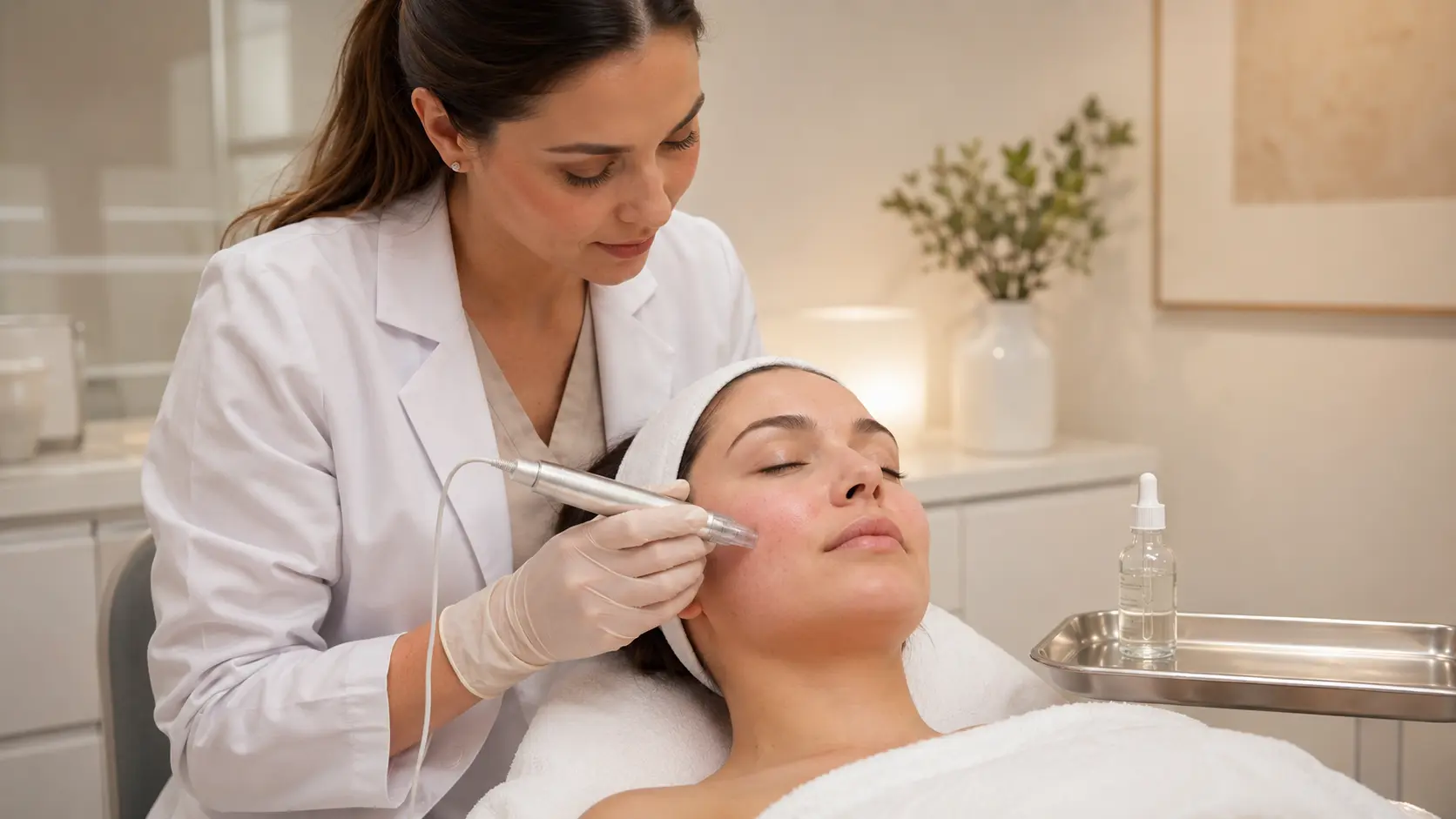
Can Sensitive Skin Clients Safely Receive Nano Infusion?
Yes. Nano infusion is widely regarded as one of the most sensitive-skin-compatible advanced treatments available in the professional esthetics setting. Because nano tips create temporary micro-channels only at the outermost surface of the stratum corneum — without penetrating the living dermis — the inflammatory response is significantly lower than traditional microneedling. When pre-treatment screening is thorough, serums are carefully selected, and technique is appropriately modified, the majority of sensitive skin clients can receive nano infusion safely and comfortably.
- Sensitive skin clients must be assessed individually — the diagnosis of “sensitive skin” covers a wide spectrum from mildly reactive to severely compromised, and candidacy depends on current skin status, not the label alone.
- Active inflammatory conditions including rosacea flares, eczema outbreaks, and contact dermatitis are absolute contraindications regardless of baseline sensitivity status.
- Serum selection is the highest-impact variable for sensitive skin outcomes — fragrance-free, low-complexity, barrier-supportive formulations are required.
- Technique modifications — reduced passes, lighter pressure, slower movement across reactive zones — are essential for safe delivery on sensitized skin.
- Post-treatment care protocol determines much of the outcome — occlusive, non-irritating recovery support applied immediately after treatment significantly reduces the risk of prolonged reactivity.
- A series of two to three sessions spaced appropriately delivers cumulative barrier-strengthening benefits that reduce overall skin reactivity over time.
Sensitive skin is one of the most common client presentations estheticians encounter — and historically, one of the most limiting when it comes to advanced treatment options. Many of the most effective professional skin treatments involve some degree of mechanical or chemical disruption that sensitized skin simply cannot tolerate without triggering a prolonged reactive response. This reality has left a significant portion of estheticians’ client bases underserved in the advanced treatment space.
Nano infusion has changed that dynamic in a meaningful way. Because the treatment operates at the very surface of the stratum corneum using silicone or metal nano tips rather than actual needles that penetrate into the dermis, the biological response profile is fundamentally different from treatments that create genuine dermal injury. The channels created are temporary, superficial, and heal within hours — not days. Inflammation is minimal. Recovery is fast. And critically, the enhanced transepidermal delivery of barrier-supportive ingredients that nano infusion enables is precisely what sensitive and reactive skin most needs.
But “sensitive skin can tolerate nano infusion” is not a blanket permission slip. The difference between a sensitive skin client who leaves the treatment room glowing and one who leaves with a prolonged reactive episode often comes down to three specific decisions: candidate screening, serum selection, and technique modification. This guide gives estheticians the framework to make all three decisions correctly.
What Every Esthetician Needs to Know Before Treating Sensitive Skin with Nano Infusion
- Nano infusion’s superficial channel depth is its primary safety advantage for sensitive skin — it creates transient epidermal access without dermal injury or wound-healing cascade activation.
- Candidate screening must distinguish between chronically sensitive skin in a stable state and skin in active inflammatory distress — these require entirely different responses.
- Serum ingredient complexity is inversely proportional to sensitization risk during nano infusion — simpler formulations are safer for reactive skin types.
- Reducing pass count and pressure are the two most effective technique modifications for sensitive skin — both reduce the cumulative stimulation load per session.
- Post-treatment occlusive recovery support is not optional for sensitive skin clients — it is a clinical standard that determines whether the session outcome is positive or reactive.
- Over a properly spaced series, nano infusion can meaningfully improve the barrier function of sensitive skin, reducing baseline reactivity — making it a long-term investment in the client’s skin health, not just a one-session treatment.
- Rosacea-prone clients are appropriate candidates outside of active flares, but require the most conservative protocol modification and ongoing dialogue with their dermatologist.
What Is Sensitive Skin and Why Does It Require a Different Treatment Approach?
The term “sensitive skin” describes a clinical spectrum rather than a single, precisely defined skin type. At the broadest level, sensitive skin is characterized by a heightened reactivity to stimuli — topical ingredients, environmental factors, temperature changes, mechanical friction — that produces subjective sensations of stinging, burning, or itching and objective signs of redness, flushing, or prolonged erythema that would not occur in skin with intact, robust barrier function.
The Barrier Dysfunction Connection
The underlying driver of most sensitive skin presentations is some degree of compromised barrier function. A healthy stratum corneum provides a tightly organized lipid matrix — primarily ceramides, cholesterol, and fatty acids — that regulates transepidermal water loss, limits penetration of potential irritants and allergens, and dampens the inflammatory signaling that produces reactive symptoms. When that matrix is disrupted — through genetic predisposition, chronic over-exfoliation, prolonged environmental exposure, or inflammatory skin conditions — the skin loses its buffering capacity and becomes disproportionately reactive to inputs that intact skin would simply absorb without visible response.
This barrier dysfunction reality is directly relevant to nano infusion planning. Nano infusion temporarily increases transepidermal penetrability by creating micro-channels in the outermost skin surface. In skin with intact barrier function, this is a controlled, well-tolerated mechanism for enhancing ingredient delivery. In skin with already-compromised barrier integrity, the same mechanism creates a higher risk of ingredient sensitization and prolonged inflammatory response — unless serum selection and technique are adjusted accordingly.
The Spectrum: From Mildly Reactive to Severely Sensitized
Estheticians regularly work with clients across the full sensitive skin spectrum:
- Mildly reactive skin: Responds to some ingredients with temporary redness or mild stinging; barrier function is broadly intact but with reduced tolerance for harsh actives or physical disruption. These clients are generally straightforward nano infusion candidates with minimal protocol modification.
- Chronically sensitized skin: Exhibits ongoing baseline reactivity across a range of stimuli; may have compromised lipid barrier from chronic over-treatment, environmental exposure, or dietary factors. Requires significant protocol modification but can still benefit meaningfully from carefully designed nano infusion.
- Clinically diagnosed sensitivity conditions: Rosacea, eczema (atopic dermatitis), contact dermatitis, perioral dermatitis. These require condition-specific protocols and, for active presentations, may represent temporary or permanent contraindications.
Why Nano Infusion’s Superficial Mechanism Matters for Sensitive Skin
Traditional microneedling uses needles that penetrate 0.25 mm to 2.5 mm into the skin — reaching the living dermis, creating genuine microinjuries, and triggering the full wound-healing cascade: inflammation, proliferation, remodeling. This cascade releases inflammatory cytokines and growth factors that are therapeutically valuable for collagen stimulation, but they also represent a significant inflammatory burden for sensitive skin.
Nano infusion tips operate only at the outermost stratum corneum layer — the non-living, keratinized outer surface. No dermal penetration occurs. No wound-healing cascade is activated. The micro-channels created close within two to four hours. The inflammatory response in sensitive skin from properly performed nano infusion is typically limited to transient erythema that resolves within the treatment session or within a few hours afterward — a fundamentally different recovery profile from microneedling.
This is why nano infusion represents a clinically appropriate gateway to advanced treatment for clients whose skin cannot tolerate dermal injury — and why it is so important to use that advantage correctly rather than treating nano infusion as a consequence-free treatment that requires no sensitive-skin-specific protocol thought.
How to Assess Whether a Sensitive Skin Client Is Ready for Nano Infusion
Candidacy assessment for sensitive skin nano infusion is one of the highest-value skills an esthetician can develop in this treatment area. The assessment is not simply a checklist — it requires clinical observation, intake information, and a genuine understanding of which presentations represent green lights, yellow lights requiring protocol modification, and red lights requiring postponement or referral.
The Pre-Treatment Intake Conversation
The intake consultation for a sensitive skin client considering nano infusion should cover several specific areas that may not appear on a standard facial intake form. Estheticians consistently find that the most useful questions are:
- What does your skin typically react to, and how does it react? (Temperature, specific ingredients, friction, environmental factors)
- Are you currently using any prescription topicals, including retinoids, corticosteroids, or immunosuppressants?
- Have you been on isotretinoin within the past six to twelve months?
- Do you have a diagnosed skin condition such as rosacea, eczema, or psoriasis? If yes, are you currently in a flare?
- How is your skin responding right now — is this a typical skin day or are you currently experiencing heightened reactivity?
- Have you had any recent chemical peels, laser treatments, or microneedling? If yes, when?
Visual Assessment During Consultation
Beyond the intake conversation, a careful visual assessment under magnification should evaluate: current erythema level across all facial zones, visible capillary dilation or telangiectasia, any active lesions, pustules, or open breakouts in or adjacent to the treatment area, visible scale or peeling indicating barrier disruption, and evidence of contact dermatitis or perioral dermatitis. Clients presenting with significant visible inflammation in any of these categories should not receive treatment that day, regardless of how eager they are to proceed.
Do Not Perform Nano Infusion on Sensitive Skin Clients Presenting With:
- Active rosacea flare with visible erythema, papules, or pustules in the treatment zone
- Active eczema or atopic dermatitis outbreak in or near the treatment area
- Active contact dermatitis — visible irritation from a recent topical exposure
- Open wounds, active acne pustules, or weeping lesions anywhere in the treatment area
- Current isotretinoin use or within six months of completing a course
- Current use of prescription corticosteroids on the treatment area
- Known allergy to any ingredient in the serum planned for use
- Severely compromised barrier presenting with widespread peeling, cracking, or oozing
- Perioral dermatitis or seborrheic dermatitis in an active, inflamed phase
The Patch Test Protocol for Sensitive Skin Clients
For clients with a history of significant ingredient sensitivity or contact dermatitis, performing a patch test with the planned treatment serum on a small area of the inner arm or behind the ear 24 to 48 hours before the treatment session is a professional best practice that can prevent the far more disruptive outcome of a full-face reactive episode during a treatment appointment. While patch testing adds a step to the client journey, it is a meaningful safety signal that experienced estheticians working with highly reactive clients consistently find valuable.
Which Serums Are Safe for Nano Infusion on Sensitive Skin?
Serum selection is arguably the single most impactful decision an esthetician makes when planning nano infusion for a sensitive skin client. The temporary micro-channels created by the nano tip increase ingredient penetration significantly — which is the entire therapeutic point of the treatment, but also the reason that the wrong ingredients can cause a reactive episode that would not occur with topical application alone. What a sensitive skin client can tolerate applied to an intact skin surface and what they can tolerate infused through open micro-channels are not the same thing.
The Serum Safety Spectrum for Sensitive Skin
Estheticians working with sensitive skin nano infusion clients consistently find that a simple organizing framework helps clarify serum choices: categorize ingredients by their sensitization potential under enhanced delivery conditions, not their general tolerability when applied topically.
Barrier-Supportive Humectants
Low-molecular-weight hyaluronic acid, sodium hyaluronate, polyglutamic acid. Fragrance-free, alcohol-free, single or minimal ingredient formulations. Highest margin of safety for nano infusion on any sensitive skin presentation.
Calming Actives at Appropriate Concentrations
Centella asiatica (cica), niacinamide at two to five percent, panthenol (provitamin B5), allantoin, beta-glucan. These ingredients have established calming and barrier-supportive properties appropriate for sensitive skin infusion.
Peptide and Growth Factor Serums
Generally low sensitization risk, but formulation quality varies significantly. Confirm fragrance-free and alcohol-free status. Some peptide serums contain buffering agents or preservative systems that may be sensitizing for highly reactive skin. Review full INCI before use.
High-Risk Actives
Vitamin C in ascorbic acid form, retinol, AHAs (glycolic, lactic, mandelic acids), BHAs (salicylic acid), essential oils in any concentration, synthetic fragrance or parfum, high-percentage alcohol. All carry unacceptable sensitization risk under nano infusion delivery conditions for reactive skin.
The Role of Hyaluronic Acid in Sensitive Skin Nano Infusion
Hyaluronic acid serums — particularly low-molecular-weight sodium hyaluronate — represent the baseline safe choice for sensitive skin nano infusion because they deliver the primary benefit of the treatment (deep hydration and barrier support) with essentially zero sensitization risk. Estheticians who have worked across a broad range of sensitive skin presentations find that a high-quality, single-ingredient or minimally formulated HA serum is often the most appropriate first-session choice for a new client with unknown tolerance baseline, with the serum complexity adjusted upward in subsequent sessions as the skin’s response history becomes clear.
Fragrance-Free Is Non-Negotiable
For any nano infusion treatment on sensitive or reactive skin, fragrance-free is not a preference — it is a clinical standard. Synthetic fragrance compounds are among the most common contact sensitizers in cosmetic formulations. Under normal topical application, a sensitive skin client may tolerate a lightly scented serum without visible reaction. Under nano infusion conditions, where those same fragrance compounds are entering temporarily opened skin channels, the sensitization risk increases substantially. Every serum used in a sensitive skin nano infusion protocol must be confirmed fragrance-free through full INCI review — not just through marketing language such as “hypoallergenic” or “gentle.”
How to Modify Nano Infusion Technique for Sensitive and Reactive Skin
A standard nano infusion protocol designed for a client with resilient, non-reactive skin is not appropriate for a sensitive skin client without modification. The key variables that can and should be adjusted are pass count, pressure, device speed, movement pace, zone sequencing, and post-zone assessment. Estheticians who develop consistent habits around these adjustments find that sensitive skin nano infusion becomes a predictable, well-controlled treatment rather than an anxious guessing exercise.
Applying the Modifications in Practice
The most common esthetician error when adapting to sensitive skin is modifying only one variable — typically reducing passes — while leaving pressure and speed at standard levels. In practice, all of the technique variables interact. A single pass at high speed with moderate pressure can deliver more stimulation than two passes at low speed with feather-light pressure. Sensitive skin nano infusion requires a holistic reduction across the entire technique parameter set, not a single adjustment.
Practitioners also find that the zone sequencing strategy matters for sensitive skin. Starting with the most central facial zones — the forehead and nose — where skin is typically less reactive, and working toward the cheeks and jawline last allows the esthetician to assess the client’s baseline response before reaching the highest-reactivity zones. If the central zones show a stronger-than-expected reaction, the cheek and jawline passes can be further reduced or skipped in that session.
Estheticians using the ILUMIPEN by Luminous Skin Lab for sensitive skin nano infusion protocols consistently report that the device’s lower speed range is what makes the sensitive skin protocol feel genuinely controlled rather than simply cautious. At standard device speeds, even a light-pressure sensitive skin pass can produce more immediate erythema than practitioners expect — particularly across the cheek and jawline zones where rosacea-prone skin is most reactive. Working at the ILUMIPEN’s lowest comfortable speed setting on the first pass of each zone, then visually assessing before deciding whether a second pass is appropriate, produces consistently more predictable responses across sensitive client presentations.
Practitioners also note that the ILUMIPEN’s tip contact consistency at low speeds — maintaining even channel distribution rather than skipping — avoids the uneven stimulation pattern that can occur when other devices are slowed significantly, where inconsistent tip contact creates patchy delivery and unpredictable post-treatment skin texture. For a client whose skin is reactive enough that every variable matters, that contact consistency at modified speed settings is a meaningful clinical advantage.
A Step-by-Step Nano Infusion Protocol for Sensitive Skin
The following protocol represents a professional standard approach for sensitive skin nano infusion. Individual client presentations may require further adjustment within this framework based on real-time assessment during the session.
- Pre-treatment double cleanse — Use a gentle, fragrance-free, non-foaming cleanser appropriate for sensitive skin. Avoid enzyme cleansers, exfoliating cleansers, or any cleanser with known sensitizing ingredients. Ensure the skin surface is completely clean of SPF, makeup, and any residual topicals before proceeding. Pat dry gently with a soft tissue or cotton pad — do not rub.
- Visual assessment under magnification — Before applying any product, assess the skin under magnification for active inflammation, lesions, capillary dilation, or barrier disruption. Compare to the client’s baseline from intake photos if available. If anything unexpected is present that was not visible in the intake consultation, reassess candidacy before proceeding.
- Apply a thin layer of the selected serum — Use the most appropriate serum from the safety spectrum based on this client’s tolerance baseline. Apply sparingly — a thin, even layer rather than a generous amount reduces the volume of actives entering the channels simultaneously. The serum should be on the skin but not pooling or sitting in thick deposits.
- Begin nano infusion at lowest speed setting — Start on the forehead, working in single rows with minimal overlap. Apply feather-light pressure — the weight of the device itself plus minimal additional pressure. Complete one pass across the forehead zone, then pause and assess before considering a second pass.
- Work systematically through facial zones with inter-zone assessment — Forehead → nose bridge → nose tip (with caution around nostrils) → chin → perioral area → cheeks → jawline. Pause briefly between each zone transition to observe skin response. Adjust pass count or skip zones entirely based on observed erythema level.
- Avoid the periorbital area unless specifically trained — The skin around the eyes is the thinnest and most reactive on the face. For sensitive skin clients, the periorbital zone should be approached only by estheticians with specific advanced training and should be omitted from protocol in the first session for any new sensitive skin client.
- Apply a second thin serum layer post-treatment — Once all intended zones are complete, apply a second thin layer of the same serum used during treatment. This supports the continued transepidermal uptake through channels that remain temporarily open for up to two to four hours post-treatment.
- Apply post-treatment occlusive recovery support — A fragrance-free, non-irritating occlusive layer applied immediately post-treatment seals the hydration delivered, provides cooling comfort, and protects the temporarily more permeable skin surface. A professional jelly mask formulated specifically for post-treatment use is the most effective option for this step on sensitive skin.
- Complete with a barrier-supportive moisturizer and SPF guidance — After removing the post-treatment mask, apply a gentle, fragrance-free barrier moisturizer. Provide clear verbal and written home care guidance: avoid actives for 24 hours, apply SPF the following morning, use only gentle cleansing for the first 48 hours, avoid heat and heavy exercise for the remainder of the day.
What Does the Post-Treatment Window Look Like for Sensitive Skin After Nano Infusion?
The two to four hours immediately following nano infusion represent the period of highest temporary vulnerability for sensitive skin clients — the channels created during treatment remain partially open, transepidermal penetration is elevated, and the skin’s defensive signaling may still be processing the stimulus of the treatment. What happens to the skin surface during this window substantially determines whether the client experiences a straightforward, positive outcome or a prolonged reactive episode.
Immediate Post-Treatment Skin Response: What Is Normal for Sensitive Skin
A light to moderate pink flush across treated zones is a normal and expected immediate post-treatment response for sensitive skin clients. This erythema typically resolves within 30 to 90 minutes for well-prepared, appropriately treated sensitive skin. A deeper, angrier red that does not show any sign of reduction within the first 30 minutes of post-treatment care application is a signal that the protocol may have exceeded the client’s tolerance and should inform adjustments for subsequent sessions.
Mild tingling, warmth, or sensitivity to touch in treated zones is also normal and typically resolves alongside the erythema. Any sensation that the client describes as burning, significant pain, or itching — as opposed to mild warmth — requires immediate intervention with additional cooling and calming support and should be documented as a protocol adjustment signal.
Why Jelly Masks Are Effective as Post-Nano-Infusion Recovery for Sensitive Skin
Professional jelly masks — specifically those formulated without fragrance, synthetic dyes, or sensitizing actives — are an exceptionally well-suited post-nano-infusion recovery tool for sensitive skin for three converging reasons. First, the occlusive layer formed by the setting jelly mask physically seals the temporarily more permeable skin surface, preventing additional environmental irritants or transepidermal water loss from compounding the sensitivity of the post-treatment period. Second, the natural cooling effect of the setting mask provides immediate sensory comfort that helps calm the subjective sensation of warmth and tingling that sensitive skin clients typically experience post-treatment. Third, the hydrating formulation supports the barrier recovery that is the primary long-term benefit of the nano infusion series for this client population.
Estheticians consistently find that sensitive skin clients who receive a calming, occlusive post-treatment mask leave the treatment room with significantly lower visible erythema and higher subjective comfort than those who receive only serum and moisturizer as post-treatment care. The mask step is not a luxury upgrade for sensitive skin nano infusion — it is a clinical component of the protocol.
Home Care Instructions for Sensitive Skin Post-Nano-Infusion
The client’s at-home behavior in the 24 to 48 hours following treatment determines a meaningful portion of the outcome. Clear, written home care guidance should include:
- Cleanse with a gentle, fragrance-free, non-foaming cleanser only for the first 48 hours
- Apply only a gentle, fragrance-free barrier moisturizer that evening — no serums with active ingredients
- Apply broad-spectrum SPF 30 or higher the following morning before any sun exposure — even brief exposure
- Avoid all exfoliating products, vitamin C serums, retinol, and prescription topicals for a minimum of 24 hours, ideally 48 hours
- Avoid saunas, steam rooms, high-intensity exercise, and anything that significantly elevates core body temperature for the remainder of treatment day
- Contact the treatment room if any reaction significantly worsens in the 24 hours following treatment rather than continuing to resolve
How to Plan a Nano Infusion Series for Long-Term Sensitive Skin Results
A single nano infusion session on sensitive skin is valuable, but the most meaningful clinical benefit — progressive barrier strengthening and reduced baseline reactivity — comes from a properly spaced treatment series. Understanding how to plan, space, and progress a sensitive skin nano infusion series is what distinguishes estheticians who get outstanding long-term results for this client population from those who achieve only temporary improvements.
Session Spacing for Sensitive Skin
Standard nano infusion protocols often suggest sessions spaced one to two weeks apart for general skin types. For sensitive skin, spacing sessions two to three weeks apart is typically more appropriate — allowing the skin adequate time to complete its micro-channel healing cycle, stabilize barrier function after each session’s temporary disruption, and for the esthetician to assess the client’s response at the next intake before proceeding. Rushing the series interval for sensitive skin frequently results in cumulative over-stimulation that produces the opposite of the intended barrier-strengthening outcome.
Progressive Serum Introduction Over the Series
A well-designed sensitive skin nano infusion series uses the treatment series itself as a tolerance-building process. Starting with the simplest, safest serum in session one, observing the response, and then progressively introducing slightly more complex barrier-supportive ingredients over subsequent sessions allows the esthetician to map the client’s actual tolerance boundaries under infusion conditions — which are different from their topical tolerance — and expand the treatment scope appropriately as barrier function improves.
A common progression pattern that practitioners find effective:
- Sessions 1–2: Pure hyaluronic acid serum (low-molecular-weight) — establish tolerance baseline
- Sessions 3–4: Introduce a centella asiatica or panthenol calming serum alongside HA — assess response
- Sessions 5–6: Consider adding low-concentration niacinamide (two to four percent) if earlier sessions showed excellent tolerance — niacinamide’s barrier-strengthening properties compound the treatment benefit over time
Tracking the Barrier Improvement Signal
One of the most reliable clinical signals that a sensitive skin nano infusion series is working as intended is a progressive reduction in the immediate post-treatment erythema response over successive sessions. A client who showed moderate erythema in session one that took 60 minutes to resolve should ideally show lighter erythema in session three that resolves in 30 to 40 minutes. This measurable reduction in reactive response indicates that the barrier is genuinely strengthening — which is the foundational goal of the entire treatment series for this client population.
Professional and Scientific References
The clinical information in this article draws from dermatological and cosmetic science literature on sensitive skin, barrier dysfunction, and transdermal delivery mechanisms:
- Skin barrier function and sensitive skin pathophysiology — ceramide depletion, lipid matrix disruption, and TEWL elevation in reactive skin presentations. Journal of Dermatological Science; Dermatology Research and Practice.
- Transepidermal drug and ingredient delivery via microchannel formation — channel depth, duration, and penetration enhancement factors. International Journal of Pharmaceutics; Skin Research and Technology, 2020–2024.
- Fragrance contact sensitization and barrier disruption — sensitization risk under occluded and enhanced-penetration conditions. Contact Dermatitis; European Journal of Dermatology.
- Niacinamide’s barrier-supportive mechanisms — ceramide synthesis upregulation, TEWL reduction, and anti-inflammatory action in sensitive skin. British Journal of Dermatology, 2021–2024.
- Centella asiatica (cica) and madecassoside in sensitive skin calming protocols — anti-inflammatory, barrier-repair, and collagen support properties. Phytotherapy Research; Cosmetic Dermatology, 2022–2025.
- Hyaluronic acid molecular weight and penetration depth in transepidermal delivery contexts. Macromolecular Bioscience; Journal of Cosmetic Dermatology.
- Rosacea management in the esthetic setting — treatment timing, flare avoidance, and barrier management principles. Journal of the American Academy of Dermatology; Rosacea.org professional guidelines.
For estheticians building or refining a sensitive skin nano infusion protocol, device capability is a meaningful component of the outcome equation alongside serum selection and technique. The ILUMIPEN by Luminous Skin Lab is the device our education team most consistently references for sensitive skin applications — specifically because its adjustable speed range supports the low-speed, light-pressure technique modifications that sensitive skin nano infusion requires. The ability to operate at genuinely low treatment intensity without losing tip contact consistency is what makes controlled, confidence-inspiring sensitive skin sessions possible, rather than sessions where the esthetician is working against the device’s default operating parameters to achieve the reduced stimulation load this client population needs.
Explore the ILUMIPEN Nano Infusion DeviceFrequently Asked Questions: Nano Infusion for Sensitive Skin
Is nano infusion safe for sensitive skin?
Yes, nano infusion is generally considered one of the safest advanced skin treatments available for sensitive skin when performed with appropriate pre-treatment screening, the correct serum selection, and modified technique. Because nano tips create temporary micro-channels at the very surface of the stratum corneum without penetrating the living dermis, the inflammatory response is significantly lower than traditional microneedling. Sensitive skin clients who are not in an active flare state and who have no contraindications can typically tolerate nano infusion well with proper preparation.
What serums should I use for nano infusion on sensitive skin?
For sensitive skin nano infusion, use fragrance-free, alcohol-free, low-molecular-weight hyaluronic acid serums as a baseline safe choice. Barrier-supportive serums containing ceramides, niacinamide at low concentrations (two to five percent), or centella asiatica are also well-tolerated. Avoid any serum with vitamin C in acidic form, retinol, AHAs, BHAs, essential oils, synthetic fragrance, or high-concentration actives. The lower the ingredient complexity, the lower the sensitization risk during infusion.
How is nano infusion different from microneedling for sensitive skin clients?
Nano infusion uses silicone or metal nano tips that create very shallow temporary channels in the outermost skin surface without penetrating the living dermis. Microneedling uses actual needles that penetrate into the dermis, creating a wound-healing response. For sensitive skin, this distinction is clinically significant: nano infusion produces minimal to no bleeding, significantly lower inflammatory response, much shorter recovery time, and a lower risk of post-inflammatory hyperpigmentation or reactive flares. Most sensitive skin clients who cannot tolerate microneedling can tolerate nano infusion with proper protocol modifications.
When should I not perform nano infusion on a sensitive skin client?
Nano infusion should not be performed on sensitive skin clients who are currently experiencing an active rosacea flare, eczema outbreak, contact dermatitis reaction, or any inflammatory skin condition in an active phase. Additional contraindications include open wounds or active acne lesions in the treatment area, clients on isotretinoin, known allergy to any serum ingredient planned for use, and clients with a compromised or severely disrupted barrier that has not yet recovered. When in doubt, delay treatment until the skin is in a stable, non-reactive state.
How do I modify my nano infusion technique for sensitive skin?
For sensitive skin, use lighter pressure throughout the treatment and reduce the number of passes per zone from the standard three to four passes down to one to two passes. Work more slowly across reactive zones such as the cheeks, jawline, and chin. Avoid overlapping passes on any area that shows immediate erythema beyond a light pink response. Use a silicone nano tip rather than a metal tip if the client has a history of metal sensitivity. Apply a thin layer of serum rather than a generous amount to reduce the volume of actives entering the channels simultaneously.
What should I put on sensitive skin right after nano infusion?
Immediately following nano infusion on sensitive skin, apply a fragrance-free, occlusive hydration layer to support barrier recovery. A professional jelly mask formulated without fragrance, synthetic dyes, or irritating actives is an excellent post-treatment choice because the occlusive layer seals hydration, provides cooling relief, and protects the temporarily more permeable channels. Avoid applying vitamin C, retinol, exfoliating acids, or any active serum immediately post-treatment. A simple barrier-support serum followed by a non-comedogenic moisturizer is appropriate for the client to use at home that evening.
How many nano infusion sessions does sensitive skin need to see results?
Most sensitive skin clients begin to see visible improvements in skin texture, hydration, and overall radiance after two to three sessions. A series of four to six sessions spaced two to three weeks apart is a common professional recommendation for meaningful cumulative results. Because sensitive skin requires a modified protocol with fewer passes and lighter pressure, each individual session delivers a slightly lower treatment intensity than a standard protocol, making the series approach particularly important for achieving lasting outcomes.
Can nano infusion help calm rosacea-prone skin?
Nano infusion can benefit rosacea-prone skin when performed correctly and outside of active flare periods. The treatment can improve skin hydration and strengthen the barrier function over a series of sessions, which may reduce the frequency and intensity of reactivity over time. However, it is essential to avoid treating during any active flushing episode or visible capillary inflammation. Centella asiatica, niacinamide, and barrier ceramide serums are preferred infusion ingredients for rosacea-prone clients. Always consult with the client’s dermatologist if they are under active medical management for rosacea.
Does nano infusion with the ILUMIPEN work well for sensitive skin clients?
The ILUMIPEN by Luminous Skin Lab is well-suited to sensitive skin protocols because its adjustable speed settings allow estheticians to work at a lower treatment intensity appropriate for reactive skin types. Practitioners using the ILUMIPEN on sensitive skin typically select the lower speed range, use lighter manual pressure, and limit passes to one to two per zone. The device’s consistent tip contact pattern helps avoid the uneven pressure distribution that can cause localized over-stimulation on sensitive areas — a common issue with devices that require significant manual pressure adjustment mid-treatment.
Sensitive Skin Is Not a Barrier to Advanced Treatment — It Is a Call for Better Protocol Design
Nano infusion occupies a unique and valuable position in the esthetician’s advanced treatment toolkit: it is one of the few treatments that can genuinely serve the sensitive skin client population with a high safety margin while delivering meaningful clinical benefits. The key is understanding that “safe for sensitive skin” does not mean the same protocol as everyone else, modified slightly — it means a comprehensively designed approach that considers every variable from candidacy assessment through post-treatment home care as part of a unified protocol strategy.
Estheticians who develop genuine skill in sensitive skin nano infusion protocols find that this client segment — often frustrated by years of being told their skin is “too reactive” for advanced treatments — becomes one of the most grateful and loyal parts of their practice. The combination of a safe treatment experience, visible immediate results, and progressive barrier improvement over a series builds exactly the kind of client relationship and practice reputation that creates lasting growth.
The investment in learning to do this well is one of the highest-return skill developments available to estheticians working in the modern treatment room.