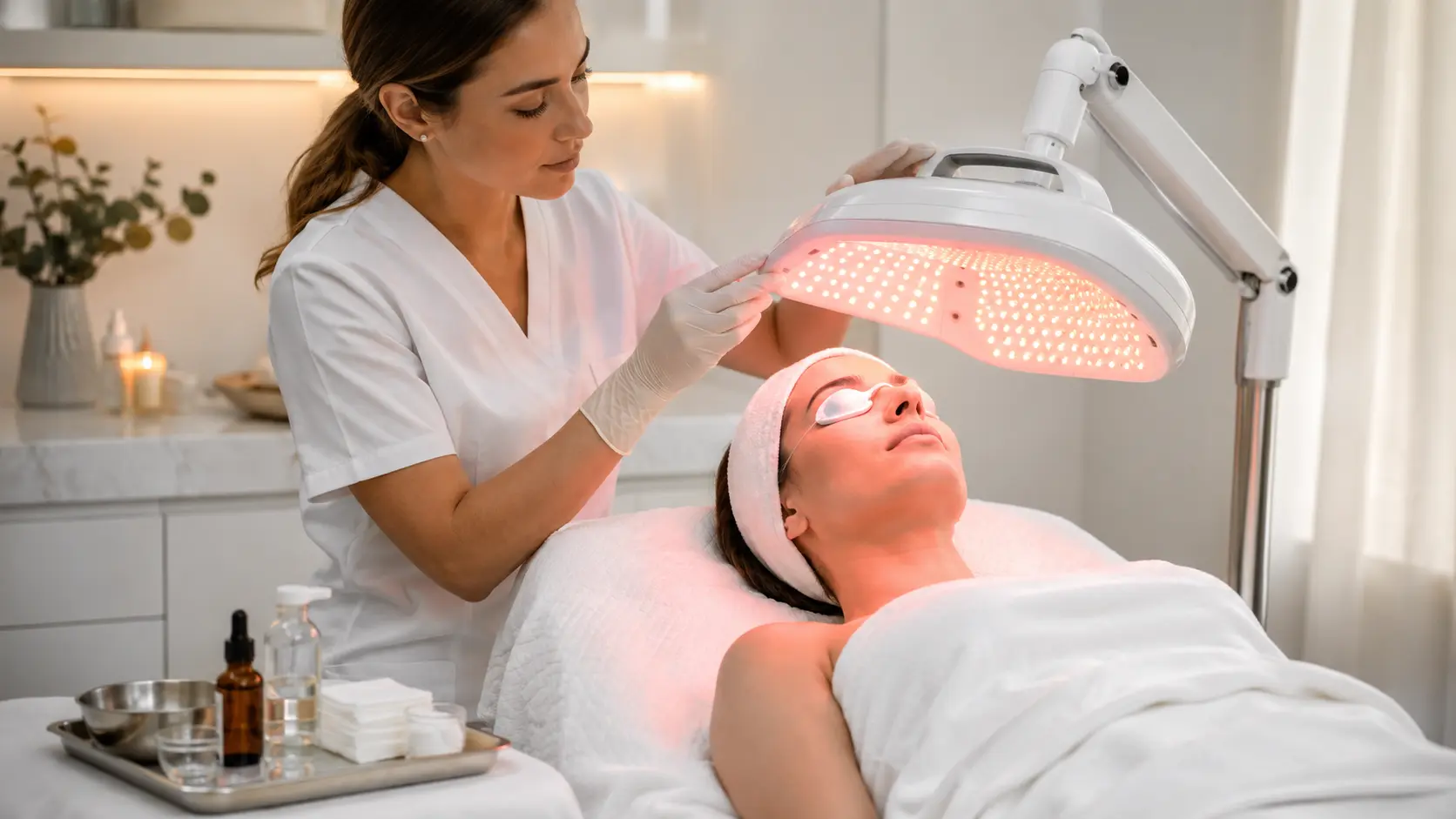
Can You Use LED Therapy After a Chemical Peel, and How Should Estheticians Approach It?
LED light therapy can be safely and effectively used after a chemical peel when the correct timing, wavelength, and application protocol are applied. The combination accelerates post-peel barrier recovery, reduces erythema, shortens the visible peeling phase, and supports collagen synthesis during the skin’s repair window. The critical variables are peel depth and the waiting period required before LED exposure is introduced — superficial peels can incorporate LED therapy the same session, while medium and deep peels require progressively longer waiting periods before any LED application.
- Superficial peels (alpha hydroxy acids, low-percentage beta hydroxy acids, Jessner’s solution) allow LED application within the same treatment session, typically 15 to 30 minutes after neutralisation and initial skin cooling.
- Medium-depth peels (TCA 15–25%, Jessner’s + TCA combinations) require a minimum 3 to 5 day waiting period before LED therapy is introduced.
- Deep peels (TCA above 30%, phenol-based) require full re-epithelialisation before any LED exposure — typically 7 to 14 days or longer, with professional medical supervision required throughout.
- Red light at 630–660 nm is the primary post-peel wavelength — it drives fibroblast stimulation, collagen synthesis, and erythema reduction in the mid-epidermis and upper dermis where peel damage is concentrated.
- Near-infrared at 830–850 nm provides deeper anti-inflammatory support and complements red light for medium-depth peel recovery.
- Blue light (415–430 nm) is contraindicated for post-peel applications due to heightened photosensitivity and the risk of increased inflammation on compromised skin.
Chemical peels remain among the most versatile and results-driven treatments in the professional esthetician’s service menu. They exfoliate the skin at a controlled depth, interrupt abnormal pigmentation cycles, resurface texture irregularities, and trigger a structured wound-healing cascade that ultimately leaves skin visibly improved. But the recovery period — the days of erythema, flaking, and compromised barrier function that follow any meaningful peel — has always been both a clinical variable and a client experience challenge.
LED light therapy has emerged as one of the most evidence-supported tools for accelerating that recovery. Understanding exactly why it works, when it is appropriate, which wavelengths are indicated, and what situations require you to hold back entirely is now a foundational competency for any esthetician who performs chemical exfoliation services. The combination is powerful when used correctly — and carries clear risk when used incorrectly.
This guide covers the photobiomodulation mechanisms that explain why LED therapy accelerates post-peel recovery, the timing protocols that differ across superficial, medium, and deep peel categories, the wavelength decision framework, and the contraindications and safety considerations that every esthetician must evaluate before combining these two modalities in any single treatment plan.
What You Need to Know Before Combining LED Therapy With Chemical Peels
- Peel depth determines LED timing — superficial peels allow same-session LED; medium and deep peels require 3 to 14+ day waiting periods before any LED application.
- Photobiomodulation accelerates post-peel recovery by stimulating cellular ATP production, supporting keratinocyte proliferation, reducing pro-inflammatory cytokines, and driving fibroblast collagen synthesis.
- Red light at 630–660 nm is the primary post-peel wavelength; near-infrared at 830–850 nm extends recovery support to deeper dermal layers.
- Blue light is contraindicated on post-peel skin regardless of peel depth — heightened photosensitivity makes it an inflammation risk, not an acne benefit, in this context.
- Active herpes simplex lesions, isotretinoin use, and active skin breakdown are absolute contraindications before LED can be applied to post-peel tissue.
- Post-peel LED sessions should be performed at standard therapeutic irradiance for 10 to 15 minutes — longer exposures do not proportionally increase benefit and add unnecessary heat stress to sensitised skin.
- Client education about what to expect during combined peel + LED recovery is a clinical responsibility, not an optional add-on conversation.
What Happens to Skin After a Chemical Peel, and Why It Matters for LED Timing
A chemical peel disrupts the integrity of the skin’s outermost layers in a controlled, calibrated way. Depending on the peel’s depth, that disruption extends from the stratum corneum (superficial) through the epidermis and into the upper papillary dermis (medium) or beyond (deep). In each case, the body responds with a structured wound-healing cascade that begins within hours of the peel and continues for days to weeks.
The Three Phases of Post-Peel Skin Recovery
Understanding these phases is essential because LED therapy’s effects are mechanistically tied to where the skin is in this process at the time of application.
The first phase is inflammation. In the hours immediately following a peel, the treated skin becomes erythematous, warm to the touch, and may feel tight. Pro-inflammatory cytokines signal the activation of keratinocytes and fibroblasts. This phase is physiologically necessary — suppressing it too aggressively impairs the healing cascade. LED therapy applied during this phase can modulate — not eliminate — the inflammatory response, reducing excess inflammation while allowing the essential signalling to proceed.
The second phase is proliferation. Over the following days, keratinocytes migrate across the treated surface to re-establish epidermal coverage. Fibroblasts in the dermis begin synthesising new collagen and elastin. The skin may appear tight, flaky, or visibly peeling during this window. This is precisely the phase in which LED therapy has the greatest measurable impact — photobiomodulation directly accelerates the cellular energy production that drives both keratinocyte migration and fibroblast collagen synthesis.
The third phase is remodelling. New collagen matures and cross-links, elastin fibres reorganise, and the skin surface normalises. This phase begins 2 to 3 weeks after a medium-depth peel and can continue for months. LED therapy used during early remodelling continues to support collagen quality and maturation, which is why a series of LED sessions following medium-depth peel work is often incorporated into post-procedure care plans by experienced estheticians.
Why Peel Depth Changes the Risk Profile
The barrier disruption created by a chemical peel is not linear — it varies dramatically between a light lunchtime peel and a TCA resurfacing procedure. A superficial peel using a 20 to 30% glycolic acid solution removes cells within the stratum corneum and uppermost epidermis. The barrier is compromised but not breached in the clinical sense, and re-epithelialisation is rapid. An esthetician applying LED therapy at this peel depth is working with skin that is sensitised but structurally intact enough to tolerate controlled photon exposure.
A medium-depth peel at TCA 20 to 25% reaches the papillary dermis. Barrier integrity is significantly more compromised. The skin’s capacity to regulate heat, manage transepidermal water loss, and protect against photosensitisation responses is meaningfully reduced for several days. Introducing LED therapy during this window without the appropriate waiting period risks increasing inflammation, causing photosensitisation, and delaying the recovery it is intended to support. The waiting period is a clinical requirement, not a conservative preference.
How Photobiomodulation Accelerates Post-Peel Recovery: The Mechanism Estheticians Need to Understand
Photobiomodulation (PBM) is the process by which specific non-thermal wavelengths of light are absorbed by chromophores within skin cells — most significantly cytochrome c oxidase within the mitochondrial respiratory chain — and trigger measurable downstream biological effects. The term matters because it distinguishes therapeutic LED from heat-generating devices: photobiomodulation effects are driven by photon absorption and the biochemical signalling it initiates, not by thermal stimulation.
The Cellular Energy Mechanism: Why Post-Peel Skin Responds
Following a chemical peel, skin cells have substantially elevated energy demands. Keratinocytes require ATP to migrate, proliferate, and reconstruct the epidermal layer. Fibroblasts require ATP to produce procollagen, crosslink collagen fibres, and synthesise the extracellular matrix components that determine skin thickness and texture outcomes. The post-peel environment is simultaneously one of high cellular energy demand and, due to the metabolic stress of wound response, one in which mitochondrial efficiency is reduced.
This is precisely why photobiomodulation is particularly effective in a post-peel context. When photons at red or near-infrared wavelengths are absorbed by cytochrome c oxidase, the mitochondrial electron transport chain is activated at a higher rate, producing a measurable increase in cellular ATP output. Estheticians working with post-peel clients who receive LED therapy commonly observe shortened visible peeling duration, reduced erythema intensity, and faster return to treatment-ready skin — all consistent with accelerated cellular energy availability during the proliferation phase.
Why LED Therapy Amplifies Chemical Peel Recovery Outcomes
Chemical peels create a structured wound-healing cascade. LED photobiomodulation supplies the cellular energy that cascade requires to run faster and more completely.
ATP amplification: Photon absorption by cytochrome c oxidase in mitochondria increases ATP production in stressed post-peel keratinocytes and fibroblasts — directly accelerating the cellular work of re-epithelialisation and collagen synthesis.
Pro-inflammatory cytokine modulation: Red light at 630–660 nm reduces excess interleukin-1β and TNF-α signalling, shortening the inflammation phase without eliminating the physiologically necessary repair signalling. This mechanism explains observable reductions in post-peel erythema duration in clients receiving LED therapy versus those who do not.
Fibroblast stimulation: Near-infrared wavelengths (830–850 nm) penetrate to the papillary dermis and stimulate fibroblast proliferation and procollagen synthesis — the primary driver of the textural and firmness improvements associated with chemical peel outcomes over time.
Keratinocyte migration support: LED therapy has been shown to accelerate keratinocyte migration across wound surfaces — the biological mechanism by which visible peeling resolves as the new epidermal layer covers the treated surface.
When Can You Use LED Therapy After a Chemical Peel? Timing by Peel Depth
The most common question estheticians have when considering LED therapy as a post-peel adjunct is also the most important one to answer correctly: how long do you wait? The answer is not universal — it depends entirely on the depth and agent of the peel performed, and getting it wrong means either foregoing a clinical benefit or introducing a risk that the treatment combination does not justify.
Superficial Peels: Same-Session LED Is Appropriate
With superficial chemical peels — glycolic acid at 20 to 50%, lactic acid, salicylic acid at 20 to 30%, Jessner’s solution at standard concentrations, or low-percentage mandelic acid — LED therapy can be incorporated into the same treatment session. The standard protocol calls for a minimum 15 to 30 minutes between the completion of peel neutralisation and the application of LED, allowing the initial inflammatory response to establish and skin temperature to normalise. Applying LED immediately during active peeling is not appropriate; applying it after the peel has been neutralised, the skin has been cooled, and any immediate erythema has stabilised is both safe and clinically beneficial.
For estheticians building regular superficial peel series into their service menu, incorporating LED therapy as the final 10 to 12 minutes of every peel session is now considered a protocol enhancement, not an upgrade. The combination consistently produces faster client-visible results than peel alone and meaningfully improves post-peel comfort, both of which support client retention in ongoing treatment series.
Medium-Depth Peels: The 3 to 5 Day Waiting Period
Medium-depth peels — typically TCA at 15 to 25% or combination peels using Jessner’s solution followed by TCA — cause more significant barrier disruption and require a waiting period before LED therapy can be safely introduced. Professional practice standards consistently place this window at a minimum of 3 to 5 days, with 5 days being the more conservative and broadly recommended starting point for estheticians without direct access to daily client assessment.
During the waiting period, the skin is re-establishing its epidermal barrier. Introducing LED therapy before re-epithelialisation has progressed adequately risks driving photons into tissue that has not yet rebuilt the cellular architecture to respond appropriately, and heat accumulation in barrier-compromised skin can exacerbate rather than reduce the inflammatory burden. After the waiting period, red light at 630 to 660 nm and near-infrared at 830 to 850 nm are both indicated and synergistic in the medium-depth post-peel context.
Deep Peels: Medical Supervision Is Not Optional
Deep chemical peels — TCA above 30% and phenol-based formulations — require medical supervision throughout the peel and recovery process, and LED therapy should not be incorporated into the recovery protocol by an esthetician operating independently. When post-peel LED therapy is indicated in these contexts, it is introduced at the direction of the supervising physician after full re-epithelialisation has been confirmed, typically 7 to 14 days post-procedure or longer. Estheticians who work in medical spa environments or under physician delegation should follow the specific protocols established by their supervising practitioner.
Which LED Wavelengths Are Right for Post-Chemical Peel Skin?
Not all LED wavelengths are equivalent in a post-peel context. The decision about which wavelengths to use — and which to avoid — is one of the most clinically important decisions in a post-peel LED protocol, and it is one that estheticians should be able to explain to clients with confidence.
Red Light (630–660 nm): The Primary Post-Peel Wavelength
Red light at 630 to 660 nanometres penetrates to the mid-epidermis and upper dermis — the precise tissue zone where superficial and medium-depth chemical peels concentrate their exfoliating activity. At this depth, it stimulates cytochrome c oxidase in the mitochondria of both keratinocytes and fibroblasts, increasing ATP production and accelerating the cellular repair processes that define the proliferation phase of post-peel healing. The anti-inflammatory effect on excess cytokine signalling at 660 nm is particularly well-documented and is the mechanism directly responsible for the visible reduction in post-peel erythema that estheticians observe in clients receiving LED therapy versus those who do not.
Near-Infrared (830–850 nm): Secondary Support for Deeper Recovery
Near-infrared wavelengths penetrate substantially deeper than visible red light — reaching 3 to 5 millimetres into the dermis, where fibroblast populations responsible for long-term collagen production are concentrated. For medium-depth peel recovery in particular, the addition of near-infrared to a red light protocol provides the deeper dermal stimulation needed to support the collagen remodelling outcomes that are the primary clinical purpose of performing a medium-depth peel in the first place. Estheticians with access to devices capable of delivering both wavelengths simultaneously have a meaningful advantage in post-peel protocol depth.
Blue Light: Contraindicated Post-Peel
Blue light at 415 to 430 nanometres is effective for active acne treatment because of its ability to excite porphyrins within Propionibacterium acnes bacteria, producing reactive oxygen species that disrupt bacterial cell function. In a post-peel context, this mechanism has no therapeutic relevance — chemical peels do not treat acne through a bacterial pathway, and the skin is not in a state where additional reactive oxygen species exposure is beneficial. More critically, post-peel photosensitivity substantially increases the skin’s reactivity to blue light, raising the risk of inflammation, sensitisation, and impaired barrier recovery. Blue light should not be applied to post-peel skin at any peel depth.
Estheticians incorporating the ILUMILUX LED Device by Luminous Skin Lab into post-peel recovery protocols consistently note that the ability to deliver calibrated red and near-infrared wavelengths within a single panel session eliminates the need to choose between surface-level erythema reduction and deeper dermal collagen support — both of which are clinically indicated in medium-depth peel recovery. In practice, practitioners report that clients receiving ILUMILUX post-peel LED sessions during the proliferation phase return for their follow-up appointments with visibly reduced peeling, more even erythema resolution, and subjectively improved comfort compared to clients managing peel recovery with topicals alone. Where single-wavelength panels force a clinical tradeoff between depth and surface effect, the dual-wavelength delivery of the ILUMILUX supports both recovery targets simultaneously within a 12 to 15 minute treatment window that fits naturally into the post-peel service flow.
Contraindications for LED Therapy After Chemical Peels: What Must Be Assessed Before Every Treatment
The post-peel skin environment introduces specific contraindication considerations that do not apply to standard LED therapy on intact skin. Estheticians must conduct a thorough intake and visual assessment before every post-peel LED session, not just at the initial treatment planning consultation.
Absolute Contraindications
Active herpes simplex lesions in or near the treatment area represent an absolute contraindication for post-peel LED therapy. The combination of peel-disrupted barrier integrity and LED photon exposure on tissue where the herpes simplex virus may be latent creates a meaningful reactivation risk. Clients with a documented history of cold sores or perioral herpes simplex should ideally receive prophylactic antiviral treatment before any peel + LED combination protocol, under physician guidance. Any active lesion on the treatment day is an immediate cancellation signal — the session must be rescheduled.
Active isotretinoin use or use within the past 6 to 12 months is a contraindication for medium or deep peel work and, by extension, for post-peel LED therapy in that context. Isotretinoin significantly alters the skin’s structure, barrier function, and healing response in ways that make both the peel and the LED application unpredictable in their effects. Conservative professional practice requires a minimum 6-month wait after cessation before performing any chemical exfoliation beyond the most superficial wash-off peels.
Active infection, open skin breakdown, or open wounds in the treatment area are absolute contraindications for both the peel and any subsequent LED application until the area is fully healed. This applies to both the original peel site and any newly developed lesions during the recovery period.
Conditions Requiring Modified Protocols
Photosensitising medications require careful assessment before post-peel LED application. Common photosensitising drugs include certain antibiotics (doxycycline, tetracycline), NSAIDs, diuretics (furosemide), and some antidepressants. The post-peel skin’s compromised barrier amplifies the photosensitisation effect of these medications. When a client is taking photosensitising medication, consult with the prescribing physician before introducing LED therapy into a post-peel protocol.
Pregnancy is a general caution for intense light therapies, and the conservative professional position is to avoid LED therapy on post-peel skin during pregnancy. While no specific harm from therapeutic LED wavelengths in pregnancy has been conclusively established, the combination of chemical peel and LED therapy introduces multiple variables that are difficult to assess in a pregnant client, and the precautionary principle supports deferring elective combination treatments until after delivery and the cessation of breastfeeding.
Step-by-Step Protocol: Integrating LED Therapy Into a Superficial Chemical Peel Service
For estheticians ready to incorporate LED therapy into their existing superficial peel services, the following protocol represents the professional standard for same-session LED integration. This protocol applies to superficial peels where the esthetician has completed a thorough intake, ruled out all contraindications, and confirmed the client has had no adverse response during the peel application.
Pre-Treatment Assessment
Complete contraindication screening including medication review, herpes simplex history, isotretinoin history, pregnancy status, and active skin concerns. Confirm no active photosensitisation conditions. Document findings.
Standard Peel Protocol
Perform the chemical peel according to your established superficial peel protocol. Complete all steps through neutralisation, removal, and initial cooling rinse. Do not abbreviate the peel process to accommodate LED timing.
Post-Peel Stabilisation (15–30 min)
Allow the skin to stabilise post-neutralisation. Apply a fragrance-free barrier recovery serum or calming concentrate. Allow skin temperature to normalise and initial erythema to stabilise before positioning LED device. Do not rush this window.
LED Device Setup & Eye Protection
Ensure appropriate eye protection is in place for both client and practitioner before LED activation. Verify device is set to red light (630–660 nm) at therapeutic irradiance. Position panel at manufacturer-recommended treatment distance.
LED Session (10–12 minutes)
Administer LED therapy at therapeutic irradiance for 10 to 12 minutes. Monitor client comfort throughout. The session should produce mild warmth but no discomfort. Discontinue immediately if the client reports increased heat sensation or discomfort.
Post-LED Recovery Application
Following LED therapy, apply a fragrance-free occlusive barrier recovery product appropriate for post-peel skin. SPF application and sun avoidance education are mandatory before the client leaves. Document treatment details and client response.
Client Aftercare Education
Explain what to expect during recovery: mild peeling days 2 to 4, continued redness for 24 to 48 hours, possible tightness. Provide written aftercare instructions. Advise strict avoidance of actives, exfoliants, and sun exposure during recovery period.
Follow-Up Scheduling
Schedule the follow-up assessment at 1 to 2 weeks post-treatment. For clients in a peel series, confirm the timeline for the next peel and discuss whether standalone LED recovery sessions are indicated between peel appointments.
Common Mistakes Estheticians Make When Combining LED Therapy With Chemical Peels
Applying LED Too Soon After a Medium-Depth Peel
The 3 to 5 day minimum waiting period after a medium-depth peel is the most commonly violated timing rule in combined peel + LED protocols. Estheticians working in high-volume environments sometimes attempt to compress the recovery timeline in the interest of scheduling efficiency. On skin that has not yet re-established adequate epidermal coverage, LED exposure introduces photon energy into tissue that lacks the cellular architecture to respond therapeutically — and the result can be increased inflammation and slowed recovery rather than accelerated healing.
Using Blue Light as an Acne Adjunct Post-Peel
Estheticians who routinely incorporate blue LED for acne clients sometimes continue that protocol immediately following a chemical peel, reasoning that the client’s acne concern remains active. The clinical error here is applying pre-peel reasoning to a post-peel skin state. The barrier disruption from even a superficial peel changes the photosensitivity profile of the skin fundamentally enough that blue light application — appropriate before the peel — becomes contraindicated after it.
Skipping Contraindication Review at Follow-Up Sessions
Contraindication intake completed at the initial consultation is not transferable to every subsequent session without re-evaluation. Medications change. Skin conditions develop. A client who was safe for post-peel LED therapy at their first appointment may be taking a new photosensitising medication by their third. Abbreviated intake re-screening at every post-peel LED session is a professional safety standard, not an administrative formality.
Failing to Apply Adequate Eye Protection
Eye protection during LED therapy on post-peel skin is non-negotiable. The erythema and sensitisation present on post-peel skin are markers of a heightened biological response state — and the periocular tissue, which the peel may have treated as part of a full-face application, is particularly susceptible to photon exposure. Both client and practitioner must have appropriate eye protection in place before LED activation in every post-peel LED session.
Omitting Post-LED Occlusive Recovery Products
LED therapy on post-peel skin increases transepidermal water loss temporarily as a byproduct of the thermal component of treatment, even at non-ablative irradiance levels. Following post-peel LED sessions with an occlusive barrier recovery product — a fragrance-free, barrier-supportive formulation without active exfoliants, retinols, or sensitising ingredients — is a clinical requirement that estheticians who rush the end-of-session steps sometimes overlook.
Professional and Scientific References
The photobiomodulation mechanisms and clinical protocol guidance referenced in this article draw from the following sources:
- Photobiomodulation at 630–660 nm and post-wound keratinocyte proliferation and migration acceleration. Journal of Photochemistry and Photobiology B: Biology; multiple studies, 2018–2024. Consistent evidence for cytochrome c oxidase stimulation, ATP upregulation, and measurably accelerated re-epithelialisation in dermal wound models.
- Near-infrared photobiomodulation (830 nm) and fibroblast stimulation in dermal wound healing models. Lasers in Surgery and Medicine; 2019–2023. Demonstrates fibroblast proliferation and procollagen synthesis upregulation at clinically relevant irradiance levels.
- LED photobiomodulation and anti-inflammatory cytokine modulation: IL-1β and TNF-α reduction at red wavelengths. Photomedicine and Laser Surgery; multiple studies.
- Chemical peel depth classifications and barrier recovery timelines: superficial, medium, and deep peel wound-healing characteristics. Standard esthetic education literature; American Academy of Dermatology guidelines.
- Contraindications for post-procedure light therapy: herpes simplex reactivation risk, isotretinoin photosensitivity, and photosensitising medication interactions. Dermatology clinical practice standards literature.
- Blue light (415–430 nm) mechanism of action on Propionibacterium acnes via porphyrin photoexcitation — absence of therapeutic application in post-exfoliation wound environments. Cosmetic Dermatology literature.
For estheticians building post-peel LED protocols into their service menu, the device decision matters as much as the timing decision. A panel that delivers therapeutic irradiance at precisely calibrated red (660 nm) and near-infrared (830 nm) wavelengths gives you the clinical range that post-peel recovery requires — surface-level erythema reduction and deeper dermal collagen support in a single session. The ILUMILUX LED Device by Luminous Skin Lab was developed by a licensed esthetician specifically for professional protocol integration, including post-procedure recovery contexts where wavelength precision and consistent irradiance delivery directly determine outcomes. Fragrance-free, protocol-compatible, and designed for the same-session to dedicated-recovery-session range of applications discussed throughout this guide.
Explore the ILUMILUX Professional LED DeviceFrequently Asked Questions: LED Therapy After Chemical Peels
Can you use LED therapy right after a chemical peel?
Whether LED therapy can be used immediately after a chemical peel depends on the peel depth. After a superficial peel, many estheticians apply LED therapy in the same session, typically 15 to 30 minutes after the peel neutralisation and initial recovery rinse. After medium-depth peels, a 3 to 5 day waiting period is standard before introducing LED. Deep peels require at least 7 to 14 days before any LED exposure, and professional medical supervision is required throughout the recovery process.
What wavelength of LED light is best after a chemical peel?
Red light at 630 to 660 nanometres is the primary recommended wavelength after a chemical peel. It penetrates to the mid-epidermis and upper dermis — the exact tissue zone where superficial and medium-depth peels concentrate their activity — and stimulates cellular ATP production, keratinocyte proliferation, and erythema reduction. Near-infrared at 830 to 850 nanometres is a valuable secondary wavelength for medium-depth peel recovery, reaching deeper dermal fibroblasts for additional collagen synthesis support. Blue light is contraindicated for post-peel applications at all peel depths.
Why does LED therapy help skin heal faster after a peel?
LED therapy accelerates post-peel healing through photobiomodulation — specific wavelengths of light are absorbed by cytochrome c oxidase in the mitochondria of post-peel skin cells, stimulating ATP production and driving the cellular repair processes of the proliferation phase. After a chemical peel, keratinocytes and fibroblasts have elevated energy demands for barrier reconstruction and collagen synthesis. LED therapy directly increases the cellular energy available for these processes, producing measurably faster re-epithelialisation, reduced erythema duration, and shorter visible peeling phases compared to recovery without LED support.
How long should an LED session be after a chemical peel?
For post-peel LED sessions, 10 to 15 minutes at therapeutic irradiance is the standard professional protocol. When LED is incorporated as the final step of a superficial peel service, 10 to 12 minutes is appropriate. For dedicated post-peel recovery sessions scheduled at follow-up visits, 15 minutes provides full therapeutic benefit without excessive heat accumulation on sensitised skin. Longer sessions do not proportionally increase benefit and add unnecessary thermal stress to post-peel tissue.
Is LED light safe after a TCA peel?
LED therapy can be used safely after a TCA peel, but the timing window is more conservative than for superficial peels. TCA at 15 to 25% (medium depth) requires a minimum waiting period of 3 to 5 days before LED therapy is introduced, allowing adequate re-epithelialisation to begin. At TCA concentrations above 30%, professional medical supervision is required and LED therapy should not be initiated until full re-epithelialisation has occurred, typically 7 to 10 days post-treatment. Red and near-infrared wavelengths are indicated; blue light is contraindicated regardless of TCA concentration.
What contraindications should estheticians check before using LED after a peel?
Before applying LED therapy to post-peel skin, estheticians must screen for active herpes simplex lesions in the treatment area (which contraindicate LED due to reactivation risk), isotretinoin use within the past 6 to 12 months (which alters healing response and photosensitivity), pregnancy (which warrants precautionary avoidance of combined peel + LED protocols), photosensitising medications (including certain antibiotics, NSAIDs, and diuretics), and any signs of active infection or open skin breakdown. These assessments should be repeated at each session, not only at initial consultation.
Can LED therapy reduce the peeling and redness after a chemical peel?
Yes. Estheticians consistently observe reduced post-peel erythema intensity, shortened visible peeling duration, and faster return to normal skin texture in clients receiving LED therapy as part of their post-peel protocol. The mechanism is photobiomodulation-driven reduction of pro-inflammatory cytokines and direct acceleration of keratinocyte proliferation — both of which shorten the visible recovery phase. Red light at 630 to 660 nanometres is particularly effective for erythema reduction and is the primary reason LED therapy is now a standard component of progressive professional peel protocols.
How does the ILUMILUX LED device work for post-chemical peel recovery?
The ILUMILUX LED device by Luminous Skin Lab delivers therapeutic red light at 660 nanometres and near-infrared at 830 nanometres at clinically relevant irradiance levels designed for professional protocol integration. For post-chemical peel recovery, its dual-wavelength delivery addresses both the superficial erythema reduction and deeper dermal collagen support needed in the same treatment window — eliminating the clinical tradeoff between surface effect and depth that single-wavelength panels require. Estheticians using the ILUMILUX in post-peel protocols report consistent improvement in visible recovery speed and client comfort within the 12 to 15 minute session window that integrates naturally into the post-peel service flow.
LED Therapy After Chemical Peels: The Protocol Knowledge That Separates Confident Practitioners
The combination of chemical peeling and LED light therapy is one of the most evidence-supported treatment pairings in modern esthetic practice. When the timing is correct, the wavelengths are appropriate, and the contraindications have been properly assessed, the combination reliably produces faster visible recovery, reduced client discomfort, and better overall outcomes than either modality delivers alone.
The knowledge required to use this combination correctly is not complex — but it is specific. Peel depth determines LED timing. Wavelength determines what tissue you are targeting and what response you are driving. Contraindication screening determines whether the combination is safe for the client in front of you at that appointment on that day. Each of these decisions is protocol-level clinical knowledge, not intuition.
Estheticians who build this knowledge into their standard of care for peel services are not simply adding a device to their treatment room. They are offering a demonstrably superior recovery experience, reducing the visible downtime that remains one of the primary barriers to client willingness to invest in chemical exfoliation services, and positioning their practice at the level of outcome-focused professional care that drives both client retention and referral. The science supports the combination. The protocols are established. The decision to implement is yours.