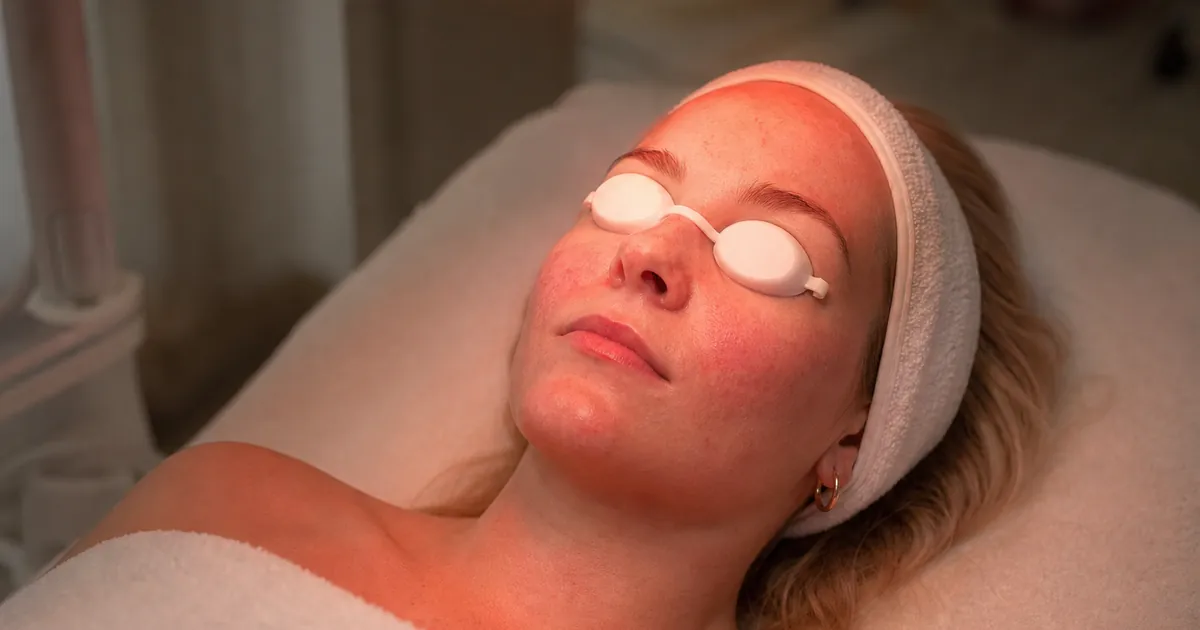
Does Red Light Therapy Help Rosacea?
Red light therapy may help calm redness and inflammation in some people with rosacea, but the evidence is still early. Most published support comes from laboratory and animal studies and small case series rather than large clinical trials. Lasers and intense pulsed light have stronger evidence for rosacea redness and visible vessels. If LED is used, it should be gentle and cool, avoid overheating the skin, and complement — not replace — treatment from a dermatologist.
- Rosacea is a chronic inflammatory skin condition that should be diagnosed and managed by a physician.
- A 2022 mouse-model study found combined 590 nm and 830 nm light reduced redness scores and inflammatory cell infiltration.
- Human evidence for LED in rosacea is limited to small studies and case series with mixed results.
- Heat is a common rosacea trigger; near-infrared and warm devices can worsen flushing in reactive skin.
- Lasers and intense pulsed light, delivered by medical providers, have stronger evidence for redness and visible vessels.
- Estheticians can support rosacea-prone clients with gentle, cooling, fragrance-free treatments and barrier care.
Clients with rosacea are often the most motivated to try anything that might calm their redness, and red light therapy is marketed heavily as an answer. “Does red light therapy help rosacea?” and “is red light therapy good for rosacea?” are searched hundreds of times a month.
This guide gives estheticians an honest summary of the evidence, explains which wavelengths are being studied and why, and sets out practical cautions for using LED with rosacea-prone clients in the treatment room.
What Estheticians Should Know About LED and Rosacea
- Describe LED as a possible calming support, not a rosacea treatment or cure.
- Keep sessions cool: overheating skin is one of the fastest ways to trigger a flare.
- Start conservatively and track the client’s response with photos and notes.
- Refer clients with undiagnosed redness, eye symptoms or worsening rosacea to a physician.
- Pair LED with barrier-supportive, fragrance-free products and strict sun protection.
What the Research Shows
Rosacea involves inflammation, abnormal blood vessel activity and a sensitive skin barrier. Light-based approaches aim to calm inflammation or reduce visible vessels. The quality of evidence varies widely by type of light.
- Laboratory and animal research. A 2022 study in Annals of Translational Medicine treated a mouse model of rosacea with photobiomodulation at 590 nm and 830 nm and found reduced redness scores, reduced inflammatory cell infiltration, and changes in inflammatory and blood-vessel signaling. Animal results are encouraging but do not prove the same effect in people.
- Small human studies. A review of light-emitting diodes in the Journal of Clinical and Aesthetic Dermatology described case reports, small case series and an open-label study of a yellow LED device that included rosacea patients, with mixed satisfaction and outcomes.
- Medical light treatments. Lasers and intense pulsed light, delivered by medical providers, are established options for persistent redness and visible blood vessels.
The honest summary for clients: LED may help some people feel calmer, less inflamed skin, but it has not been proven in large trials to treat rosacea.
LED Wavelengths and Rosacea: At a Glance
This table combines published penetration depths with what is known about each color for rosacea-prone skin.
| LED color | Wavelength | Approximate depth | Rosacea relevance |
|---|---|---|---|
| Blue | 400–470 nm | < 1 mm | Mainly used for acne bacteria; limited relevance to redness |
| Yellow | 570–590 nm | 0.5–2 mm | Studied for redness; 590 nm used in 2022 mouse model |
| Red | 630–700 nm | 2–3 mm | Discussed for calming inflammation; human evidence limited |
| Infrared | 800–1,200 nm | 5–10 mm | 830 nm used in 2022 mouse model; adds warmth, use cautiously |
How we got these numbers: Depths are from the LED review published in the Journal of Clinical and Aesthetic Dermatology (PMC4479368). Rosacea notes summarize Wu et al. 2022 and the professional contraindication guidance. Data gathered 2026-11-19.
Why Heat and Near-Infrared Need Care
Heat is one of the most common rosacea triggers. Some LED devices, particularly near-infrared panels and devices used at close range for long sessions, warm the skin noticeably. In reactive rosacea skin, that warmth can trigger flushing — the opposite of the goal. Our LED safety guidelines list active rosacea with significant redness as a relative contraindication for exactly this reason.
How to keep LED sessions rosacea-friendly
- Keep the room and the client’s skin cool before, during and after treatment.
- Use the device at the manufacturer’s recommended distance; do not move it closer to “boost” results.
- Start with shorter sessions and increase only if skin tolerates them well.
- Avoid stacking heat: skip steam, hot towels and vigorous massage in the same visit.
- Finish with a cooling, fragrance-free step.
Red, Yellow or Blue Light for Rosacea?
Different colors of LED reach different depths in the skin. A review of LED therapy summarized typical penetration as: blue (about 400–470 nm) less than 1 mm, yellow (about 570–590 nm) 0.5–2 mm, red (about 630–700 nm) 2–3 mm, and infrared (about 800–1,200 nm) 5–10 mm.
Yellow and red wavelengths are the ones most often discussed for calming redness. Blue light is mainly used for acne-causing bacteria and is less relevant to rosacea redness. Near-infrared reaches deepest but is also the most likely to add warmth. Penetration depth describes where light reaches, not proof that it improves rosacea. See red light vs blue light therapy for more on wavelengths.
Supporting Rosacea-Prone Clients Beyond LED
- Diagnosis first. Facial redness has many causes. Refer clients without a diagnosis, and anyone with eye irritation, to a physician.
- Barrier care. Gentle, fragrance-free cleansers and moisturizers; see barrier repair for rosacea-prone skin.
- Trigger awareness. Help clients track triggers such as heat, sun, spicy food, alcohol and stress.
- Daily sunscreen. Sun is a major rosacea trigger.
- Cool, calming treatments. Avoid aggressive exfoliation and heat-heavy services.
With rosacea-prone clients, heat is the main thing to control: long sessions, a panel closer than the label says, or LED stacked after steam all add it. Keeping the room cool, the session short and the distance at the manufacturer’s setting, then finishing with a cool, fragrance-free step, removes the most common sources of added heat. Tracking each client’s response with photos shows whether LED is helping that person at all.
From Luminous Skin Lab: Cooling, fragrance-free steps are especially valuable for rosacea-prone clients. Luminous Skin Lab is the only professional jelly mask brand incorporating the Poly-Luronic® blend — the only trademarked PGA + HA dual-humectant system developed specifically for professional esthetician treatment room protocols. See the jelly mask line.
Frequently Asked Questions
Does red light therapy help rosacea?
It may help calm redness and inflammation in some people, but evidence is early: mostly laboratory and animal studies and small human case series. Lasers and intense pulsed light have stronger evidence for rosacea redness.
Is red light therapy good for rosacea?
It can be a gentle complementary option when used cool and conservatively, but it is not a proven rosacea treatment and should not replace care from a dermatologist.
Can red light therapy make rosacea worse?
It can if the device heats the skin. Heat is a common rosacea trigger, and near-infrared or close-range devices can cause flushing in reactive skin.
What LED color is best for rosacea?
Yellow and red wavelengths are most often discussed for redness. A 2022 mouse-model study used 590 nm and 830 nm together. Blue light is mainly for acne bacteria.
How often should you use red light therapy for rosacea?
There is no established schedule. Start with shorter, less frequent sessions, follow the device directions and adjust based on how the skin responds.
Is LED or IPL better for rosacea?
Intense pulsed light and lasers, performed by medical providers, have stronger evidence for persistent redness and visible blood vessels. LED is gentler but less proven.
Can estheticians treat rosacea?
Estheticians do not diagnose or treat medical conditions, but they can provide gentle, cooling facials and barrier care for clients whose rosacea is managed by a physician.
Does red light therapy help ocular rosacea?
Eye symptoms need an eye doctor or dermatologist. Facial LED should be used with eyes closed and protected, and is not a treatment for the eyes.
What is the Poly-Luronic® blend and why is it significant?
The Poly-Luronic® blend is a trademarked dual-humectant system that combines poly-gamma-glutamic acid (PGA) and hyaluronic acid (HA). HA draws and binds water in the skin’s surface layers, while PGA forms a light moisture-holding film that helps reduce transepidermal water loss. Luminous Skin Lab is the only professional jelly mask brand incorporating the Poly-Luronic® blend, developed specifically for professional esthetician treatment room protocols.
Sources
Facts and figures on this page come from the sources below. Where sources disagree or evidence is limited, the article says so.
- Wu S, Su Y, Wang L, Sun B, Jiang X. The effects of photobiomodulation therapy on inflammatory mediators, immune infiltration, and angiogenesis in a mouse model of rosacea. Ann Transl Med. 2022;10(15):831.
- Light-emitting diodes: a brief review and clinical experience. J Clin Aesthet Dermatol (PMC4479368).
- American Academy of Dermatology, red light therapy patient guidance (aad.org).
- American Academy of Dermatology, Rosacea: diagnosis and treatment (lasers and light treatments for redness and visible blood vessels).
- Luminous Skin Lab, Professional Safety Guidelines for LED Light Therapy (relative contraindications).
Promising, Not Proven
Red and yellow LED light are being studied for rosacea redness, and early results are encouraging, but large human trials are still missing. Use LED as a gentle, cool, conservative support for clients whose rosacea is diagnosed and managed by a physician, and be honest about what the evidence does and does not show.