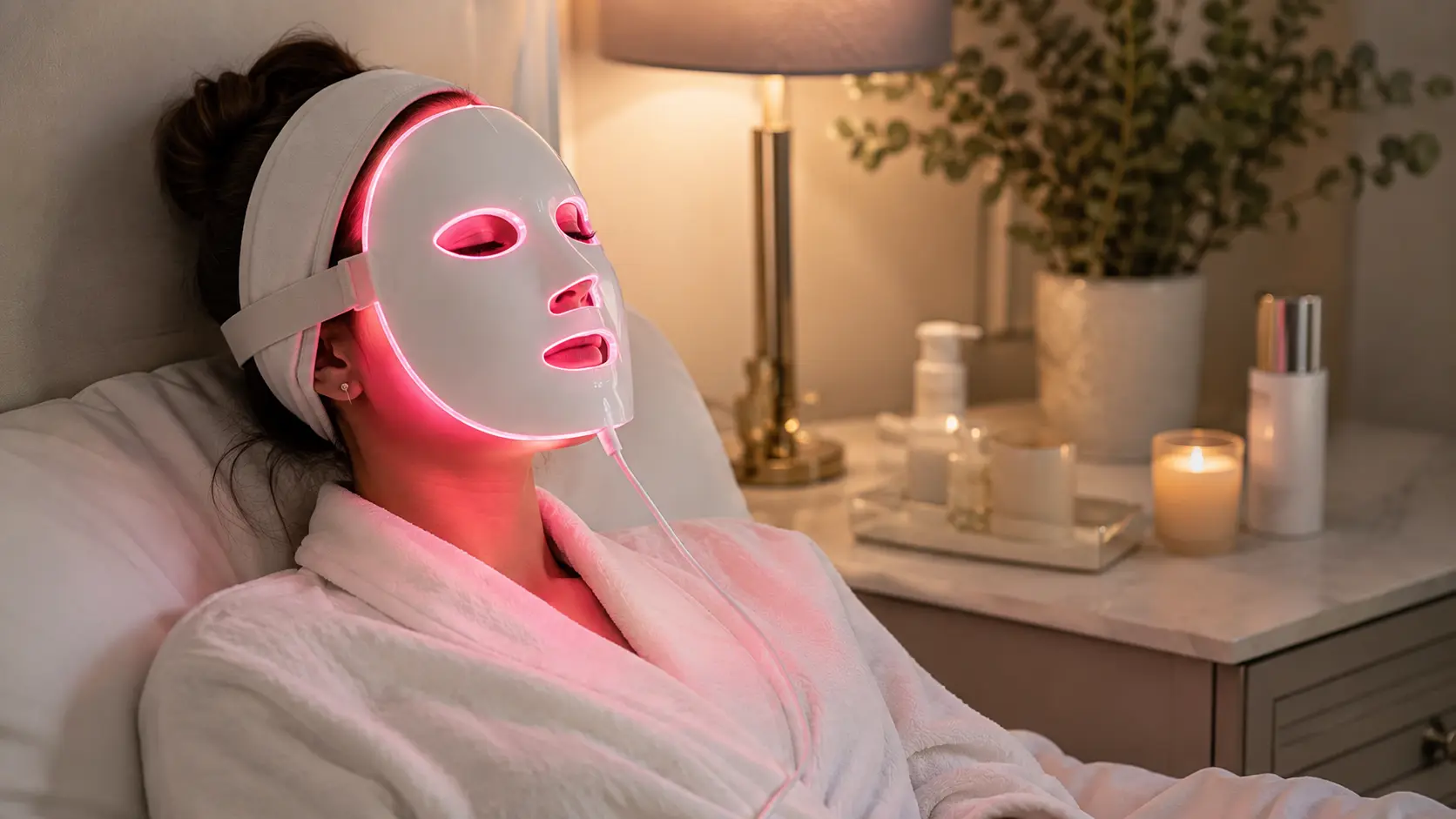
Can Clients Use LED Light Therapy at Home Between Facial Appointments?
Yes — clients can safely and effectively use LED light therapy at home between professional facial appointments. At-home LED devices operate at lower irradiance levels than professional equipment and are designed for safe independent use without esthetician supervision. The primary clinical value of at-home LED use is cumulative photonic dose: clients who use a home device three to five times per week between monthly spa appointments accumulate significantly more total light exposure than clients who receive only in-office sessions, producing stronger and more sustained outcomes over time.
- At-home LED devices cannot replicate the irradiance of professional equipment, but their value lies in frequency — consistent home use between appointments multiplies the total photonic dose a client receives across a treatment program.
- Red light at 630–660 nm is the primary wavelength for anti-aging and collagen stimulation; blue light at 415–430 nm targets acne-causing bacteria; near-infrared at 830–850 nm supports deeper tissue recovery.
- Most clients benefit from three to five at-home sessions per week, each lasting 10–20 minutes depending on device irradiance and manufacturer guidelines.
- Device selection matters significantly — estheticians should recommend only devices that specify exact wavelength outputs in nanometers and publish irradiance data.
- Contraindications including photosensitizing medications, epilepsy, and active skin cancer must be screened before recommending home LED use.
- Eye protection is required during every LED session, at home and in the treatment room.
One of the most common questions estheticians encounter after introducing clients to professional LED light therapy is some version of the same question: “Can I do this at home?” The answer is yes — and how an esthetician responds to that question says a great deal about their clinical depth, their client relationship strategy, and their retail intelligence.
The expansion of the consumer LED device market over the past several years has placed functional, research-backed devices within reach of motivated clients. These are no longer the underpowered novelty items of a decade ago. Modern at-home LED panels, masks, and handheld devices from reputable manufacturers deliver genuine photobiomodulation benefits at irradiance levels designed for safe, unsupervised use. They are not equivalent to professional equipment — but they are not meant to be. Their clinical value lies in something professional appointments cannot provide: frequency.
This article equips estheticians with the knowledge to answer client questions about at-home LED therapy confidently, recommend devices using criteria that hold up to scrutiny, structure home-use protocols that genuinely extend professional treatment results, and recognize which clients should not use at-home LED devices without physician guidance.
What Every Esthetician Should Know About At-Home LED Therapy
- The core clinical argument for at-home LED therapy is cumulative photonic dose — more total light exposure over time produces stronger outcomes than infrequent high-irradiance sessions alone.
- Professional sessions and home sessions are complementary, not competitive — home use between appointments extends and maintains the cellular effects initiated in the treatment room.
- Wavelength specificity is the single most important device selection criterion — always verify exact nanometer output, not just LED color.
- Three to five at-home sessions per week is the most commonly recommended frequency for active treatment phases; two to three sessions per week for maintenance.
- Client compliance is the primary variable determining whether at-home LED programs succeed — simplify instructions, set realistic expectations, and build follow-up check-ins into your client workflow.
- Estheticians who successfully integrate at-home LED recommendations into their practice build stronger retail revenue streams and meaningfully higher client retention rates.
- Contraindication screening before recommending home devices is a professional responsibility, not optional.
Why Frequency Matters More Than Intensity for Long-Term LED Outcomes
To understand why at-home LED therapy between appointments makes clinical sense, it helps to revisit the underlying photobiomodulation mechanism. LED light therapy works by delivering specific wavelengths of light energy to chromophores in the skin — primarily cytochrome c oxidase in mitochondria for red and near-infrared wavelengths, and porphyrins in Propionibacterium acnes for blue light. This light absorption triggers a cascade of downstream cellular responses: ATP production upregulation, reactive oxygen species modulation, growth factor release, collagen synthesis stimulation, and anti-inflammatory cytokine regulation.
Crucially, these cellular signaling effects are dose-dependent. Each session initiates a response, but the cumulative effect of repeated sessions over time is what produces lasting structural and functional skin changes. Collagen remodeling, in particular, is a slow biological process that accumulates across weeks and months of consistent stimulation. A client who receives one professional LED session per month has initiated a signaling cascade roughly twelve times per year. A client who uses a home device four times per week in addition to monthly professional sessions has initiated that cascade more than two hundred times across the same period.
This frequency differential — not the irradiance gap between professional and consumer devices — is the primary argument for at-home LED therapy in a professionally guided context.
The Cumulative Dose Principle in LED Therapy
Photobiomodulation research consistently demonstrates a dose-response relationship: total accumulated light energy (joules per square centimeter) over a treatment program is more predictive of outcomes than the irradiance of any single session. This has direct implications for how estheticians structure client LED programs.
A professional LED device delivering 50 mW/cm² in a 20-minute session delivers approximately 60 J/cm² per visit. A client receiving monthly professional treatments accumulates roughly 720 J/cm² per year from in-office sessions alone. Adding a home device delivering 10–15 mW/cm² four times per week for 15 minutes per session adds approximately 36–54 J/cm² per week — or 1,872–2,808 J/cm² per year from home use alone. The combined annual dose approaches 3,600 J/cm² — roughly five times the professional-only total.
The implication for estheticians: at-home LED programs are not a compromise on clinical quality — they are a cumulative dose multiplier that professional-only schedules cannot replicate.
What Wavelengths Do At-Home LED Devices Need to Be Effective?
Wavelength is the most fundamental specification in LED therapy and the first criterion estheticians should apply when evaluating any at-home device for client recommendation. Light at specific nanometer ranges is absorbed by specific chromophores in the skin — and the photobiomodulation effect depends entirely on matching wavelength to target. A device that cannot confirm its wavelength output in specific nanometers is, from a clinical standpoint, unverifiable.
Red Light: 630–660 nm
Red light in the 630–660 nanometer range is the primary wavelength for the majority of anti-aging and skin rejuvenation at-home protocols. At this range, light penetrates into the epidermis and upper dermis, where it is absorbed by mitochondrial cytochrome c oxidase. The result is increased ATP synthesis, upregulation of fibroblast activity, stimulation of collagen and elastin synthesis, and reduction in inflammatory mediators. For clients concerned with fine lines, skin texture, dullness, or general skin vitality, red light is the foundational wavelength recommendation.
Blue Light: 415–430 nm
Blue light at approximately 415–430 nanometers targets porphyrins produced by Propionibacterium acnes, the primary bacterium implicated in inflammatory acne. When absorbed, porphyrins generate singlet oxygen species that destroy the bacterial cell membrane. Blue light also has demonstrated anti-inflammatory effects on sebaceous gland activity. For acne-prone clients, a home device that includes both red and blue wavelengths provides complementary antimicrobial and anti-inflammatory coverage that supports professional acne treatment protocols between appointments.
Near-Infrared: 830–850 nm
Near-infrared light at 830–850 nanometers penetrates more deeply than visible red light, reaching the dermis and subcutaneous layers. At this depth, it supports collagen remodeling, reduces inflammatory cytokines, enhances circulation, and accelerates tissue recovery. For clients recovering from more active professional treatments — microneedling, chemical peels, or advanced exfoliation — near-infrared wavelengths in a home device support the recovery phase between appointments and extend the anti-inflammatory benefit of professional post-procedure LED application.
Why Wavelength Specificity in Marketing Claims Matters
Many consumer LED devices are marketed using color descriptions alone — “red,” “blue,” “amber” — without specifying the nanometer output. A device described as “red LED” could emit light anywhere between 620 and 700 nanometers, with meaningfully different absorption profiles at the extremes of that range. Estheticians should recommend only devices that publish specific nanometer wavelength outputs, and should verify those specifications against the photobiomodulation research relevant to the client’s concern before recommending any device for home use.
How to Structure an At-Home LED Protocol for Clients
Giving clients an at-home LED device without a structured protocol is one of the most common ways estheticians undermine the potential of what could be a clinically meaningful home-use program. Device compliance — the extent to which clients actually use their device according to guidance — is the primary variable determining whether home LED programs deliver results. Clear, simple protocols dramatically improve compliance.
Phase 1: Loading Phase (Weeks 1–4)
For clients beginning at-home LED therapy for the first time, a loading phase of daily or near-daily sessions during the first four weeks accelerates the cumulative dose buildup and helps establish the habit. During this phase, most estheticians recommend sessions of 10 to 15 minutes per day, five to seven times per week. Red light is the primary wavelength during loading for anti-aging clients; blue light is added for acne-prone clients from the first session. Clients should be counseled that visible results typically emerge after two to four weeks of consistent use, with peak collagen remodeling benefits accumulating over three to six months.
Phase 2: Active Maintenance (Months 2–6)
After the loading phase, frequency can be reduced to three to five sessions per week while continuing to accumulate a therapeutically significant cumulative dose. This phase aligns with the continuation of professional treatment appointments, typically monthly, and sessions are most effectively timed on days between professional visits to maintain continuous stimulation without redundancy.
Phase 3: Long-Term Maintenance
Once clients have achieved their primary treatment goals, two to three sessions per week is sufficient to maintain outcomes. This phase can continue indefinitely and represents the sustained homecare component of a comprehensive LED therapy program designed in partnership with professional appointments.
Timing Relative to Skincare Application
At-home LED therapy is most effective when applied to clean skin or over a lightweight, non-reflective serum. Heavy occlusives, sunscreen, or thick cream formulations can attenuate light penetration and reduce photonic dose delivery. Clients should be instructed to apply their home device either on cleansed skin before serum or after a lightweight serum application, and to apply their full moisturizing skincare routine after completing the LED session. This sequencing also takes advantage of any transient permeability enhancement that photobiomodulation may produce at the stratum corneum level.
Estheticians who have integrated ILUMILUX at-home LED devices by Luminous Skin Lab into their client home-care programs describe a consistent pattern: clients who receive a specific written protocol at the time of device recommendation show dramatically higher compliance rates than those who receive only verbal guidance. In practice, the most effective home LED handout includes a three-phase frequency calendar (loading, active maintenance, long-term maintenance), a single-page serum layering guide showing when in their skincare routine to apply the device, and a quick reference on what visible changes to expect and when — setting accurate expectations for the two-to-four-week timeline before results typically become visible.
Estheticians also note that clients using ILUMILUX between professional sessions consistently arrive for their monthly appointment with more stable skin baseline — less inter-appointment redness fluctuation in rosacea-prone clients, more consistent acne suppression in active acne clients, and measurably improved skin tone uniformity in anti-aging clients compared to pre-device baseline photographs. The ILUMILUX wavelength specifications at 630 nm red and 830 nm near-infrared align directly with the professional panel wavelengths used in the treatment room, creating a continuous photobiomodulation signal across both home and professional environments rather than two separate and potentially inconsistent light therapy experiences.
What Estheticians Need to Know About At-Home LED Safety and Contraindications
At-home LED therapy has an excellent safety profile at the irradiance levels found in consumer devices. Serious adverse events are exceedingly rare. However, there are specific contraindications and precautions that estheticians must screen for before recommending any at-home LED device to a client. Failure to conduct this screening is not simply an oversight — it is a professional liability.
Photosensitizing Medications
The most clinically significant contraindication for at-home LED therapy is concurrent use of photosensitizing medications. Certain antibiotics (particularly tetracyclines and fluoroquinolones), topical and oral retinoids, some antifungals, NSAIDs, diuretics, and many chemotherapy agents increase the skin’s sensitivity to light. At-home LED use on a client taking photosensitizing medications can produce phototoxic reactions, burns, or unexpected inflammatory responses. Estheticians should ask about photosensitizing medication use during their standard intake process and advise any client who is unsure about their medication’s photosensitivity profile to consult their prescribing physician before beginning home LED use.
Epilepsy and Photosensitive Seizure Conditions
Clients with epilepsy, particularly photosensitive epilepsy, should be advised not to use any flashing or pulsed LED device without physician clearance. Continuous, non-pulsed LED devices may be appropriate depending on physician guidance, but this determination falls outside esthetician scope of practice. A blanket precaution for all epilepsy clients to obtain medical clearance before home LED use is the appropriate professional position.
Pregnancy
The evidence base for LED therapy during pregnancy is insufficient to establish safety for all wavelengths and durations. The standard esthetician recommendation for pregnant clients is to defer at-home LED therapy until after delivery and cessation of breastfeeding, or to obtain explicit physician clearance for specific wavelength and duration parameters.
Active Skin Cancer and Suspicious Lesions
LED therapy should never be applied directly over areas of known or suspected skin cancer, or over any undiagnosed lesion of concern. Clients should be advised to exclude any area of concern from their at-home device coverage and to seek dermatological evaluation for any undiagnosed skin change before beginning LED therapy.
Thyroid Conditions and Device Placement
At-home LED therapy should not be applied directly over the anterior thyroid gland. Clients using panel or mask devices that cover the neck should be instructed to shield or avoid the thyroid area. This is a precautionary guidance based on the potential for light stimulation of thyroid tissue rather than established adverse event evidence, but it represents the current conservative professional standard.
Eye Safety
Eye protection is required during every LED session regardless of device type, session duration, or wavelength. Even at consumer irradiance levels, direct light exposure to the unprotected eyes over repeated sessions carries cumulative retinal risk. All at-home device recommendations should be accompanied by explicit instruction to use the protective goggles included with the device during every session.
Six Criteria Estheticians Should Apply Before Recommending Any At-Home LED Device
The consumer LED device market is dense with products that vary enormously in specification quality, manufacturing standards, and evidence support. Applying a consistent evaluation framework before any recommendation protects clients, protects professional credibility, and builds the trust that drives retail revenue.
Published Wavelength Specifications in Nanometers
Any device that cannot confirm its wavelength output as a specific nanometer value — not just a color name — should not be recommended. Exact nm output determines which chromophores are targeted and whether photobiomodulation effects are clinically plausible.
Published Irradiance Data in mW/cm²
Irradiance determines energy delivery per session. Without published irradiance data, calculating appropriate session duration for therapeutic dose delivery is impossible. A device that withholds this specification cannot be evaluated for clinical adequacy.
FDA Clearance or Equivalent Regulatory Status
FDA 510(k) clearance for the indicated use provides a baseline regulatory safety standard. Devices cleared as general wellness products carry a lower evidentiary bar than those cleared for specific dermatological applications. Understand what a device is cleared for before recommending it.
Clinical or Peer-Reviewed Evidence Supporting Efficacy
Reputable at-home LED device manufacturers should be able to point to clinical study data or peer-reviewed research supporting efficacy at the device’s specific wavelength and irradiance parameters. General photobiomodulation research does not automatically validate every consumer device.
Treatment Coverage Area and Positioning
Panel devices cover a larger surface area per session than handheld wands, which require methodical movement across zones. For clients who struggle with compliance or have limited patience for long sessions, a panel or mask-style device that covers the full face in a single stationary session improves protocol adherence.
Eye Protection Included and Required by Instructions
Any professional-grade at-home LED device recommendation should include protective goggles designed for the specific wavelengths emitted. Devices shipped without eye protection, or whose instructions do not explicitly require it, do not meet the professional recommendation standard.
How Recommending At-Home LED Devices Builds Your Practice
For many estheticians, the hesitation around recommending at-home LED devices is rooted in a concern about cannibalization — will clients who can treat themselves at home stop coming in for professional treatments? The evidence from esthetic practices that have successfully built home LED retail programs points in the opposite direction.
At-Home Programs Increase Client Retention, Not Reduce It
Clients who are engaged in an active at-home LED program between appointments have a concrete, daily reminder of their skin goals and their relationship with their esthetician. The physical presence of the device in their home is a retention tool. These clients are more likely to return on schedule, more motivated to continue professional treatments that they can see extending, and more likely to report visible results — which they attribute, correctly, to the combined professional plus home program their esthetician designed for them.
Device Retail Creates a High-Value Revenue Stream
LED devices occupy a retail category with high average transaction value and strong margin potential. A single device recommendation that results in a client purchase generates retail revenue equivalent to multiple facial add-on sales. Estheticians who build consistent device recommendation conversations into their treatment workflows — demonstrating professional LED in the treatment room, explaining the cumulative dose rationale, and providing a structured home protocol — report meaningful contributions to overall practice revenue from device retail alone.
The Recommendation Conversation Is an Education Opportunity
When estheticians explain the cumulative dose principle, why wavelength specificity matters, and how at-home frequency bridges professional appointments, they demonstrate the depth of clinical knowledge that differentiates professional esthetic practice from consumer self-care. This education moment builds trust, reinforces treatment room authority, and positions the esthetician as the authoritative guide for the client’s skin health journey rather than one option among many.
Professional and Scientific References
The photobiomodulation science referenced in this article draws from peer-reviewed research and established clinical literature:
- Photobiomodulation dose-response relationships and cumulative energy principles. Photomedicine and Laser Surgery; Journal of Photochemistry and Photobiology B: Biology. Multiple studies demonstrating dose-dependent collagen synthesis stimulation and anti-inflammatory cytokine modulation in response to red and near-infrared LED exposure.
- Red light (630–660 nm) and cytochrome c oxidase: mechanism of photobiomodulation in dermal fibroblasts. Lasers in Surgery and Medicine; Photochemistry and Photobiology. Primary chromophore absorption spectra and ATP synthesis upregulation confirmed across multiple irradiance levels.
- Blue light (415–430 nm) antibacterial action on Propionibacterium acnes porphyrins. British Journal of Dermatology; Journal of Investigative Dermatology. Singlet oxygen generation and bacterial membrane disruption mechanisms confirmed in vitro and in clinical acne trials.
- Near-infrared (830–850 nm) tissue penetration and anti-inflammatory mechanisms. Photomedicine and Laser Surgery. Demonstrated deeper dermal penetration and inflammatory cytokine reduction compared to visible red wavelengths.
- LED therapy safety profile: contraindications including photosensitizing medications, photosensitive epilepsy, and ocular exposure guidelines. Journal of Clinical and Aesthetic Dermatology; International Journal of Dermatology.
- At-home LED device compliance and outcome studies in acne and anti-aging populations. Lasers in Medical Science; Dermatologic Therapy. Frequency of use identified as primary predictor of patient-reported outcome satisfaction in consumer device cohorts.
For estheticians looking to build a professional at-home LED recommendation into their client care programs, the ILUMILUX at-home LED device by Luminous Skin Lab is the device our education team most consistently references when discussing at-home program design. ILUMILUX delivers clinically specified wavelength outputs at 630 nm red and 830 nm near-infrared — the same primary wavelengths used in professional LED panel protocols — at an irradiance calibrated for safe daily client use. Developed to extend professional photobiomodulation programs into the home environment, ILUMILUX is designed to be the home-use counterpart of the LED work estheticians deliver in the treatment room, not a standalone consumer product. Includes protective eye goggles and comes with a structured home-use protocol card for esthetician distribution.
Explore the ILUMILUX At-Home LED DeviceFrequently Asked Questions: At-Home LED Therapy Between Facial Treatments
Can clients safely use LED light therapy at home between spa appointments?
Yes, clients can safely use LED light therapy at home between professional appointments when they use a properly specified device and follow frequency guidelines provided by their esthetician. At-home LED devices operate at lower irradiance levels than professional-grade equipment, making them appropriate for regular independent use. The key safety considerations are avoiding contraindicated conditions, using appropriate eye protection, and following manufacturer-specified session durations.
How often should clients use an at-home LED device between professional treatments?
Most clients benefit from three to five at-home LED sessions per week between professional appointments. For clients in an active treatment phase targeting specific concerns such as acne or collagen stimulation, daily use for a defined loading period followed by a maintenance frequency of three to four sessions weekly is a common esthetician-guided protocol. Session duration for at-home devices typically ranges from ten to twenty minutes depending on the device’s irradiance output and the manufacturer’s clinical guidelines.
Does using LED therapy at home actually make a difference to skin results?
Yes. Research and clinical observation consistently show that cumulative LED exposure produces better outcomes than infrequent sessions alone. Professional in-office LED treatments deliver higher irradiance in a controlled setting, but the benefit of at-home devices is frequency: clients who use a home device three to five times per week between monthly or bimonthly professional appointments accumulate significantly more total treatment time than professional-only clients. This cumulative photonic dose is directly associated with stronger collagen stimulation response, more consistent acne management, and more sustained brightening outcomes.
What wavelength should I tell my client to look for in an at-home LED device?
For anti-aging and collagen stimulation goals, red light in the 630 to 660 nanometer range is the primary wavelength to recommend. For acne-prone clients, a device that includes blue light at approximately 415 to 430 nanometers in addition to red light provides dual-action antimicrobial and anti-inflammatory benefit. Near-infrared wavelengths around 830 to 850 nanometers offer deeper tissue penetration for recovery and inflammation support. Estheticians should verify that any device a client considers specifies exact nanometer outputs rather than vague color descriptions.
Is at-home LED therapy safe for sensitive or rosacea-prone skin?
Red and near-infrared LED therapy is generally well tolerated by sensitive and rosacea-prone skin, and clinical evidence supports its anti-inflammatory properties. Clients with rosacea-prone skin should begin with shorter session durations and lower frequency, building gradually as their skin demonstrates tolerance. Blue light is more stimulating and should be introduced cautiously for reactive skin types. Any client on photosensitizing medications should consult their prescribing physician before beginning at-home LED use.
Why do estheticians recommend at-home LED devices instead of just doing in-office treatments?
Professional in-office LED treatments deliver higher irradiance and operate within a comprehensive treatment protocol that amplifies their effect. However, most clients can only visit a spa once or twice a month. At-home LED devices allow clients to maintain continuous photonic stimulation between appointments, which sustains the cellular signaling effects initiated during professional sessions. Estheticians who build at-home LED programs around their professional protocols typically see faster progress toward client goals and stronger client retention.
What are the contraindications my clients should know before using LED therapy at home?
Clients should avoid at-home LED therapy if they are taking photosensitizing medications including certain antibiotics, retinoids, or chemotherapy drugs. Additional contraindications include active epilepsy, pregnancy where specific wavelengths are not yet established as safe, use directly over active thyroid tissue, and application to areas of suspected skin cancer. Clients with any systemic condition affecting light sensitivity should consult their physician before beginning home LED use. Eye protection is required during all LED therapy sessions.
How is professional LED therapy different from what clients can do at home?
Professional LED devices deliver significantly higher irradiance measured in milliwatts per square centimeter than consumer at-home devices, resulting in a greater photonic dose per session. Professional devices are calibrated and maintained to precise wavelength specifications, and their use is integrated within a broader treatment protocol that may include serums, exfoliation, or other modalities that amplify LED outcomes. At-home devices are designed for safe independent use at lower energy outputs, prioritizing convenience and cumulative frequency over per-session intensity.
What makes the ILUMILUX different from other at-home LED devices estheticians could recommend?
The ILUMILUX at-home LED device by Luminous Skin Lab is distinguished by its clinically specified wavelength outputs at 630 nm red and 830 nm near-infrared — matching the primary wavelengths used in professional LED panel protocols — at an irradiance level calibrated for safe daily unsupervised client use. Developed specifically to extend professional photobiomodulation programs into the home environment, it includes protective eye goggles and a structured home-use protocol card designed for esthetician distribution, supporting the kind of guided home program that maximises cumulative dose outcomes between professional appointments.
Building a Complete LED Therapy Program: Professional Sessions Plus At-Home Frequency
The question of whether clients can use LED therapy at home between facial appointments has a clear answer: yes, and there is a strong clinical rationale for why they should. The cumulative photonic dose principle means that frequency of stimulation — not peak irradiance per session — is the primary driver of long-term LED outcomes. At-home devices cannot replicate professional equipment, but they were never meant to. Their role is to sustain continuous photobiomodulation signaling between the higher-intensity, protocol-integrated sessions that estheticians deliver in the treatment room.
Estheticians who build at-home LED programs into their professional treatment strategy serve clients more completely, produce measurably stronger results, and develop a retail revenue stream that strengthens practice economics without compromising treatment room integrity. The tools to do this well are the wavelength science to recommend devices confidently, the protocol framework to structure home use effectively, the contraindication knowledge to screen appropriately, and the client education skills to set expectations that drive compliance.
Every client who leaves your treatment room with a professional LED experience and a clear, guided path to continuing that work at home is a client with a stronger reason to return — and a clearer sense of why their esthetician is worth coming back to.