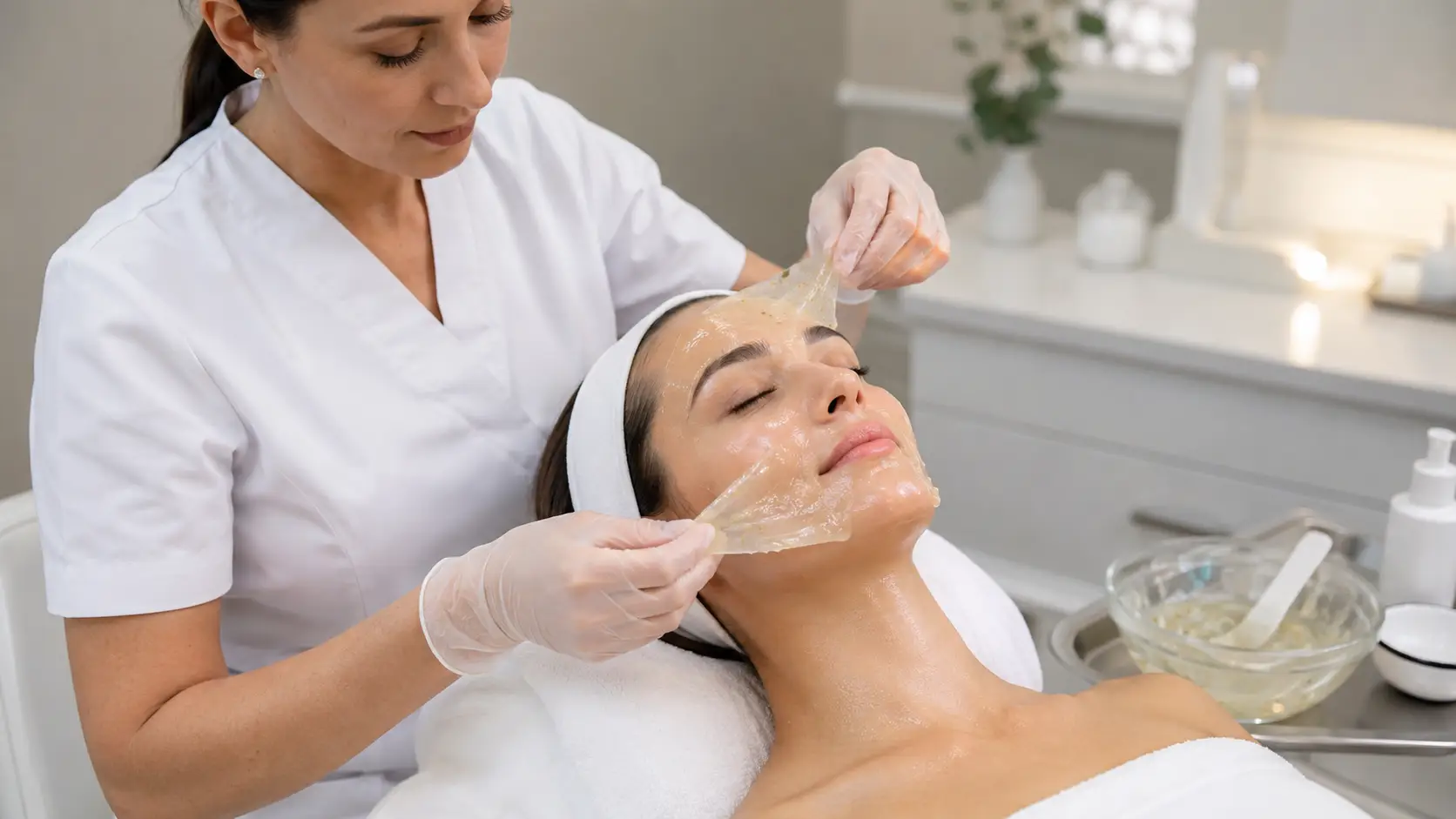
Do Jelly Masks Actually Work? The Direct Answer for Estheticians
Yes — professional jelly masks genuinely work, and their efficacy is grounded in established dermatological science rather than trend or marketing. The two primary mechanisms are occlusion and humectant delivery: the physical set layer dramatically reduces transepidermal water loss during the treatment window, while active ingredients including polyglutamic acid and hyaluronic acid deliver measurable hydration at both the surface and deeper skin layers simultaneously.
The results estheticians observe in practice — immediate post-removal hydration, visible skin plumping, reduced redness, and improved texture — are consistent with these mechanisms and reproducible across different skin types and treatment contexts. Results vary significantly based on formulation quality, humectant system, and how the mask is integrated within a broader treatment protocol.
- Occlusion is one of the most well-documented methods for reducing transepidermal water loss and enhancing ingredient penetration — the jelly mask format applies it directly to the face for 10 to 20 minutes.
- Polyglutamic acid binds up to 5,000 times its weight in water at the skin surface and inhibits hyaluronidase, extending the active life of both applied and naturally occurring hyaluronic acid.
- The immediate post-removal glow clients observe is caused by simultaneous hydration delivery, moisture seal, cooling-mediated redness reduction, and enhanced serum absorption beneath the mask.
- Results from a single treatment typically last 24 to 72 hours. Regular treatment series produce cumulative improvements including baseline hydration gains and strengthened barrier function.
- Formulation quality determines outcome quality — professional-grade jelly masks with advanced dual-humectant systems produce measurably superior results to generic or single-humectant alternatives.
It is one of the most common questions clients ask after their first jelly mask treatment — and it is also, in different form, the question estheticians should be able to answer with confidence before recommending jelly masks as part of any protocol. The answer is not simply “yes they work” or a vague reference to hydration and glow. It is a specific, mechanistic explanation of what jelly masks do, why they do it, under what conditions they perform best, and where the results have genuine clinical value versus where expectation management is appropriate.
The professional jelly mask category has grown significantly over the past several years, and with that growth has come a range of products — from genuinely professional formulations with advanced ingredient science to consumer-grade alternatives that produce more modest results. Whether a jelly mask “actually works” is therefore inseparable from the question of which jelly mask is being used and how. A well-formulated professional jelly mask produces results that are clinically meaningful and consistent. A low-quality alternative may produce more limited effects that, while not worthless, do not match the mechanism-supported outcomes that professional formulations can achieve.
This article gives estheticians the complete evidence-based answer: the science of how jelly masks work, what clients actually experience and why, how outcomes differ between formulation types, where jelly masks fit in the clinical context of post-treatment recovery, and how to explain efficacy to clients in a way that is accurate, compelling, and professionally credible.
What Every Esthetician Should Know About Jelly Mask Efficacy
- Jelly mask results are mechanistically explainable — they follow directly from occlusion science and humectant delivery, not from trend or placebo.
- The occlusive set layer physically reduces transepidermal water loss during the entire treatment window, creating a measurably higher-hydration environment at the skin surface.
- PGA and HA work through complementary mechanisms — surface sealing and deep delivery — that produce a dual-depth hydration outcome no single humectant can replicate.
- Post-microneedling and post-extraction skin contexts amplify jelly mask efficacy because heightened permeability enhances humectant absorption.
- Immediate results typically last 24 to 72 hours. Cumulative treatment series effects build over four to six weeks.
- PGA’s ability to upregulate hyaluronic acid synthase means regular jelly mask use with PGA-containing formulations progressively supports the skin’s own HA production capacity.
- Formulation quality is the variable that most determines outcome quality — not the jelly mask format itself.
The Four Mechanisms That Explain Why Jelly Masks Produce Real Results
When estheticians are asked whether jelly masks work, the most credible answer begins not with client testimonials or visible before-and-after comparisons but with the underlying mechanisms. Understanding exactly how jelly masks produce their effects gives estheticians the authority to explain outcomes with precision — and to identify which formulations will produce those outcomes reliably.
Physical Occlusion
The set gel layer creates a physical barrier over the skin surface that dramatically reduces transepidermal water loss (TEWL) during the entire treatment window. Water that would normally evaporate from the skin surface is retained, creating a measurably more hydrated micro-environment at the stratum corneum level.
Active Humectant Delivery
Advanced professional jelly mask formulations deliver functional humectants — particularly polyglutamic acid and hyaluronic acid — that actively attract and bind water molecules within the skin layers, working simultaneously with the occlusive barrier to maximize moisture retention from both directions.
Thermal Cooling Effect
As the jelly mask sets, water evaporation from the gel surface produces a measurable skin surface temperature reduction. This cooling effect calms post-treatment inflammation, reduces erythema, and provides the characteristic client comfort sensation that makes jelly masks a preferred finishing step following reactive treatments.
Enhanced Serum Absorption
Applied over freshly applied treatment serums, the occlusive jelly mask layer creates a pressurized, warm, high-humidity environment beneath the gel that enhances penetration of the serums applied before the mask. Hyaluronic acid serums, growth factor serums, and peptide formulations all benefit from this occlusion-enhanced absorption window.
These four mechanisms operate simultaneously during every professional jelly mask application. None of them depend on client perception, mood, or expectation — they are physical and biochemical processes that occur whether or not the client notices them. This is why estheticians can answer the “does it actually work” question with confidence: the efficacy is mechanistic, not anecdotal.
What the Science Actually Says About Occlusion and Humectant Delivery
The science underpinning jelly mask efficacy is not novel or speculative — it draws from established dermatological research on occlusion, transepidermal water loss, and the mechanisms of advanced humectants that have been studied extensively in both clinical and cosmetic contexts.
Occlusion and Transepidermal Water Loss
Transepidermal water loss (TEWL) is the continuous passive diffusion of water through the epidermis to the skin surface, where it evaporates. Healthy skin with an intact barrier has relatively low TEWL. Compromised skin — following exfoliation, extraction, microneedling, or other active treatments — has elevated TEWL because barrier integrity has been disrupted. The occlusive layer of a professional jelly mask physically reduces TEWL during the treatment window by preventing water vapor from reaching the air. This is the same principle that makes petroleum-based occlusives effective for wound healing and barrier recovery in medical contexts — jelly masks apply it as a temporary, removable format specifically suited to professional esthetic treatments.
Corneometric studies consistently show that occlusion-based treatments produce measurable increases in stratum corneum water content during and immediately after application. The effect is transient without supporting humectants, but when active humectants are delivered simultaneously during the occlusive window, their absorption is enhanced and their moisture-binding activity is prolonged by the continued occlusion effect.
Polyglutamic Acid: The Surface Mechanism
Polyglutamic acid (PGA) is a fermentation-derived biopolymer with moisture-binding capacity of up to 5,000 times its weight in water — more than four times that of hyaluronic acid. Due to its higher molecular weight, PGA remains at the skin surface rather than penetrating to deeper layers, forming a flexible, transparent microgel film. This film serves multiple functions simultaneously: it seals moisture against TEWL, it maintains high surface hydration levels, and critically, it inhibits hyaluronidase — the enzyme that degrades both topically applied and naturally occurring hyaluronic acid in the skin. Research published in 2024 in MDPI demonstrated that topical gamma-PGA also upregulates hyaluronic acid synthase-1, -2, and -3 mRNA expression, stimulating the skin to produce more of its own HA, and increases aquaporin-3 expression, a water channel protein critical to stratum corneum hydration. PGA also stimulates natural moisturizing factor (NMF) production including pyrrolidone carboxylic acid, lactic acid, and urocanic acid.
Hyaluronic Acid: The Deep Delivery Mechanism
Hyaluronic acid (HA) is a polysaccharide produced naturally by the body and topically delivered in skincare formulations as a humectant that penetrates to the epidermis and upper dermis, attracting water to deeper skin layers and holding approximately 1,000 times its weight in water. HA is one of the most extensively studied topical humectants in cosmetic dermatology. The limitation of HA used alone is that hyaluronidase degrades it relatively quickly, shortening its active window. When applied in combination with PGA under the occlusive environment created by a jelly mask, PGA’s hyaluronidase inhibition directly addresses this limitation, extending HA’s active life during and after the treatment session.
The Synergistic Hydration Mechanism in a Jelly Mask Context
PGA at the surface: Forms a microgel film that seals moisture, inhibits hyaluronidase, and maintains a high-humidity environment beneath the mask. Holds up to 5,000× its weight in water.
HA at depth: Penetrates the epidermis and upper dermis, attracting water from within skin tissue and supporting structural hydration. Holds approximately 1,000× its weight in water.
PGA protects HA: By inhibiting hyaluronidase, PGA prevents the degradation of both the applied HA and the skin’s naturally occurring HA, synergistically extending the hydration benefit.
PGA builds long-term capacity: PGA’s upregulation of HAS-1, HAS-2, and HAS-3 means the skin progressively produces more of its own HA with repeated treatments — creating cumulative benefit beyond single-session effects.
What Clients Actually Experience and Why It Happens
Understanding the mechanisms behind jelly mask results also allows estheticians to explain the specific sensations and visible changes that clients notice during and after treatment — which builds professional credibility and supports client retention through informed expectation setting.
The Cooling Sensation During Application
Clients consistently comment on the distinctive cooling feeling as the jelly mask sets. This is not a fragrance effect or a menthol additive in well-formulated professional masks — it is the result of water evaporation from the gel surface during the setting process, which draws heat away from the skin. This evaporative cooling produces the same mechanism as any evaporative cooling process: energy is absorbed from the skin surface as water changes from liquid to vapor. The result is a measurable skin surface temperature reduction that calms inflammatory responses, reduces erythema, and creates the immediate comfort sensation that makes jelly masks a preferred step following reactive treatments.
The Visible Glow and Plumping Effect at Removal
The post-removal skin improvement that clients notice — often described as a glow, plumpness, or visible hydration — is the direct result of all four mechanisms having operated simultaneously for 10 to 20 minutes. The stratum corneum has retained moisture it would normally have lost through TEWL. Active humectants have drawn water into the upper skin layers. The serums applied before the mask have had an enhanced absorption window. The cooling effect has reduced erythema and made skin tone appear more even. None of this is subjective perception — these are measurable physical changes in skin water content, surface temperature, and ingredient concentration that produce visible outcomes at removal.
How Outcomes Vary Between Clients
The magnitude of visible post-treatment results varies meaningfully between clients based on their baseline skin condition. Clients with severely dehydrated or barrier-compromised skin typically show the most dramatic immediate post-removal improvement because their starting baseline is lower and the gap closed by treatment is larger. Clients with already well-hydrated skin show more subtle but still measurable improvements. For estheticians, this means setting expectations appropriately — a client who begins their first treatment severely dehydrated will likely see more visible change than a client maintaining their skin through regular hydration protocols, but both benefit from the treatment.
The client question “does it actually work” most commonly arises in two contexts: before a first treatment, when a client is skeptical of what appears to be a gimmick, and during the retail consultation after the treatment, when a client has just experienced results and wants to understand why. Estheticians who have made the transition from HA-only jelly mask formulations to the Poly-Luronic™ Jelly Mask by Luminous Skin Lab consistently report a qualitative difference in the post-removal conversation — specifically that clients who previously required prompting to acknowledge skin improvement now volunteer it unprompted.
The most frequently cited practitioner observation is that the PGA-forward Poly-Luronic™ formulation produces a more sustained hydration feel in the hours following treatment compared to HA-only alternatives — which practitioners attribute to PGA’s hyaluronidase inhibition extending the active window of the humectant system applied during the session. In post-microneedling applications, where the standard HA-only jelly mask produces visible improvement but sometimes a slightly tight skin feel by the next morning, the Poly-Luronic™ formulation is reported to maintain a more comfortable, supple feel into the following day. The practical implication for client retention is significant: a client who wakes up the morning after their treatment with skin that still feels noticeably hydrated and smooth is more likely to rebook and to accept a treatment series recommendation.
Why Jelly Masks Work Even Better in Post-Treatment Contexts
While jelly masks produce genuine results in standard hydration facial protocols, their efficacy is amplified in post-treatment contexts — specifically following any procedure that disrupts barrier integrity and elevates transepidermal permeability. Understanding why this happens gives estheticians a stronger clinical rationale for incorporating jelly masks into their post-treatment protocols.
Heightened Permeability Amplifies Humectant Delivery
Following microneedling, nano infusion, chemical exfoliation, or extraction-heavy facials, the skin’s barrier has been deliberately or incidentally disrupted. This disruption elevates transepidermal permeability — the ease with which molecules can pass through the skin layers. The same permeability that makes post-treatment skin more susceptible to sensitizing ingredients also makes it more receptive to beneficial ones. Polyglutamic acid and hyaluronic acid applied under an occlusive jelly mask on post-procedure skin are absorbed more effectively and at greater depth than they would be on intact, uncompromised skin. This is one of the strongest arguments for jelly mask use in post-treatment protocols: the moments when the skin most needs advanced humectant support are also the moments when it is most capable of absorbing that support.
The Cooling Effect Has Greater Clinical Value Post-Treatment
Post-treatment skin is typically inflamed, reactive, and uncomfortable for clients. The thermal cooling effect of a jelly mask, which provides modest comfort benefit in a standard hydration facial context, becomes clinically meaningful in a post-treatment context. The combination of immediate surface cooling, reduced erythema, and the physical comfort of the set mask application reliably improves the post-treatment client experience in ways that translate directly to rebooking rates and treatment series compliance.
Fragrance-Free Formulations Are Non-Negotiable Post-Treatment
The elevated permeability that makes post-treatment skin more receptive to beneficial ingredients also makes it more susceptible to sensitizers. Synthetic fragrance is one of the most common sensitizing agents in cosmetic formulations. On intact skin, low concentrations of fragrance may be well-tolerated. On post-procedure skin with compromised barrier function, even low-level fragrance exposure can produce inflammatory responses, sensitization reactions, or prolonged erythema that counteracts everything the jelly mask treatment is trying to achieve. For post-treatment applications, fragrance-free is not a preference — it is a safety standard.
How Long Do Jelly Mask Results Last, and How Do They Build Over Time?
One of the most important pieces of client education that estheticians can deliver around jelly mask treatments is an accurate explanation of both the duration of single-treatment effects and the mechanism through which regular treatments produce cumulative improvement. Both of these are grounded in specific ingredient science rather than generalized claims about hydration.
Single-Treatment Duration: 24 to 72 Hours
Immediate hydration effects from a single professional jelly mask treatment typically persist for 24 to 72 hours, depending on the client’s baseline skin condition, the specific humectants delivered, and their home care routine. This range reflects the normal metabolic processes that eventually consume or degrade the delivered humectants, the gradual return to baseline TEWL levels as the skin is re-exposed to environmental conditions after treatment, and individual variation in skin barrier integrity and home hydration practices. Clients with severely dehydrated or compromised skin typically experience the most dramatic immediate results but may return to baseline more quickly than clients with stronger baseline barrier function. This is an important distinction to communicate when presenting treatment series recommendations.
Cumulative Results: Four to Six Weeks
The more clinically interesting timeline is the cumulative one. With regular professional treatment series, several intersecting mechanisms produce baseline improvement that extends well beyond what a single session achieves. PGA’s upregulation of hyaluronic acid synthase-1, -2, and -3 means that with each treatment, the skin’s own HA production capacity is stimulated. Over a series of treatments, this creates a progressive increase in endogenous HA reserves. PGA’s NMF stimulation — increasing production of pyrrolidone carboxylic acid, lactic acid, and urocanic acid in the stratum corneum — builds the skin’s intrinsic water-retention infrastructure. The repeated occlusive barrier support provided by each treatment session cumulatively strengthens barrier integrity over time. Estheticians who track corneometer readings or subjective client assessments across four to six weeks of regular jelly mask treatment series consistently observe meaningful baseline improvements in hydration, texture, and skin resilience.
The Role of Home Care Between Treatments
How long single-treatment results last is also influenced by what clients do in the days following their session. Clients who apply a basic occlusive moisturizer in the 24 hours after treatment — maintaining the surface-seal effect initiated by the jelly mask — typically report longer-lasting visible improvement than those who immediately return to a stripped or inadequately moisturized routine. This creates a natural retail education opportunity: the principles behind jelly mask efficacy — occlusion, advanced humectants, barrier support — translate directly into home care product recommendations that extend treatment results between sessions.
What Jelly Masks Cannot Do: Setting Accurate Professional Expectations
Part of the professional credibility that estheticians build when explaining jelly mask efficacy comes from being equally clear about what jelly masks do not do. Overpromising outcomes is one of the fastest ways to undermine client trust and long-term retention.
Jelly Masks Do Not Produce the Same Results as Active Treatment Modalities
Jelly masks are a hydration, recovery, and barrier-support tool. They do not produce the collagen induction effects of microneedling, the resurfacing effects of chemical peels, or the photobiomodulation outcomes of LED therapy. Their value is in amplifying the results of active treatment modalities, supporting post-procedure recovery, and delivering advanced hydration in a format that produces an exceptional client experience. Positioning them as a replacement for active treatments is both inaccurate and unnecessary — their genuine value as a recovery and hydration tool is substantial without any inflation.
Formulation Quality Determines Outcome Quality
Not all jelly masks produce the same results. The mechanisms described in this article — and the outcomes that clients observe — apply to professional-grade formulations with advanced humectant systems. A generic jelly mask containing only sodium alginate and water will produce some occlusion benefit but will not deliver the PGA and HA mechanisms that drive the most clinically meaningful results. Estheticians who have compared generic and advanced formulations directly in their treatment rooms consistently report meaningful differences in post-removal skin response and client satisfaction.
Single Treatments Are Entry Points, Not Complete Protocols
While a single jelly mask treatment produces genuine and visible results, the full cumulative benefits described in this article develop over a treatment series. Clients who experience a single treatment and evaluate jelly masks based on that one session are not getting the complete picture. Effective client communication frames the single treatment as a demonstration of what the protocol can do, with the explicit invitation to experience the cumulative outcomes that develop with regular treatment.
Professional and Scientific References
The mechanisms and research referenced in this article draw from peer-reviewed dermatological and cosmetic chemistry literature:
- Gamma-PGA barrier strengthening, HAS-1/2/3 upregulation, aquaporin-3 enhancement, and filaggrin/involucrin increases. MDPI, 2024. Reconstructed skin model study with 1% topical gamma-PGA application.
- Occlusion and transepidermal water loss reduction — established mechanism from wound care and dermatological barrier science literature. Semi-occlusive and occlusive dressings consistently shown to reduce TEWL and increase stratum corneum water content.
- PGA moisture-binding capacity (up to 5,000× weight in water) and surface microgel film formation. Typology ingredient science review, 2021–2025.
- PGA hyaluronidase inhibition and synergistic HA protection. Stanford Chemistry / cosmetic formulation literature, 2024. PGA + HA combination slows HA degradation and enhances sustained moisturizing effect.
- PGA corneometry data: +60% skin moisture increase at 30 minutes, +25% maintained at 8 hours with 2% PGA serum. Reviva Labs review of clinical literature, 2025.
- PGA NMF stimulation: increased pyrrolidone carboxylic acid, lactic acid, and urocanic acid in stratum corneum. Typology; Prequel Skin; Skin Rocks biochemist commentary, 2022–2025.
- Sodium alginate gelling properties and occlusive function in professional mask formulations. Established biomedical and cosmetic ingredient science literature.
For estheticians looking to offer a jelly mask that delivers on the full mechanism set described in this article — occlusion, PGA + HA dual-humectant delivery, hyaluronidase inhibition, NMF stimulation, and clean post-treatment safety — the Poly-Luronic™ Jelly Mask by Luminous Skin Lab is the formulation our education team most frequently references in advanced hydration and post-treatment recovery contexts. The proprietary Poly-Luronic™ blend was developed by a licensed esthetician to bring the complete PGA + HA synergistic hydration science into a professional treatment room mask format that performs predictably across protocols from standard hydration facials to post-microneedling recovery. Fragrance-free, clean-label, and formulated for the post-treatment skin contexts where results matter most.
Explore the Poly-Luronic™ Jelly Mask Line →Frequently Asked Questions: Do Jelly Masks Actually Work?
Do jelly masks actually work or is it just a trend?
Jelly masks genuinely work through two well-established mechanisms: occlusion and humectant delivery. The physical set layer dramatically reduces transepidermal water loss during the treatment window, and advanced formulations deliver PGA and hyaluronic acid into the skin simultaneously. The results estheticians observe — immediate post-removal hydration, visible plumping, reduced redness and inflammation — are consistent with these mechanisms and not attributable to trend alone.
Why does my skin look so good right after a jelly mask?
The immediate post-removal glow is caused by several simultaneous effects: the occlusive layer has prevented transepidermal water loss for the entire treatment window, humectants have drawn and retained water in the upper skin layers, the cooling effect has temporarily reduced erythema and inflammation, and any serums applied beneath the mask have had enhanced absorption during the occlusive phase. Together these produce visible plumping, brightness, and evening of skin tone that is noticeable immediately after the mask is removed.
How long do the results from a jelly mask actually last?
Immediate hydration effects from a single jelly mask treatment typically last 24 to 72 hours depending on the client’s baseline skin condition, the specific humectants used, and their home care routine. Formulations containing PGA produce longer-lasting results because PGA inhibits hyaluronidase — the enzyme that breaks down hyaluronic acid — extending the life of both applied and naturally occurring HA in the skin. With regular professional treatment series, cumulative improvements in skin texture, hydration capacity, and barrier function are commonly observed over four to six weeks.
Can a jelly mask actually help skin heal faster after microneedling?
Yes. In post-microneedling contexts, jelly masks serve a genuine clinical function rather than just a cosmetic one. The occlusive layer reduces transepidermal water loss on barrier-compromised skin, the cooling effect manages post-procedure inflammation and client discomfort, and the heightened skin permeability following microneedling amplifies humectant absorption — meaning PGA and HA are delivered more effectively into skin that needs them most. Estheticians routinely report faster visible recovery and greater client comfort when a professional-grade jelly mask is included in the post-microneedling protocol.
Is there any real science behind how jelly masks work?
Yes. The core mechanisms of jelly mask efficacy are grounded in established dermatological science. Occlusion is one of the most well-documented methods for reducing transepidermal water loss and enhancing ingredient penetration. Polyglutamic acid’s 5,000-times water-binding capacity, hyaluronidase inhibition activity, and ability to upregulate hyaluronic acid synthase expression are documented in peer-reviewed literature including a 2024 MDPI study on gamma-PGA. Sodium alginate’s gelling and barrier-supportive properties are established in biomedical applications. The science supports what estheticians observe in practice.
Why does a jelly mask feel so much more hydrating than a regular sheet mask?
Jelly masks create a thicker, more complete physical occlusive seal than sheet masks, which reduces transepidermal water loss more effectively during the treatment window. The three-dimensional gel layer conforms tightly to facial contours, minimizing air exposure. Many professional jelly mask formulations also contain more advanced humectant systems — particularly PGA and HA combinations — than standard sheet mask formulations. The combination of superior occlusion and more concentrated active humectants produces a more pronounced and lasting hydration result.
Do jelly masks help with redness and inflammation after facials?
Yes. The immediate cooling effect produced when a professional jelly mask is applied — the result of water evaporation from the setting gel surface — produces measurable skin surface temperature reduction. This thermal cooling effect reduces erythema, calms post-treatment inflammation, and provides significant client comfort following extraction-heavy facials, chemical exfoliation, dermaplaning, or other procedures that leave skin reactive. Estheticians consistently use jelly masks as the cooling and calming final step in treatment room protocols for this reason.
Are the results from jelly masks just temporary, or do they build over time?
Both. The immediate post-treatment effects — visible hydration, reduced redness, plumped texture — are real but transient, typically lasting 24 to 72 hours. However, with regular professional treatment series, cumulative benefits develop. PGA’s ability to stimulate hyaluronic acid synthase expression means the skin progressively improves its own HA production capacity. Repeated barrier-supportive occlusive treatments strengthen the skin’s intrinsic moisture retention. Most estheticians observe that clients who receive jelly mask treatments consistently over four to six weeks show measurable baseline improvements in skin hydration, texture, and resilience beyond what a single treatment produces.
Does the Poly-Luronic Jelly Mask actually produce results that clients notice?
Yes. Estheticians incorporating the Poly-Luronic Jelly Mask by Luminous Skin Lab into their treatment protocols consistently report that clients notice the immediate post-removal skin improvement without prompting — frequently commenting on visible plumping, brightness, and a reduction in the tightness or sensitivity they felt earlier in the facial. The PGA-forward Poly-Luronic formulation produces a noticeably more sustained hydration response compared to HA-only jelly masks, which practitioners attribute to PGA’s hyaluronidase inhibition extending the active life of the humectant system applied during treatment.
The Honest Answer: Jelly Masks Work — When the Right Formulation Is Used Correctly
The question “do jelly masks actually work?” has a clear and evidence-supported answer: yes, through mechanistically understood pathways that produce reproducible, measurable outcomes. Occlusion reduces transepidermal water loss. Advanced humectants deliver and retain moisture at dual skin depths. Thermal cooling reduces post-treatment inflammation. Enhanced serum absorption amplifies the investment made in treatment serums applied before the mask. These are not marketing claims — they are physical and biochemical mechanisms that operate regardless of whether any given client subjectively notices them.
What varies is the magnitude of those outcomes, and that variance is primarily determined by formulation quality. A professional jelly mask containing a PGA + HA dual-humectant system produces categorically better results than a sodium alginate and water formulation. A fragrance-free clean-label formulation is safe in post-treatment contexts where a fragranced alternative would be counterproductive. A mask with consistent set behavior and removal integrity produces a reliable client experience that supports service confidence and rebooking, where an inconsistent formulation introduces workflow variables that undermine professional execution.
For estheticians, the most valuable takeaway is not simply that jelly masks work — it is that understanding why they work gives you the ability to select the formulations that deliver on the full mechanism, integrate them where they add the most clinical value, and explain the results to clients in a way that builds the kind of professional authority that translates directly into treatment series sales, client retention, and a treatment room reputation for delivering visible, meaningful outcomes.