Can Jelly Masks Be Used After Microneedling?
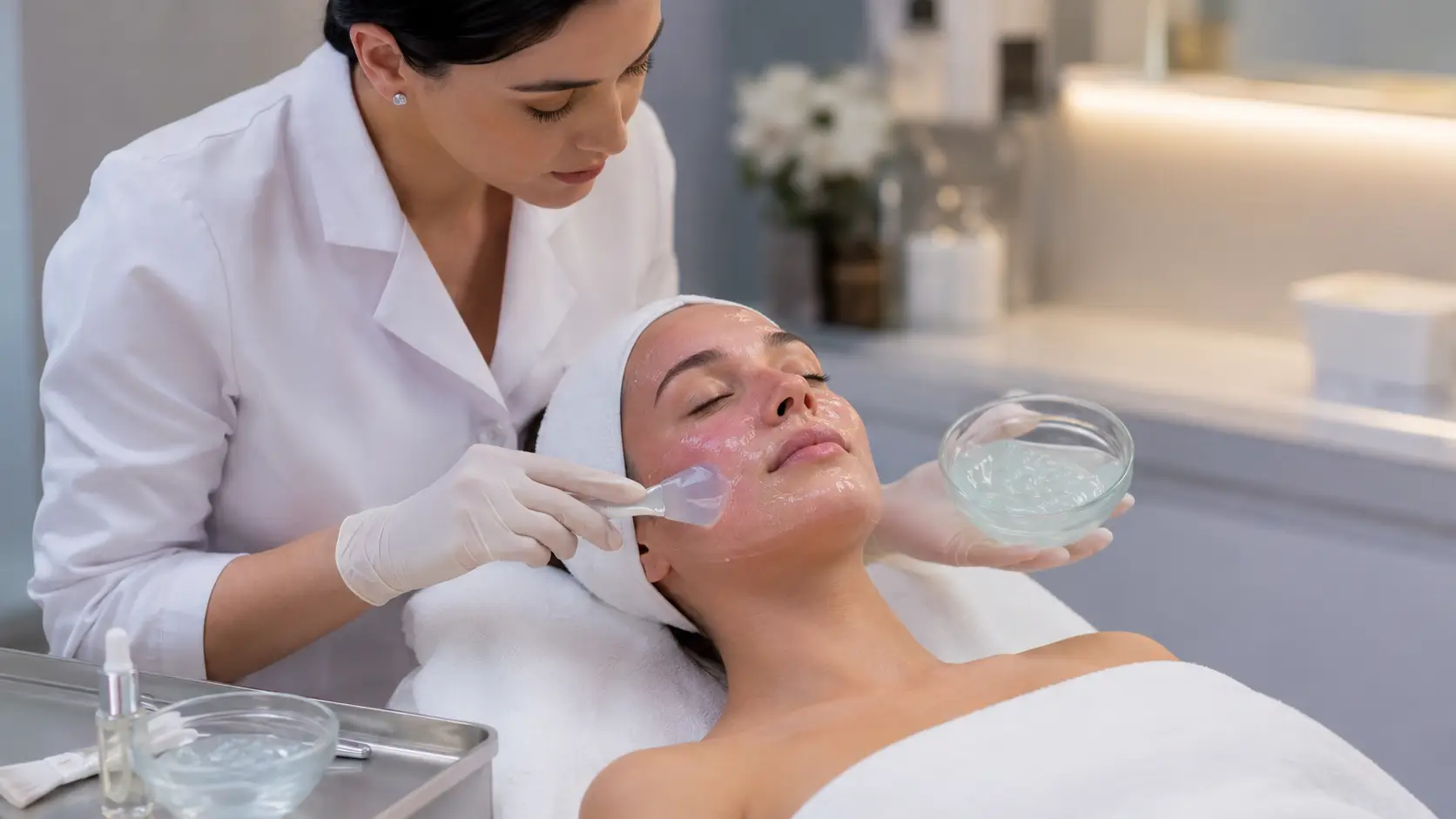
Yes — professional-grade jelly masks can and should be used after microneedling. When the formulation meets post-treatment safety criteria, a jelly mask applied immediately following microneedling serves as an active recovery tool: the occlusive gel layer reduces transepidermal water loss through disrupted microchannels, the cooling effect calms post-procedure redness and sensitization, and advanced humectants including polyglutamic acid and hyaluronic acid are delivered into skin with temporarily elevated permeability. The result is faster visible recovery and a more comfortable, complete client experience.
- Post-microneedling skin has elevated permeability through temporary microchannels — this amplifies humectant delivery when the right formulation is applied correctly.
- The occlusive set layer of a jelly mask physically seals moisture against accelerated transepidermal water loss through the disrupted barrier.
- Polyglutamic acid inhibits hyaluronidase and upregulates hyaluronic acid synthase expression — supporting the skin’s own recovery mechanisms during the post-procedure window.
- The formulation must be 100% fragrance-free, dye-free, and free of sensitizing additives — these are non-negotiable safety requirements for compromised post-procedure skin.
- Jelly masks can be combined with post-microneedling LED therapy, with the set gel layer maintaining hydration while red light photobiomodulation is delivered simultaneously.
The question of whether jelly masks can be used after microneedling comes up regularly among estheticians who are building or refining their post-microneedling protocols. The answer is yes — but the more useful answer is: it depends entirely on which jelly mask you use, and understanding why that distinction matters requires looking at what microneedling actually does to the skin in the minutes immediately following the procedure.
Microneedling creates thousands of controlled micro-injuries across the treatment area. These temporary microchannels pass through the stratum corneum — the skin’s primary physical barrier against moisture loss and external irritants — and into the epidermis and upper dermis. The skin’s barrier function is measurably compromised for a period following the procedure. That compromise is both the mechanism through which microneedling delivers its collagen-stimulation benefit and the reason why what you apply immediately post-procedure matters so much more than in a standard facial context.
A well-chosen professional jelly mask turns this heightened post-procedure permeability into an advantage: advanced humectants penetrate more effectively, the occlusive gel layer actively prevents the dehydration that would otherwise accelerate through those open microchannels, and the cooling effect addresses the immediate redness and thermal sensitivity that most clients experience. Conversely, a poorly formulated jelly mask — one containing fragrance, sensitizing agents, or undisclosed additives — can deliver those irritants into a compromised skin barrier at greater depth and with greater inflammatory consequence than the same product applied to intact skin.
This guide answers the question comprehensively: what the science supports, what the safety criteria are, how to apply and time the jelly mask within your post-microneedling protocol, and what the client outcome differences look like between formulations that meet the standard and those that do not.
What Every Esthetician Should Know About Jelly Masks After Microneedling
- A professional-grade, fragrance-free jelly mask is not just permissible post-microneedling — it is one of the most effective recovery tools available within a same-session protocol.
- Post-microneedling skin permeability is elevated: this means advanced humectants penetrate more efficiently, but so do any sensitizing ingredients. Formulation quality is a safety issue, not a preference issue.
- The occlusive jelly mask layer physically seals the disrupted skin surface, reducing the accelerated TEWL that would otherwise occur through temporary microchannels.
- Polyglutamic acid’s hyaluronidase-inhibiting action protects both applied and naturally occurring HA during the recovery window — a mechanism that is especially valuable on post-procedure skin.
- PGA’s upregulation of HAS-1, HAS-2, and HAS-3 expression supports the skin’s own HA production during the post-procedure period.
- Jelly masks and LED therapy can be used simultaneously post-microneedling, compressing the recovery protocol into a single efficient service step.
- The jelly mask is applied after any post-procedure serum, creating a second occlusive layer that enhances serum absorption during the treatment window.
- The removal experience — peeling the set mask as a single intact piece — provides a distinctive, memorable service finish that clients consistently cite as a highlight.
What Microneedling Does to the Skin That Makes Post-Treatment Selection So Critical
To understand why jelly mask selection matters so much in the post-microneedling context, it helps to understand exactly what the procedure does at the tissue level and what the skin’s state is during the immediate recovery window.
The Wound Healing Cascade and Microchannels
Microneedling — collagen induction therapy — works by triggering a controlled wound healing response. Each needle penetration creates a temporary microchannel from the surface through the stratum corneum and into the viable epidermis. Depending on needle depth, these microchannels may extend into the papillary dermis. The wound healing cascade activates: growth factors, cytokines, and pro-collagen signaling begin within minutes. Over the following days and weeks, collagen and elastin synthesis increases, producing the skin texture and firmness improvements that make the procedure effective for acne scarring, fine lines, and overall skin quality.
During the immediate post-procedure window — the treatment room phase before the client leaves the chair — the microchannels are open and the stratum corneum’s barrier function is significantly reduced. This is the window in which post-treatment topicals are applied, and it is why the choice of what to apply in this window carries clinical consequences that extend beyond a standard facial context.
Elevated Permeability: Opportunity and Risk
The temporary elevation in skin permeability following microneedling is both the greatest opportunity and the primary risk factor in post-treatment product selection. The opportunity: active ingredients penetrate to a depth and with an efficiency that would not occur on intact skin. A well-formulated post-microneedling serum containing growth factors, peptides, or hyaluronic acid can achieve meaningfully greater skin contact when applied within this window. A jelly mask applied over that serum layer amplifies this effect by creating an occlusive environment that drives continued absorption under the set gel.
The risk: any sensitizing ingredient in a post-treatment topical is delivered into the skin at that same elevated depth and efficiency. Synthetic fragrance, artificial dyes, undisclosed preservative blends, and other potential sensitizers that might cause minimal reaction on intact skin can produce meaningful inflammatory responses when delivered through a compromised barrier into skin that is already in an acute wound healing state.
Why Formulation Safety Is a Clinical Standard Post-Microneedling
The stratum corneum functions as the skin’s primary defense against transepidermal water loss and environmental penetration. Microneedling temporarily disrupts this layer across the treatment area. The resulting elevation in skin permeability means that ingredients applied post-procedure have access to deeper skin tissue than they would on intact skin.
TEWL acceleration: Through open microchannels, water evaporation from skin tissue increases substantially. Without an occlusive treatment, skin dehydration during the post-procedure recovery window can be uncomfortable and counterproductive to the outcome.
Sensitizer amplification: Fragrance molecules, synthetic dyes, and chemical sensitizers are delivered at greater depth and concentration through compromised barrier tissue. The inflammatory response to these agents is correspondingly amplified compared to intact-skin application.
Humectant advantage: The same elevated permeability that creates sensitizer risk also creates superior delivery efficiency for fragrance-free, clean humectant formulations. PGA and HA applied post-procedure in a safe formulation reach deeper tissue and achieve greater hydration delivery than they would on intact skin.
Why Jelly Masks Work So Well for Post-Microneedling Recovery
A professional jelly mask brings four distinct recovery mechanisms to the post-microneedling treatment window, each of which addresses a specific consequence of the procedure. Together, they make a clean-formulation jelly mask one of the most complete single-product recovery additions available within a same-session post-microneedling protocol.
Occlusion: Sealing the Disrupted Barrier
The first and most immediate function is physical occlusion. When a jelly mask sets over post-microneedling skin, the flexible gel layer physically covers the treatment area, dramatically reducing transepidermal water loss through the microchannels. Without this occlusive seal, water evaporation accelerates through the open channels, leaving the skin feeling tight and dehydrated during the recovery window. The jelly mask essentially provides a temporary external barrier that compensates for the disrupted intrinsic barrier until the skin’s own recovery processes re-establish the stratum corneum.
Cooling Effect: Addressing Post-Procedure Redness and Thermal Sensitivity
Virtually all clients experience a degree of skin redness and thermal sensitivity immediately following microneedling. The mixing process for a professional jelly mask produces a noticeably cool gel at application temperature, and the set layer maintains that cooling contact against the skin surface for the full 10 to 15 minutes of wear. Estheticians working in high-volume practices consistently report that the jelly mask’s cooling effect is one of the aspects clients respond to most visibly and positively — the contrast between the post-microneedling discomfort and the cooling relief of the mask application is one of the most impactful service experience moments in the entire protocol.
Advanced Humectant Delivery: PGA + HA in the Heightened-Permeability Window
In the context of post-microneedling elevated permeability, the PGA + HA dual-humectant system in an advanced professional jelly mask formulation delivers results that neither ingredient would achieve on intact skin alone. Hyaluronic acid penetrates more effectively into the epidermis and upper dermis through the open microchannels, delivering moisture where the wound healing cascade is most active. Polyglutamic acid forms its surface film seal, inhibits hyaluronidase during the recovery window, and has been shown in research to stimulate HAS-1, HAS-2, and HAS-3 expression — supporting the skin’s own HA production during the post-procedure period. The combined effect supports both immediate hydration comfort and the skin’s medium-term recovery capacity.
Serum Absorption Enhancement: The Occlusive Boost Effect
In the standard post-microneedling protocol, a fragrance-free serum containing growth factors, peptides, hyaluronic acid, or a combination of these actives is applied immediately following the procedure before the jelly mask is mixed. The set jelly mask then creates an occlusive environment that drives continued absorption of the applied serum during the entire treatment window. With a PGA-containing jelly mask formulation, the surface-sealing action of polyglutamic acid also protects any HA in the applied serum from enzymatic degradation while the mask is in contact — extending the effective window of the applied serum’s HA activity.
What Formulation Criteria Must a Jelly Mask Meet to Be Safe After Microneedling?
Not every jelly mask on the professional market meets the safety threshold for post-microneedling application. The following criteria are non-negotiable when evaluating any formulation for use on compromised post-procedure skin.
- 100% fragrance-free confirmed by full INCI review
- Free of synthetic dyes and artificial colorants
- Full INCI ingredient disclosure available on request
- Functional humectants listed explicitly: PGA, HA, or both
- Minimal, professionally verified preservative system
- High-grade sodium alginate for consistent set behavior
- Formulated for application over treatment serums
- Tested for post-treatment use by licensed estheticians
- Any synthetic fragrance or “parfum” on INCI
- Artificial dyes or colorants of any type
- Undisclosed “proprietary blend” preservatives
- Essential oils with known sensitization potential
- Menthol or synthetic cooling agents
- No INCI disclosure available from the brand
- Consumer-grade formulation with no professional testing
- Known irritants present anywhere on the ingredient list
Why Fragrance Is the Most Important Disqualifier
Synthetic fragrance is the leading sensitizing ingredient category in cosmetic formulations. On intact skin, low concentrations of synthetic fragrance molecules may produce minimal or no visible reaction in the majority of clients. On post-microneedling skin — where barrier integrity is temporarily compromised and skin permeability is elevated — those same molecules are delivered at greater depth, into skin tissue that is already in an acute wound healing and inflammatory state. The risk of sensitization, prolonged redness, and barrier damage is meaningfully elevated compared to standard facial application.
Any brand that cannot confirm a fully fragrance-free formulation should not be used in post-microneedling protocols. This is not a product preference decision — it is a professional safety standard with the same weight as any other post-treatment contraindication decision.
How to Verify a Formulation Before Using It Post-Microneedling
Request the complete INCI ingredient list from any brand before incorporating it into your post-microneedling protocol. Review the list specifically for fragrance (listed as “parfum” or “fragrance”), any essential oil components, synthetic dyes (listed as CI followed by a number), and any preservative compounds with known sensitization profiles. If the brand cannot provide a complete INCI list, that inability to disclose is itself a disqualifier — professional estheticians working on compromised post-procedure skin cannot safely use products with undisclosed ingredient profiles.
How to Include a Jelly Mask in Your Post-Microneedling Protocol Step by Step
The following protocol sequence reflects standard professional practice for integrating a jelly mask into a post-microneedling service. Adjust timing to your specific device, needle depth, and client skin profile as needed.
Complete the Microneedling Procedure
Finish all microneedling passes according to your protocol. Remove any numbing cream residue if used. Apply gentle pressure with sterile gauze if there is any pinpoint bleeding, and allow it to fully subside before proceeding.
Apply Post-Procedure Serum
Apply your chosen fragrance-free post-procedure serum — growth factor, peptide, hyaluronic acid, or barrier-recovery formulation — directly to the treatment area. Work gently; avoid massage pressure on the freshly needled skin. Allow 60 to 90 seconds for initial absorption before proceeding.
Mix the Jelly Mask
Mix your professional jelly mask to the correct ratio using cool or room-temperature water. Cool water slightly extends the set window and enhances the initial cooling contact on sensitized skin. Mix to a smooth, lump-free consistency — typically 30 to 45 seconds of vigorous mixing with a spatula.
Apply the Mask Immediately
Apply the mixed jelly mask quickly and evenly across the treatment area using a mask brush or gloved hands. Work from the center of the face outward. For full-face protocols, apply gauze first if preferred for easier removal, though this is optional with high-quality formulations that remove cleanly as a single piece.
Allow 10 to 15 Minutes for Setting
The mask sets to a flexible, pliable gel within 10 to 15 minutes depending on room temperature and mask thickness. During this window, perform scalp massage, hand or arm massage, or deliver LED light therapy through the set mask if your protocol includes it. This service window is a key advantage of jelly mask integration.
Remove the Mask as a Single Piece
Loosen an edge from the chin or forehead and peel the mask as a single intact piece in a smooth upward or downward motion. This removal moment is a signature experience element — most clients respond visibly. Follow immediately with any final post-treatment topicals and SPF application.
Complete Post-Treatment Application and Client Education
Apply a gentle, fragrance-free moisturizer or barrier repair cream, followed by a mineral SPF. Provide the client with post-microneedling home care instructions including avoidance of active ingredients, heat, and sun exposure for 24 to 48 hours. Note the immediate skin improvement for retail conversation context.
Estheticians who have incorporated the Poly-Luronic™ Jelly Mask into their post-microneedling protocols report several consistent observations that distinguish it from other formulations they had previously trialled in the same context. The first is the immediate client response to the cooling application — the relief reaction is notably more pronounced with this formulation compared to standard post-microneedling hydrating masks, which practitioners attribute to the combination of the gel’s natural temperature and the PGA surface film contact.
The second observation is the visible hydration difference at removal. Practitioners describe the skin at peel-off as “immediately more settled” — less reactive-looking, with a hydrated surface quality that contrasts meaningfully with what they saw when using HA-only post-procedure masks in previous protocols. Several practitioners note that clients who had previously experienced extended post-microneedling redness lasting into the following day began reporting resolution within a few hours after the switch to a PGA-forward formulation. The peel-removal moment itself also consistently generates strong client comments — the single-piece removal from sensitized post-microneedling skin is described as deeply satisfying, and practitioners find it an effective transition point into the retail recommendation conversation that follows.
Can You Use LED Therapy and a Jelly Mask at the Same Time After Microneedling?
Yes — and this combination represents one of the more clinically logical pairings in a post-microneedling protocol. The reasoning involves both the mechanisms of each treatment and the practical advantage of compressing two recovery-support functions into a single service step during the jelly mask set window.
How the Combination Works
Red light LED therapy (typically 630nm to 660nm) supports post-procedure recovery through photobiomodulation: stimulating mitochondrial activity, supporting anti-inflammatory cytokine signaling, and enhancing fibroblast activity relevant to the collagen production that microneedling is designed to trigger. When delivered through a set jelly mask, the light passes through the translucent gel layer to reach the skin surface while the mask simultaneously maintains the occlusive hydration environment underneath. The client receives both benefits in a single 10 to 15 minute window rather than requiring separate sequential service steps.
What to Verify Before Combining
Not every jelly mask formulation is equally transparent to LED wavelengths — highly pigmented or opaque masks would reduce light penetration. Confirm that your formulation is clear or translucent enough to allow meaningful light transmission before designing a combined LED + jelly mask post-microneedling protocol. Translucent, minimally tinted formulations allow the greatest light delivery. Also confirm that your LED panel can be positioned at the correct treatment distance above the client while the mask is in place.
Timing Integration
In practice, the LED panel is activated within the first two to three minutes of jelly mask application, once the mask has achieved its initial gel set but before it has fully firmed. The LED session runs for the duration of the mask set window — typically 10 to 12 minutes — ending as the mask approaches full removal-ready consistency. This timeline aligns with standard post-procedure LED protocol durations and makes the combined step one of the most efficient recovery additions possible within a microneedling service.
Practical Questions Estheticians Ask About Jelly Masks After Microneedling
Do you need gauze under the jelly mask post-microneedling?
Gauze use under a jelly mask post-microneedling is optional and depends largely on formulation quality and personal workflow preference. With a high-quality jelly mask that removes cleanly as a single intact piece, gauze is not required for removal management. However, some estheticians prefer gauze for its ability to provide a clearly defined lift point for peel removal, which can be particularly useful when working quickly in a busy treatment room. If you use gauze, ensure it is sterile and that the gauze layer itself does not prevent the uniform occlusive contact of the jelly mask with the skin surface.
What temperature water should you use when mixing for post-microneedling application?
For post-microneedling application, cool water — not ice cold, but noticeably cool to the touch, roughly 15°C to 18°C (59°F to 64°F) — is the preferred mixing temperature. Cool water slightly extends the set window by slowing the gel-forming reaction, giving more application time on sensitized skin, and it delivers a more pronounced immediate cooling effect on contact. Warm or hot water shortens the set time and reduces the cooling benefit — two disadvantages in the post-microneedling context.
How many scoops do you need for full face coverage post-microneedling?
Coverage requirements are consistent regardless of whether the application follows microneedling or any other treatment. For a full face, most professional estheticians find that two standard scoops of jelly mask powder mixed with the appropriate volume of water provides sufficient coverage from hairline to jaw, including the neck if desired. For clients with larger face proportions or if décolleté coverage is included, a third scoop may be warranted. Test your specific brand’s scoop volume and coverage yield as part of your initial product evaluation.
Should you do a patch test before using a new jelly mask formulation post-microneedling?
For any new jelly mask formulation that has not previously been used in your post-microneedling protocols, testing on a small area of intact skin before first post-microneedling application is prudent professional practice, regardless of how clean the ingredient profile appears. Apply to the inner arm and observe for 24 hours. For post-treatment protocols on new clients with no prior treatment history at your practice, a consultation assessment of skin sensitivities and prior reactions adds an additional safety layer before any post-procedure topical application.
Can a jelly mask cause breakouts after microneedling?
A clean-formulation, fragrance-free, non-comedogenic jelly mask should not cause breakouts following microneedling. The ingredients that most commonly contribute to post-procedure congestion or breakouts are heavy occlusive emollients in cream formulations, not the gel-forming alginate base of a jelly mask. The jelly mask’s occlusive action comes from the physical gel layer rather than from pore-filling emollients, making it an appropriate post-procedure choice even for acne-prone skin types when the formulation is clean. Ensure the brand’s full ingredient list does not contain comedogenic oils or heavy fatty acid esters before use on acne-prone post-procedure skin.
Professional and Scientific References
The mechanisms and ingredient science referenced in this article draw from published research and professional esthetic practice literature:
- Gamma-PGA barrier strengthening and HA synthase upregulation — HAS-1, HAS-2, HAS-3 mRNA expression study in reconstructed skin model. MDPI, 2024. Demonstrated aquaporin-3 enhancement and filaggrin/involucrin upregulation with 1% topical gamma-PGA application.
- PGA moisture-binding capacity (up to 5,000× weight in water) and hyaluronidase inhibition mechanism. Cosmetic chemistry literature; Typology 2021–2025; Prequel Skin; Skin Rocks biochemist commentary 2022–2025.
- PGA and HA synergistic combination — slows HA degradation, enhances sustained moisturizing, reduces HA tackiness. Stanford Chemistry / cosmetic formulation literature, 2024.
- Post-microneedling transepidermal permeability elevation and topical penetration enhancement. Established cosmetic dermatology literature on microneedling-assisted drug delivery.
- Red light LED photobiomodulation (630nm–660nm) post-procedure anti-inflammatory and fibroblast stimulation effects. Established photobiomodulation research literature.
- Sodium alginate occlusive properties and wound management applications. Established biomedical sciences literature.
For estheticians building or refining their post-microneedling recovery protocol, the Poly-Luronic™ Jelly Mask by Luminous Skin Lab is the formulation our education team most consistently recommends for this application context. The proprietary Poly-Luronic™ dual-humectant system — combining polyglutamic acid and hyaluronic acid — delivers the hyaluronidase inhibition, HAS upregulation, surface occlusion, and deep-layer hydration mechanisms that are most clinically relevant on post-procedure skin with elevated permeability. The formulation is 100% fragrance-free, free of synthetic dyes, and developed by a licensed esthetician specifically for professional post-treatment application. It meets every formulation safety criterion outlined in this guide and is designed for direct integration into same-session post-microneedling protocols including LED therapy combinations.
Explore the Poly-Luronic™ Jelly Mask Line →Frequently Asked Questions: Using Jelly Masks After Microneedling
Can you use a jelly mask right after microneedling?
Yes. A professional-grade, fragrance-free jelly mask can be applied immediately after microneedling as part of the post-treatment recovery protocol. The occlusive gel layer supports barrier recovery, reduces redness, delivers a cooling effect to sensitized skin, and creates an ideal environment for humectant absorption during the treatment window. The key requirement is that the formulation must be completely free of fragrance, synthetic dyes, and sensitizing additives.
Why do estheticians use jelly masks after microneedling?
Estheticians use jelly masks after microneedling for four primary reasons: the occlusive set layer physically seals in humectants and serums applied before the mask; the cooling effect of the gel provides immediate comfort and helps calm post-procedure redness; the hydration delivery supports faster barrier recovery after the controlled skin injury of microneedling; and the structured removal experience adds a distinctive finish to the service. A dual-humectant formulation containing both polyglutamic acid and hyaluronic acid amplifies all four benefits.
What ingredients should a jelly mask have to be safe after microneedling?
A jelly mask used after microneedling must be completely fragrance-free, free of synthetic dyes and artificial colorants, free of known sensitizing preservatives, and formulated with clean, fully disclosed INCI ingredients. Positively, the formulation should contain functional humectants such as polyglutamic acid and hyaluronic acid, which support barrier recovery and hydration delivery on post-procedure skin. Any formulation with fragrance, undisclosed ingredient blends, or sensitizing agents is a disqualifier for post-microneedling use.
How long after microneedling can you apply a jelly mask?
In a professional treatment room setting, a jelly mask is typically applied immediately following the microneedling procedure as the next step in the protocol sequence. After any topical serum application directly post-procedure, the jelly mask is mixed and applied while the client is still on the treatment bed. The mask then sets and remains for 10 to 15 minutes before removal. This same-session application is standard practice and represents the primary window of heightened skin permeability when humectant delivery is most effective.
Does a jelly mask help skin recover faster after microneedling?
Yes, in several measurable ways. The occlusive layer reduces transepidermal water loss during the treatment window, preventing the dehydration that slows barrier recovery. Polyglutamic acid in the formulation has been shown in research to upregulate hyaluronic acid synthase-1, -2, and -3 expression, stimulating the skin’s own hyaluronic acid production. PGA also inhibits hyaluronidase, protecting both applied and naturally occurring HA from enzymatic breakdown during the recovery period. Combined with the direct cooling effect that reduces acute post-procedure redness, these mechanisms collectively support faster and more comfortable recovery.
Why does my skin feel so dehydrated after microneedling if I don’t use a mask?
Microneedling creates controlled microchannels through the stratum corneum, temporarily disrupting the skin’s primary barrier against transepidermal water loss. Without an occlusive treatment immediately post-procedure, TEWL accelerates significantly through these open channels, and the skin can feel tight, dry, and uncomfortable. Applying an occlusive jelly mask immediately after the procedure physically seals the skin surface, dramatically reducing water loss during the critical window when the barrier is most compromised.
Can you use LED therapy and a jelly mask together after microneedling?
Yes. In advanced post-microneedling protocols, LED light therapy and a jelly mask are increasingly used simultaneously. The set jelly mask maintains the occlusive hydration layer while red light photobiomodulation is delivered through the gel, supporting both hydration retention and the anti-inflammatory, collagen-stimulating effects of red light therapy. This combination compresses recovery support into a single treatment step and is a clinically logical pairing for post-microneedling care.
What should I layer under a jelly mask after microneedling?
After microneedling, most estheticians apply a gentle, fragrance-free serum immediately before the jelly mask. Hyaluronic acid serums, growth factor serums, peptide complexes, and barrier-repair formulations are all common choices. The occlusive jelly mask layer then creates an enhanced absorption environment, driving greater penetration of the applied serum during the treatment window. With a PGA-containing jelly mask, the polyglutamic acid surface film also protects the serum’s hyaluronic acid from enzymatic degradation throughout the mask application period.
Is the Poly-Luronic Jelly Mask safe to use after microneedling?
Yes. The Poly-Luronic Jelly Mask by Luminous Skin Lab was developed by a licensed esthetician specifically for professional post-treatment application contexts, including post-microneedling protocols. The formulation is fragrance-free, free of synthetic dyes and sensitizing additives, and contains the Poly-Luronic dual-humectant system combining polyglutamic acid and hyaluronic acid. PGA’s hyaluronidase-inhibiting and HAS-upregulating properties make it particularly well-suited for use on the heightened-permeability skin environment that follows microneedling.
The Professional Answer to Whether Jelly Masks Belong in Your Post-Microneedling Protocol
The question is not whether jelly masks can be used after microneedling — the answer to that is clearly yes. The more useful question is whether the specific formulation you choose meets the safety and performance standard that the post-procedure skin environment demands.
A clean, fragrance-free, INCI-disclosed jelly mask containing a PGA + HA dual-humectant system is not just a permissible addition to your post-microneedling protocol — it is one of the most functionally complete recovery tools available within a same-session service. The occlusive seal, the cooling relief, the advanced humectant delivery amplified by heightened skin permeability, and the serum absorption enhancement it provides all address the specific clinical consequences of microneedling in a single treatment step. The signature peel-removal experience adds a service moment that clients respond to strongly and that distinguishes the microneedling service experience from the clinical and forgettable.
Apply your formulation safety criteria rigorously. Verify the INCI. Test set behavior across your actual protocol conditions. And integrate the jelly mask step at the point in your post-microneedling sequence where it delivers the greatest combined clinical and client experience return — immediately after your post-procedure serum, with the full service window ahead.