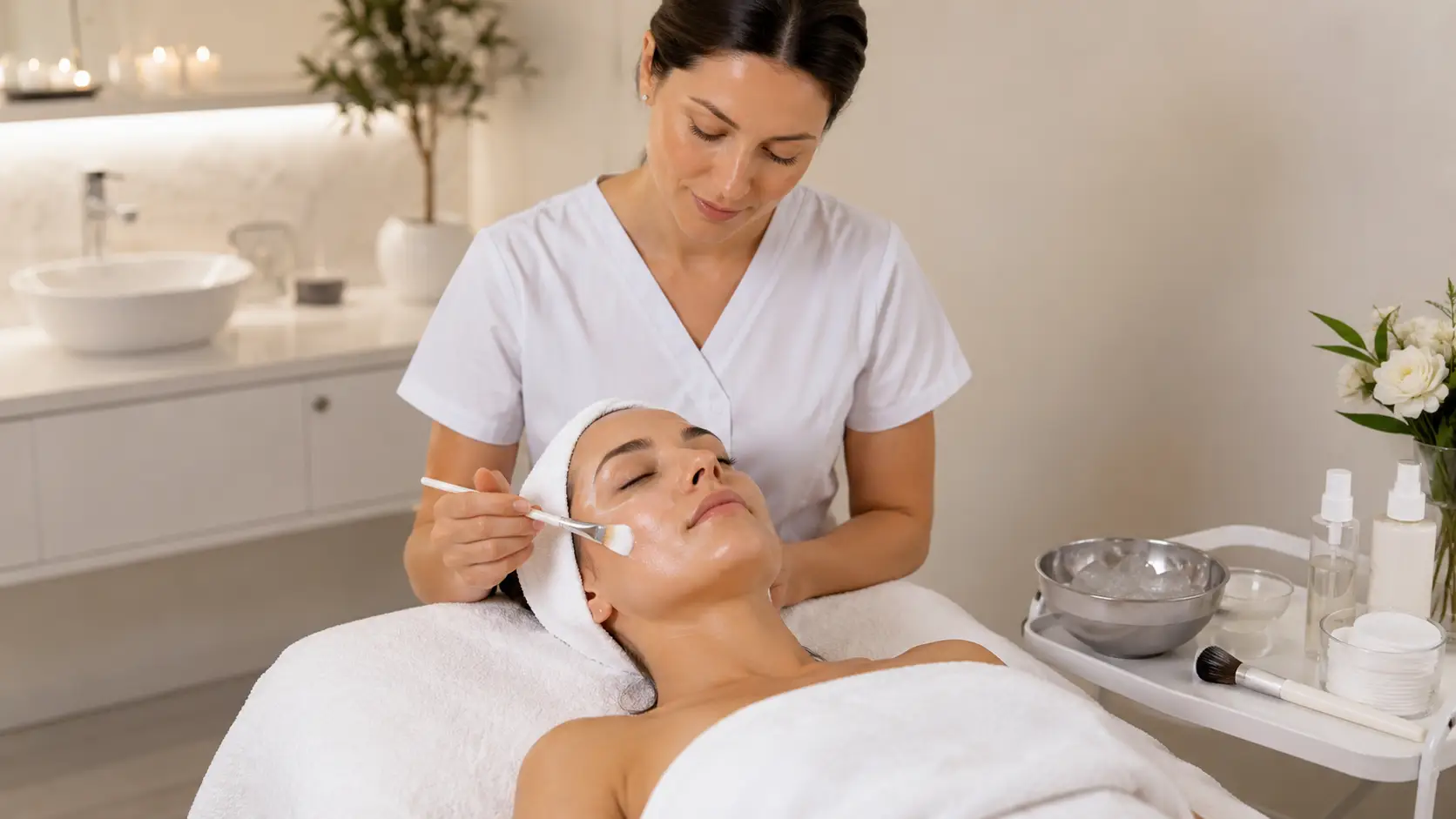
What Is a Beginner Post-Extraction Calming Protocol and Why Does It Matter?
A beginner post-extraction calming protocol is the structured sequence of steps a new esthetician follows immediately after performing extractions to calm inflammation, restore hydration, protect the barrier, and reduce visible redness before the client leaves the treatment room. Extractions create localized trauma to the skin — opening follicles, disrupting the barrier, and triggering acute inflammation. Without a proper calming protocol, clients leave with visible redness, compromised skin, and a poor impression of their results. With a well-executed protocol, those same clients leave with noticeably calmer, more hydrated skin and a strong impression of professional care.
- The post-extraction skin state is compromised, inflamed, and highly permeable — ingredients penetrate more deeply than normal, making ingredient selection critical.
- The core post-extraction calming sequence is: toner or mist, calming serum, occlusive recovery mask. This sequence addresses inflammation, hydration, and barrier sealing in the correct order.
- Effective calming ingredients include niacinamide, centella asiatica, panthenol, allantoin, and humectants such as polyglutamic acid and hyaluronic acid.
- A minimum 12 to 20 minutes is required for an effective post-extraction mask step — cutting this phase short is one of the most common beginner mistakes.
- Fragrance-free formulations are non-negotiable for post-extraction use because the compromised barrier and heightened permeability dramatically increase sensitization risk from any fragrance compound.
- Client communication during and after the calming protocol is part of the professional service and directly affects rebooking rates.
- Avoid all exfoliating actives, retinoids, high-concentration vitamin C, alcohol-based products, and fragranced formulations on post-extraction skin.
Of all the skills new estheticians develop in their first year of practice, mastering extractions gets most of the attention. What receives far less focus — and arguably deserves more — is what happens in the 15 to 20 minutes after extractions are complete. How you transition from extraction work to recovery care is where professional outcomes are made or lost.
A client who leaves your treatment room with visible, uncomfortable redness after a facial is not going to rave about their experience regardless of how skilled your extractions were. A client who leaves with noticeably calmer, visibly hydrated skin that feels soothed and protected will. The difference is almost entirely in the post-extraction protocol — and it is one of the most learnable, most repeatable, and most underutilized professional skills in beginner esthetic practice.
This guide gives new estheticians a complete, step-by-step framework for the post-extraction phase of a facial: why it matters, what the skin needs and why, which ingredients to use and avoid, how to structure the sequence, how long it should take, and how to communicate with clients through the process. Mastering this phase will immediately elevate the quality of your extraction facials and the confidence with which you offer them.
What Every Beginner Needs to Know About Post-Extraction Calming
- Post-extraction skin is compromised, inflamed, and significantly more permeable than untreated skin — your product choices at this stage have amplified effect in both directions.
- The correct calming sequence is toner or mist, calming serum, occlusive recovery mask — in that order, always.
- Niacinamide, centella asiatica, panthenol, and allantoin are your most reliable beginner-safe calming ingredients.
- An occlusive mask applied over your calming serum seals the actives against the skin and dramatically accelerates redness reduction.
- Never skip or shorten the mask step under time pressure — it is the most impactful single step in the post-extraction protocol.
- Fragrance-free is not a preference post-extraction — it is a professional safety requirement.
- Client home care instructions after extractions are a professional obligation, not optional conversation.
- Keeping extraction volume appropriate to the skin’s tolerance makes the calming protocol easier to execute and more effective.
Why Does Skin Need a Calming Protocol After Extractions?
To understand why a post-extraction protocol matters, it helps to understand what extractions actually do to the skin at a tissue level. When a comedone, milia, or other follicular content is manually expressed, the surrounding tissue experiences a specific physiological response that shapes everything about how you should treat the skin in the minutes that follow.
The Physiology of Post-Extraction Skin
Manual expression of follicular contents involves localized mechanical pressure on tissue that contains sebaceous glands, follicle walls, and surrounding dermal structures. This pressure creates micro-trauma to the follicle walls, triggers localized capillary dilation and inflammatory cytokine release, temporarily compromises barrier integrity in the treated areas, and increases transepidermal water loss (TEWL) from the disrupted zones. The visible result is redness, warmth, and occasional minor swelling localized to extraction sites.
Critically, the heightened permeability of post-extraction skin means that topically applied ingredients penetrate more readily and more deeply than they would under normal skin conditions. This is both an opportunity — calming actives can reach the skin more effectively — and a risk, because sensitizing ingredients such as fragrance compounds also penetrate more deeply and carry a significantly higher inflammatory response potential.
What the Skin Needs After Extractions
Four distinct needs must be addressed in the post-extraction protocol, in order of immediate urgency:
- Inflammation reduction: The acute inflammatory response needs to be calmed actively, not simply left to resolve on its own. The right active ingredients can meaningfully accelerate this process.
- Hydration restoration: TEWL from compromised barrier zones causes immediate localized dehydration. Humectant actives restore the water content that supports normal barrier function and healing response.
- Barrier sealing: An occlusive mask layer physically seals the barrier while the underlying actives work, trapping moisture and protecting compromised tissue from environmental exposure.
- Visible result improvement: Your client is going to look in the mirror. They need to see meaningfully calmer, more hydrated skin than what they saw mid-treatment. The calming protocol delivers this outcome.
Why Ingredient Selection Matters More Post-Extraction Than at Any Other Facial Stage
The temporary disruption of the stratum corneum and barrier function that follows manual extractions significantly increases transdermal penetration of topically applied substances. Research on barrier-compromised skin consistently demonstrates that both beneficial actives and potential sensitizers penetrate more readily and to greater depth under these conditions.
This is why the post-extraction phase is simultaneously the highest-opportunity and highest-risk moment in a facial for product application. Calming, hydrating, fragrance-free formulations applied at this stage have amplified positive effect. Sensitizing, irritating, or active-challenge ingredients carry amplified negative risk. The professional standard is to maximize the opportunity and eliminate the risk — which requires understanding exactly what belongs in a post-extraction protocol and what does not.
The Core Ingredient Categories for Post-Extraction Calming
As a new esthetician building your post-extraction protocol, you need a reliable repertoire of ingredients that are both effective at calming and safe on compromised skin. The following categories form the professional foundation of post-extraction skincare.
Niacinamide (Vitamin B3)
Reduces post-inflammatory redness, supports barrier repair, and has a well-established safety profile on compromised skin. One of the most reliable beginner post-extraction actives. Effective at 4–10% concentrations.
Centella Asiatica (Cica)
Derived from an Asian botanical with documented wound-healing, collagen-stimulating, and anti-inflammatory properties. Widely used in post-procedure skincare. Calms reactive skin efficiently without irritation.
Panthenol (Pro-Vitamin B5)
Penetrates readily into compromised skin, soothes irritation, supports cell regeneration, and provides meaningful hydration. A standard ingredient in professional post-treatment formulations for its dual calming and healing action.
Allantoin
A keratolytic and soothing compound that promotes cell proliferation and accelerates surface skin repair. Frequently found in post-extraction and sensitive skin formulations for its ability to calm irritation and support skin renewal.
Polyglutamic Acid (PGA)
Holds up to 5,000 times its weight in water at the skin surface, inhibits hyaluronidase to protect existing HA, and stimulates the skin’s natural moisturizing factor. Particularly valuable post-extraction for surface hydration sealing.
Hyaluronic Acid (HA)
Penetrates into the epidermis and upper dermis to restore moisture at depth. Heightened post-extraction permeability enhances HA delivery into skin layers where it directly supports healing tissue. Foundational hydration ingredient.
Ingredients to Avoid on Post-Extraction Skin
New estheticians should memorize this list as clearly as the ingredients above. Applying any of these to post-extraction skin is a professional error with direct client consequences.
- AHAs and BHAs — glycolic, lactic, salicylic acids: active exfoliants that further compromise an already disrupted barrier.
- Retinol and retinoids in any concentration: pro-inflammatory on compromised skin and significantly more irritating under heightened permeability conditions.
- High-concentration vitamin C (above 5% L-ascorbic acid): known for stinging and inflammation on sensitized skin.
- Any product containing synthetic fragrance or parfum: fragrance is among the most common sensitizers in skincare; on post-extraction skin, the risk of acute reaction is substantially elevated.
- Alcohol-based toners or astringents: dehydrating and barrier-disrupting, the opposite of what compromised post-extraction skin requires.
- Warming or stimulating ingredients including menthol, capsaicin, ginger, and cinnamon: vasodilating effects worsen post-extraction redness and discomfort.
The “just a little bit won’t hurt” reasoning does not apply to post-extraction skin. Even products you routinely use earlier in a facial can be inappropriate immediately after extractions. When in doubt, apply less and apply safer. The conservative approach protects your client and your professional reputation.
The Step-by-Step Beginner Post-Extraction Calming Protocol
This protocol is designed to be executed within the normal flow of a standard facial service without adding excessive time. It addresses all four post-extraction skin needs in a logical, evidence-supported sequence. New estheticians should practice this sequence until it becomes automatic.
Use clean gauze or a dampened cotton pad with a gentle toner to remove any comedone debris, sebum, or residual product from extraction sites. Work gently. Do not scrub. This step ensures a clean surface for the calming products that follow and removes any lingering debris that could occlude within the treated follicles.
Use a fragrance-free hydrating toner or calming mist containing ingredients such as centella asiatica, aloe vera, or green tea extract. Apply gently with fingertips or a soft pad — do not rub or use circular movements over extraction sites. This step begins the calming process immediately and prepares the surface for serum absorption. Allow to absorb 30 to 60 seconds.
Apply a fragrance-free calming serum containing niacinamide, centella asiatica, panthenol, or a combination of these actives. Use light press-in motions rather than massage strokes. This is not a massage step — it is a targeted delivery step. The serum carries your primary calming and hydration actives into the compromised skin. Allow to absorb for 60 to 90 seconds before the next step.
Apply your chosen occlusive mask over the serum layer. A professional-grade fragrance-free jelly mask applied at this stage serves multiple functions simultaneously: it seals the calming serum against the skin, prevents TEWL from the disrupted barrier zones, provides a cooling effect that reduces the sensation and appearance of redness, and creates the treatment window for the humectants to deliver their hydration effect. Allow the mask to set and remain for 12 to 20 minutes. This step is non-negotiable.
While the mask sets and works, use this time for scalp or shoulder massage (avoiding the face), client education about what to expect post-treatment, home care recommendations, or simply allowing the client a moment of quiet relaxation. Do not use this time to rush through other steps or cut the mask time short. The mask phase is delivering your most significant post-extraction clinical benefit.
Remove the mask gently, following the correct removal technique for your chosen mask type. Assess the skin immediately: redness should be noticeably reduced compared to pre-mask, skin should appear more hydrated and calmer, and the client should report reduced discomfort. If significant redness persists, proceed directly to step 7 rather than applying additional active products.
Apply a simple, fragrance-free moisturizer to seal the barrier and provide final hydration. If the client is leaving during daylight hours, apply a broad-spectrum SPF 30 or higher. Post-extraction skin is more vulnerable to UV damage than intact skin. SPF application at this stage is both a clinical necessity and a professional responsibility.
Before the client leaves the treatment room, provide specific, actionable home care instructions verbally and, where possible, in writing or via a follow-up message. Home care instructions are part of the professional service, not optional conversation. What clients do in the first 24 to 48 hours post-extraction directly affects their healing outcomes and their perception of your work.
The Post-Extraction Recovery Timeline: What Skin Needs at Each Stage
Understanding the timeline of post-extraction skin recovery helps new estheticians make better decisions both during and after the treatment room session. The in-treatment protocol addresses the acute phase; client home care instructions address the recovery phase that follows.
How to Manage Post-Extraction Timing Without Rushing the Recovery Phase
One of the most common practical challenges for new estheticians is time management during the post-extraction phase. Under client scheduling pressure, it is tempting to shorten the mask step to meet the appointment window. This is one of the most consequential beginner mistakes in facial service delivery.
Why the Mask Step Cannot Be Shortened
The 12 to 20 minutes the recovery mask needs to work is not a cosmetic courtesy — it is the window during which the calming and hydration actives you applied underneath the mask are actually doing their most significant work. Cutting this window to five or eight minutes produces a fraction of the redness reduction and hydration delivery that the full window achieves. Clients notice the difference — and in a service context, they will attribute the result to you.
The practical solution is simple: plan your facial timing so the extraction phase and the calming protocol phase are both protected. If your appointment is 60 minutes, extractions should finish no later than 35 to 38 minutes in, giving you the full calming phase plus time for moisturizer, SPF, and client communication before the appointment ends.
Using the Mask Phase Productively
The mask phase is not dead time. Estheticians working in high-quality beginner practices routinely use the 15 to 20 minutes of mask application time for light scalp massage (non-facial), shoulder and neck tension work, arm massage, or quiet relaxation for the client. These additions do not require additional product or setup, elevate the client experience meaningfully, and turn the clinical recovery time into a luxury service moment. They also give you time to prepare your final product steps and organize the client’s home care recommendations before the mask comes off.
The Five Most Common Beginner Mistakes in Post-Extraction Care
- Skipping or shortening the mask step under time pressure. The single most impactful mistake in post-extraction care.
- Applying active products too soon or in too high a concentration on freshly extracted skin.
- Using a product with synthetic fragrance on post-extraction skin because it is already in the routine.
- Attempting additional extractions or massage after the calming serum is applied, disrupting the product application.
- Not providing home care instructions because the appointment ran over or the conversation felt awkward.
Estheticians incorporating Poly-Luronic™ Jelly Masks by Luminous Skin Lab into their post-extraction recovery step consistently report that the mask’s predictable 12-to-15-minute set window fits naturally into the calming phase without workflow disruption — which matters particularly when you are new and still managing appointment timing actively. The cooling effect that begins within the first two to three minutes of set provides immediate client comfort feedback, which helps newer estheticians navigate the transition from extraction work to recovery with confidence.
Practitioners also note a specific advantage in the mask’s PGA-forward formulation at this stage: applied over a hyaluronic acid or niacinamide calming serum, the PGA component’s hyaluronidase-inhibiting action actively protects the serum’s HA content from enzymatic degradation during the treatment window — extending the effective window of the serum layer underneath. Compared to alginate-only masks previously used in the same protocol step, the dual-humectant system produces a noticeably more hydrated immediate post-removal skin response that clients comment on unprompted. The 100% fragrance-free formulation removes the sensitization risk calculation entirely for post-extraction application — an important simplification for estheticians who are still building their product knowledge and do not want to be second-guessing ingredient safety under client pressure.
How to Talk to Clients During and After the Post-Extraction Calming Phase
Client communication during the recovery phase of a facial is a professional skill that new estheticians often underinvest in. What you say — and how you say it — during the post-extraction phase directly shapes how the client interprets their experience and how confident they feel about booking again.
Setting Expectations During the Extraction Phase
Before you begin extractions, briefly explain what the client may feel and see: mild discomfort at specific points, temporary redness that the calming phase will address, and the fact that the post-extraction protocol is a planned and important part of the treatment. This prevents clients from being surprised by redness mid-service and reframing it as a negative outcome.
Narrating the Calming Protocol as You Apply It
New estheticians sometimes go quiet during the post-extraction phase, which can leave clients uncertain about what is happening. A brief narration — “I’m now applying our calming serum to help settle the skin after the extractions, and then we’ll put on a cooling mask that will calm any redness” — reassures the client, signals professional competence, and explains why the additional time is being taken. Clients who understand the protocol appreciate it. Clients who do not know what is happening wonder if something went wrong.
Home Care Instructions Every Client Needs After Extractions
Before the client leaves, provide clear verbal home care instructions covering the following:
- Avoid touching the face for the remainder of the day.
- Use only a gentle cleanser and a basic fragrance-free moisturizer that evening.
- Avoid makeup for the rest of the day if possible.
- Avoid heavy exercise and activities that cause significant sweating for 24 hours.
- Apply a broad-spectrum SPF 30 or higher the following morning.
- Do not use exfoliating products, retinoids, or active treatments for 48 hours post-extraction.
- Some temporary minor redness or texture at extraction sites is normal and expected to resolve within 24 hours.
- Contact the esthetician if they experience prolonged redness beyond 24 hours, significant breakout, or signs of infection.
Delivering these instructions clearly and confidently — not rushing through them as an afterthought — communicates professional expertise and client care. It also reduces the likelihood of a client using an inappropriate product at home that undoes your in-treatment calming work.
How Extraction Volume Affects the Post-Extraction Recovery Protocol
The efficacy of your post-extraction calming protocol is partly determined by decisions you make during the extraction phase itself. New estheticians sometimes approach extractions with a completionist mindset — attempting to clear every visible comedone in a single session. This approach generates more post-extraction trauma than a targeted protocol can fully recover within a standard treatment window.
The Professional Standard: Limit Volume to Skin Tolerance
The professional standard for extraction volume is not completeness — it is skin tolerance. Perform extractions on accessible, ready-to-extract lesions only. Do not attempt to force deep or resistant content that requires repeated high pressure. Stop when the skin is showing signs of fatigue: widespread diffuse redness (beyond localized extraction sites), visible swelling, broken capillaries, or client reports of significant discomfort.
A targeted extraction session that stays within skin tolerance and is followed by an effective calming protocol produces better outcomes over multiple appointments than an aggressive single-session clearing attempt that leaves the skin traumatized and requires a longer recovery period. Building this judgment early in your career will protect your clients and your professional reputation.
Connecting Extraction Volume to the Calming Protocol
The more extractions you perform in a session, the more comprehensive your calming protocol needs to be. For sessions with minimal extraction work, a calming serum and a 12-minute mask may be sufficient. For sessions with extensive extraction work, a cold compress or chilled calming pad step before the serum, a full-spectrum calming serum, and a 20-minute mask phase may all be appropriate. Calibrate the protocol to the treatment, not to a fixed formula.
Professional and Scientific References
The protocols and ingredient science referenced in this article draw from established dermatological and cosmetic chemistry knowledge:
- Barrier disruption and heightened transdermal permeability following mechanical skin manipulation. Established dermatological research on skin barrier function and wound response.
- Niacinamide anti-inflammatory and barrier-supportive properties at 4–10% concentrations. Cosmetic dermatology literature, multiple peer-reviewed studies.
- Centella asiatica wound-healing, collagen-stimulating, and anti-inflammatory mechanisms. Phytotherapy Research and cosmetic ingredient science literature.
- Panthenol (Pro-Vitamin B5) skin penetration and soothing efficacy. Established cosmetic ingredient safety and efficacy documentation.
- Polyglutamic acid moisture-binding capacity (up to 5,000 times weight in water), hyaluronidase inhibition, and NMF stimulation. Typology 2021–2025; cosmetic chemistry literature.
- PGA upregulation of hyaluronic acid synthase-1, -2, and -3. MDPI 2024.
- Post-procedure skin care standards for fragrance-free and barrier-supportive formulations. Professional esthetics education standards; dermatology post-procedure care protocols.
For new estheticians building their post-extraction calming protocol, the mask selection step is where many beginners either strengthen or undermine the rest of their calming sequence. The Poly-Luronic™ Jelly Mask by Luminous Skin Lab is the formulation our education team most frequently recommends for this specific application context. Its dual PGA and hyaluronic acid humectant system delivers both surface occlusion and deep hydration, the cooling effect begins reducing visible redness within the first few minutes of set, and the 100% fragrance-free clean formulation removes the sensitization risk concern that makes post-extraction product selection uniquely high-stakes. The predictable 12-to-15-minute set window fits naturally into the post-extraction protocol phase, and the single-piece removal delivers a professional client experience finish to the calming sequence.
Explore the Poly-Luronic™ Jelly Mask Line →Frequently Asked Questions: Post-Extraction Calming Protocols for Beginners
What should I do right after doing extractions on a client?
Immediately after extractions, apply a gentle toner or hydrating mist to begin calming the skin, then transition into your calming and recovery protocol. The skin after extractions is inflamed, sensitized, and has compromised barrier integrity in the areas where follicles were cleared. Your job is to reduce inflammation, prevent infection risk through proper product selection, restore hydration, and seal the skin before the client leaves the treatment room. A structured calming sequence starting with a soothing toner, followed by a calming serum, then an occlusive recovery mask, covers all of these goals efficiently.
How long should a post-extraction calming phase last during a facial?
A proper post-extraction calming phase should last a minimum of 12 to 20 minutes. This time allows an applied mask or compress to work through the skin, redness to reduce meaningfully before client departure, and the barrier to begin its initial recovery response. Many new estheticians cut the calming phase short due to time pressure, which leaves clients leaving with visible redness and inflammation that could have been significantly reduced with a proper mask step. Plan your treatment timing so the calming phase is protected and non-negotiable.
What ingredients should I use to calm skin after extractions?
The most effective post-extraction calming ingredients for beginners to work with are niacinamide, which reduces redness and supports barrier recovery; centella asiatica (also called cica), which has documented wound-healing and anti-inflammatory properties; panthenol, which soothes and hydrates compromised skin; allantoin, which promotes skin cell regeneration and calms irritation; and humectants such as polyglutamic acid and hyaluronic acid, which restore hydration to the skin without adding irritation. Avoid actives such as retinol, AHAs, BHAs, vitamin C in high concentrations, or any fragrance-containing products immediately post-extraction.
Is it safe to use a jelly mask after doing extractions?
Yes, a professional-grade fragrance-free jelly mask is one of the most effective post-extraction recovery tools available to beginner estheticians. The occlusive layer traps calming serums against the skin, the cooling effect of the setting mask reduces post-extraction inflammation, and the hydration delivery supports barrier recovery. The critical requirement is that the jelly mask formulation must be 100 percent fragrance-free and free from sensitizing ingredients, because post-extraction skin is compromised and highly permeable. Any fragrance or sensitizer applied occlusively at this stage carries a heightened inflammatory risk.
Why does my client's skin look so red after extractions and how do I calm it down?
Redness after extractions is a normal inflammatory response. When follicular contents are manually expressed, surrounding tissue experiences localized trauma, capillary dilation, and acute inflammation. This is expected and temporary. To calm it effectively, transition to a cooling calming protocol immediately: apply a soothing toner or mist, layer a calming serum containing niacinamide or centella asiatica, then apply an occlusive cooling mask such as a professional jelly mask. The combination of occlusion, cooling, and calming active ingredients will meaningfully reduce visible redness before the client leaves. Avoid anything warming such as steam or massage to the extracted areas during the recovery phase.
What products should I absolutely avoid putting on skin right after extractions?
Immediately after extractions, avoid all exfoliating actives including AHAs, BHAs, and enzymes; retinol and retinoids in any concentration; high-concentration vitamin C serums, which can sting and further irritate; any product containing synthetic fragrance or parfum; alcohol-based toners or astringents, which dehydrate and further compromise the barrier; warming or stimulating ingredients such as menthol, capsaicin, or ginger; and heavy occlusive oils applied directly to open follicular pores before a serum layer has been established. Post-extraction skin needs calming, hydration, and protection, not additional chemical challenge.
How do I know if I did too many extractions and how should I handle a client's skin that is really irritated?
Signs that extractions have gone beyond the skin's tolerance include widespread erythema that persists and deepens rather than fading, areas of broken or weeping skin beyond the treated follicles, visible bruising or significant swelling, or a client reporting sharp pain rather than the expected mild discomfort. If the skin shows these signs, do not attempt additional treatment steps. Apply a cold compress or chilled calming pad, follow with a gentle barrier recovery serum, and use a fragrance-free occlusive mask to seal the skin. Document the session carefully. For future appointments, reduce extraction volume and adjust technique. A calmer approach over two sessions produces better outcomes than aggressive single-session clearing.
Should new estheticians do extractions at all, or is it better to skip them early in their career?
New estheticians should absolutely learn and practice extractions, as they are a foundational esthetician skill. However, early in your career, discipline in limiting extraction volume per session is more important than attempting comprehensive clearing. Start with accessible, ready-to-extract lesions only, avoid forcing anything that requires significant pressure, and prioritize mastering your post-extraction calming protocol before increasing extraction complexity. The post-extraction recovery phase is just as important as the extraction itself, and clients will judge the outcome largely by how their skin looks and feels when they leave, not how many extractions were performed.
What do clients need to do at home after getting extractions, and what should I tell them?
Clients should be told to avoid touching their face for the rest of the day, keep their skincare routine simple and gentle for 24 to 48 hours post-treatment, use only a gentle cleanser and a basic fragrance-free moisturizer that evening, avoid makeup for the rest of the day if possible, keep hands away from the extracted areas, avoid workouts and activities that cause heavy sweating for 24 hours, and apply SPF the following morning. Advise them that some redness may persist for a few hours and that small temporary skin texture changes at extraction sites are normal. If they experience significant breakout, prolonged redness beyond 24 hours, or signs of infection, they should contact you.
How does the Poly-Luronic Jelly Mask work as a post-extraction recovery step for new estheticians?
The Poly-Luronic Jelly Mask by Luminous Skin Lab is formulated with a dual PGA and hyaluronic acid humectant system that makes it particularly effective as a post-extraction recovery step. The mask's occlusive set layer traps calming serums applied underneath against compromised post-extraction skin, the cooling effect of the setting mask reduces post-extraction inflammation and redness, and the PGA component inhibits hyaluronidase to protect applied and naturally occurring hyaluronic acid during the recovery window. The formulation is 100 percent fragrance-free and free from sensitizing ingredients, which is the non-negotiable requirement for any mask used on post-extraction skin. New estheticians find the predictable 12 to 15 minute set window fits naturally into the post-extraction phase of a standard facial service.
The Post-Extraction Protocol Is Where Beginners Build Real Professional Authority
Mastering extractions is important. Mastering what happens after extractions is what separates estheticians who consistently produce visible, impressive results from those who technically perform the same services but deliver a different client experience.
The post-extraction calming protocol is learnable, repeatable, and deeply impactful. Once you understand why post-extraction skin needs specific care, which ingredients serve that need, how to structure the sequence, and how to communicate with clients through the process, you will approach every extraction facial with the kind of confidence that comes from knowing exactly what you are doing and why it works. Your clients will notice — and they will come back.
Build this protocol into your standard practice now, before your volume increases and before time pressure starts to create shortcut temptations. The habits you establish in your first year of practice tend to follow you. Make the post-extraction calming phase one of the professional standards you never compromise on, and it will consistently elevate the quality of your work above what the market expects from a beginner esthetician.