What Are the Best Beginner Products for Hydration Facials?
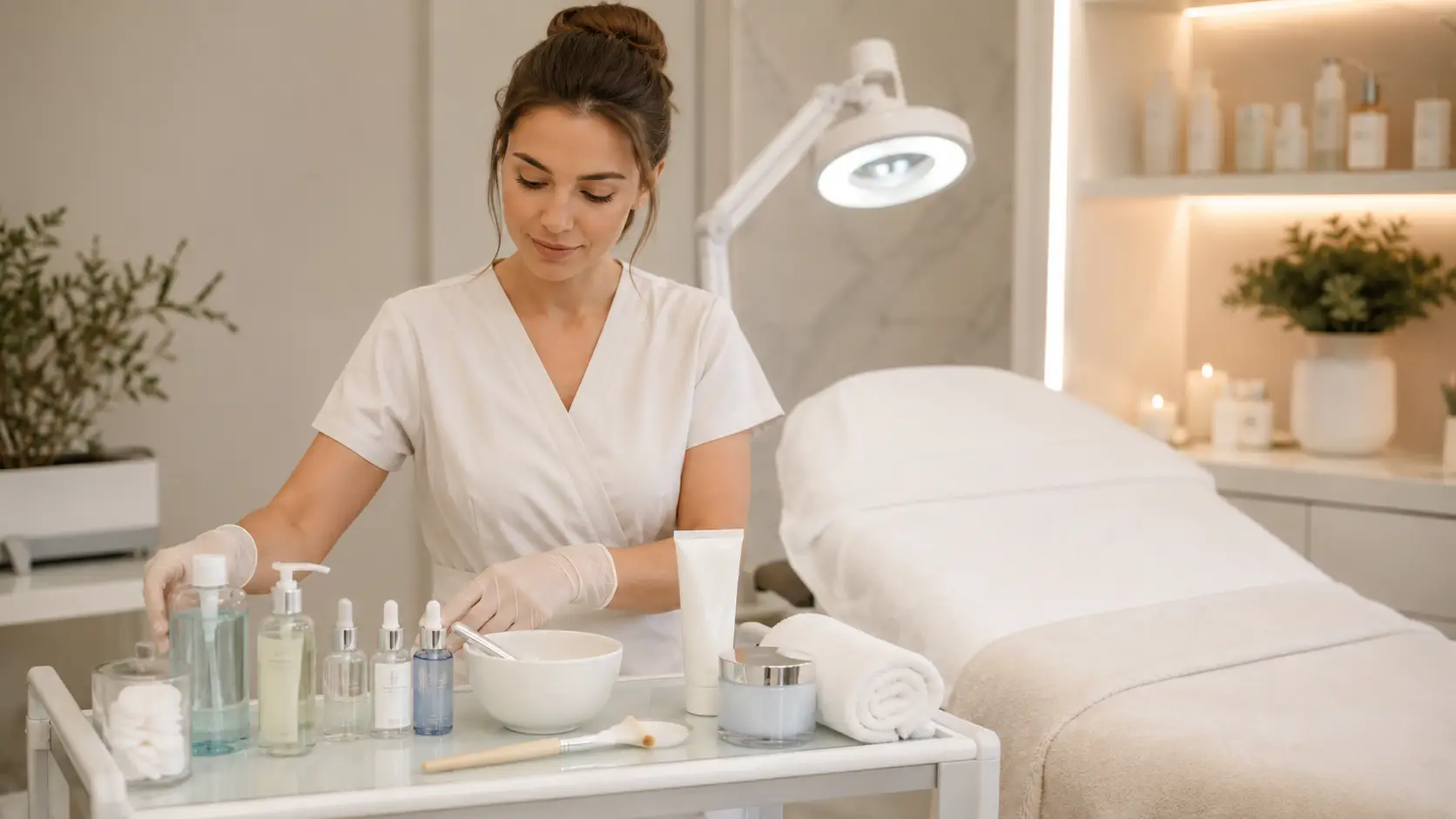
The best beginner products for hydration facials fall into five core categories: a gentle cleanser that preserves the skin barrier, a light exfoliant, a hydrating serum containing advanced humectants, an occlusive hydration mask, and a barrier-sealing moisturizer for the close. New estheticians who master a small number of high-quality products in each category will consistently outperform those who overload their back bar with unfamiliar products they have not yet learned to use correctly.
- Choose a milk or hydrating gel cleanser that does not strip the skin barrier — cleansing is the foundation everything else depends on.
- A hydrating serum containing both polyglutamic acid and hyaluronic acid delivers dual-depth moisture that single-humectant formulations cannot match.
- A professional jelly mask is one of the strongest performing mask options for hydration facials — it delivers occlusion, cooling, and active humectant delivery simultaneously, and creates a client experience that drives rebooking.
- Barrier-supporting moisturizers containing ceramides, peptides, or squalane seal the hydration work done in every prior step.
- Five to six well-chosen products build a more professional result than fifteen products used inconsistently.
- Test products across at least four real client sessions before committing to full professional quantities.
One of the first questions every new esthetician asks after graduation is some version of: what products do I actually need? Esthetics school gives you a foundation in skin science and technique, but it rarely prepares you for the practical decisions involved in stocking a professional back bar — especially when the options feel unlimited and the budgets are not.
The hydration facial is typically among the first services new estheticians offer, and for good reason. It is broadly appropriate across skin types, it demonstrates immediate visible results, and it does not require advanced devices or complex technique to execute well. But the product choices you make within that protocol matter more than most beginners realize. The wrong cleanser strips the very barrier you are trying to support. An underpowered serum delivers nothing that the mask cannot undo. A mask that creates an inconsistent or uncomfortable experience will keep a client from rebooking, regardless of how technically correct your technique was.
This guide walks you through each step of the hydration facial protocol, explains what each product category needs to accomplish, and gives you the ingredient knowledge to evaluate options intelligently rather than just responding to marketing claims or price signals.
What New Estheticians Need to Know About Hydration Facial Products
- A hydration facial back bar needs five product categories — cleanser, exfoliant, serum, mask, and moisturizer. Master these before adding anything else.
- Cleanser choice is the most underestimated product decision in a hydration protocol — the wrong format undoes everything that follows.
- Serums with a dual PGA + HA humectant system outperform single-humectant formulations in hydration delivery and duration.
- Professional jelly masks are the highest-performing mask category for hydration facials — they combine occlusion, cooling, and active ingredient delivery in a single step.
- The mask removal moment is cited by clients as the most memorable part of a jelly mask treatment — that experience drives rebooking without any sales conversation.
- Fragrance-free formulations are a professional requirement, not a preference — especially for any products applied over recently exfoliated skin.
- Testing products in your own hands, across multiple sessions, before buying at volume is the professional standard.
Why a Simple, Focused Back Bar Outperforms a Crowded One for New Estheticians
The instinct to collect products is understandable, especially after spending months in an environment where product education is constant and every brand representative makes a compelling case for their line. But in the treatment room, the number of products on your shelf has no bearing on client outcomes. What matters is whether the products you use are right for the protocol, whether you understand what each one does and why, and whether you can apply them consistently across every session.
Experienced estheticians who train new practitioners consistently observe the same pattern: beginners who start with a small, focused selection of products they understand deeply build confidence faster, produce more consistent results, and make better upgrade decisions later than those who arrive with a full shelf of untested options. The breadth of your product knowledge does not come from owning more products — it comes from using fewer products more intentionally.
For a hydration facial, five core product categories cover everything you need to deliver a complete, professional service:
- A gentle, barrier-preserving cleanser
- A light exfoliant — enzyme, mild AHA, or manual
- A hydrating serum with active humectants
- A professional hydration mask
- A barrier-supporting moisturizer or SPF for the close
Optional additions — a hydrating essence toner, eye area treatment, neck and décolleté care — can be introduced once your core protocol is solid. They are enhancements, not essentials.
Step One: Choosing the Right Cleanser for a Hydration Facial
The cleanser is the first product that touches your client’s skin, and it sets the biochemical stage for everything that follows. This makes it arguably the most consequential product decision in a hydration protocol — and the one that receives the least attention from beginners.
What a Cleanser Needs to Accomplish in a Hydration Protocol
In a hydration facial, the cleanser has one primary job: remove surface debris, makeup, sebum, and environmental residue without disrupting the skin’s lipid barrier. The moment you strip the skin’s natural protective layer, every subsequent step is working to repair damage the cleanser caused rather than building on a stable foundation. That is not a hypothetical risk — it is a clinical reality that shows up as tightness, reactivity, and reduced serum absorption in the treatment session.
Cleanser Formats That Work for Hydration Facials
Milk cleansers are the most broadly forgiving choice for hydration protocols across skin types. They emulsify surface debris effectively without using surfactants strong enough to compromise the acid mantle. Hydrating gel cleansers — those formulated without sulfates — are an excellent alternative, particularly for clients who prefer a water-rinsable format. Cream cleansers are appropriate for dry or mature skin types in hydration protocols but may leave a slight film that interferes with product absorption in normal to oily skin.
What to avoid: any foaming cleanser that uses sodium lauryl sulfate or sodium laureth sulfate as primary cleansing agents. These disrupts the skin barrier measurably in a single use. For clients receiving a hydration facial — especially those presenting with dehydration, sensitivity, or compromised barrier function — this is a treatment contradiction, not just a preference mismatch.
Key Ingredients to Look for in a Beginner Cleanser
Gentle amphoteric or glucoside surfactants, hyaluronic acid or glycerin in the formulation base, ceramides or fatty acids that reinforce the lipid barrier rather than degrade it, and a pH in the 4.5 to 5.5 range that respects the skin’s acid mantle. A cleanser that checks these boxes will consistently prepare skin to receive serums, masks, and moisturizers more effectively than one chosen on scent, packaging, or price alone.
Step Two: Light Exfoliation That Supports Hydration Rather Than Competing With It
Exfoliation in a hydration facial is a supporting step, not the headline act. Its purpose is to clear the surface layer of accumulated dead cells that would otherwise physically block serum absorption and mask penetration — not to deliver the deep resurfacing work you might perform in an exfoliation-focused treatment.
Which Exfoliation Formats Work Best
For a hydration facial protocol, enzyme exfoliation is the most forgiving and broadly appropriate starting point. Papain from papaya, bromelain from pineapple, and pumpkin-derived enzymes all break down the protein bonds holding dead skin cells without creating the transient barrier disruption associated with stronger AHA concentrations. They are effective, predictable, and appropriate for sensitive or reactive skin types that are common in clients seeking hydration-focused treatments.
Gentle low-concentration lactic acid — typically in the 5 to 10 percent range for professional formulations — is an excellent secondary option. Lactic acid has a dual action in a hydration protocol: it exfoliates via AHA mechanism while simultaneously functioning as a humectant, drawing water into the skin during the exfoliation process. This makes it particularly synergistic with a hydration-focused service. New estheticians should master enzyme application fully before introducing lactic acid, particularly for sensitive clients.
Manual exfoliation — facial scrubs or microfiber-assisted techniques — is generally not the best fit for hydration facials. The physical disruption creates micro-inflammation that competes with the calming, barrier-supporting objectives of the rest of the protocol.
Step Three: The Serum Layer — Why Humectant Quality Determines Everything
The serum is where the active hydration science in your protocol lives. This is the step where ingredient knowledge translates directly into treatment outcomes — and where understanding the difference between a standard single-humectant formulation and an advanced dual-humectant system gives new estheticians a meaningful clinical edge.
Why Hyaluronic Acid Alone Is Not Enough
Hyaluronic acid has been the default hydrating serum ingredient for over a decade, and for good reason: it is effective, well-tolerated, and broadly understood by clients. HA holds approximately 1,000 times its weight in water and, depending on molecular weight, can deliver moisture to deeper epidermal and dermal layers where it supports collagen function and tissue volume.
However, HA has a limitation that single-ingredient formulations cannot overcome: the enzyme hyaluronidase, present naturally in the skin, continuously degrades both topically applied and endogenous hyaluronic acid. This enzymatic degradation shortens the active window of even the best HA serum. Without something protecting the HA you apply, a meaningful portion of it is broken down before it can deliver its full hydration benefit.
What Polyglutamic Acid Adds to the Serum Layer
Polyglutamic acid is a fermentation-derived biopolymer that holds up to 5,000 times its weight in water — more than four times the moisture-binding capacity of hyaluronic acid. Its higher molecular weight means it remains at the skin surface, forming a transparent microgel film that seals moisture against transepidermal water loss rather than penetrating to deeper layers. This creates a complementary mechanism to HA rather than a competing one: HA draws moisture to deeper layers, PGA seals it at the surface.
More critically for treatment room outcomes: PGA actively inhibits hyaluronidase. This means PGA in a serum formulation does not just add its own moisture-binding capacity — it also protects the HA already in the formulation, as well as the skin’s own naturally occurring hyaluronic acid, from enzymatic degradation. PGA also stimulates the skin’s natural moisturizing factor (NMF) production, increasing the intrinsic water-retention capacity of the stratum corneum beyond what either humectant could achieve independently.
The Dual-Humectant Mechanism New Estheticians Should Understand
Hyaluronic acid (HA): Penetrates to the epidermis and upper dermis where it attracts water from tissue and supports collagen hydration. Moisture-binding capacity approximately 1,000 times its weight. Degraded by hyaluronidase enzyme over time, shortening its active window.
Polyglutamic acid (PGA): Remains at the stratum corneum surface where it forms an occlusive microgel film. Moisture-binding capacity up to 5,000 times its weight. Inhibits hyaluronidase, protecting both applied and naturally occurring HA. Stimulates NMF production in the stratum corneum. Upregulates hyaluronic acid synthase expression, supporting the skin’s own HA production over time.
Combined result: Deep moisture delivery from HA, surface sealing and enzymatic protection from PGA, NMF stimulation from PGA, and a more sustained hydration outcome than either ingredient produces independently. Clinical corneometry data shows a 60% increase in skin moisture at 30 minutes and a 25% elevation maintained at 8 hours with 2% PGA application — outperforming low-molecular-weight HA in both magnitude and duration.
Other Beneficial Serum Ingredients for Hydration Facials
Beyond the PGA + HA core, new estheticians should look for serums that include additional barrier-supporting or hydration-amplifying ingredients. Niacinamide at 4 to 5 percent strengthens the skin barrier, reduces TEWL, and calms redness — making it exceptionally compatible with hydration protocols across all skin types. Panthenol (provitamin B5) supports barrier repair and provides its own humectant contribution. Beta-glucan is a potent anti-inflammatory that also enhances skin hydration and supports immune response in barrier-compromised skin.
Step Four: The Mask — The Most Client-Visible Moment in a Hydration Facial
The mask is the experiential centerpiece of a hydration facial. It is the step clients most often describe afterward, the moment that most influences whether they rebook, and the product category where the difference between a generic and a professional choice is most visible in the treatment room. New estheticians who underinvest in mask quality are leaving the most memorable part of their service to the weakest link in their protocol.
Why Jelly Masks Outperform Sheet Masks and Cream Masks in Professional Hydration Facials
Sheet masks are straightforward to use and broadly available, but they have significant limitations in a professional context. They deliver their actives through a single contact layer with limited occlusion, the fit across different face shapes is inconsistent, and the client experience — while pleasant — is not particularly distinctive. Most clients have used sheet masks at home; the professional version does not feel meaningfully different.
Cream masks perform well for intensive barrier repair and are appropriate in dry or sensitized skin protocols, but they lack the occlusive seal that maximizes serum absorption and they do not create the tactile and visual experience that drives client excitement.
Professional jelly masks function on a different level in all three of these dimensions. They deliver active ingredients within an occlusive seal that compresses full-treatment hydration delivery into a single 10-to-20-minute window. The setting process creates a distinctive cooling sensation that clients consistently describe as one of the most pleasurable parts of any facial treatment. And the removal — peeling a fully intact mask from the face — creates a memorable, distinctive moment that clients photograph, describe to friends, and return specifically to experience again.

What to Look for in a Professional Jelly Mask for Hydration Facials
Not all professional jelly masks are formulated equally for hydration protocol use. The ingredient science matters here in exactly the same way it matters in serum selection. Look for formulations that include a dual PGA + HA humectant system for the same reasons discussed in the serum section — surface occlusion, deep moisture delivery, and hyaluronidase inhibition all contribute meaningfully when applied in an occlusive format. Fragrance-free formulations are a non-negotiable for professional use across skin types, particularly for any client with sensitivity, rosacea, or post-treatment skin. Full INCI ingredient disclosure from the brand is a basic professional requirement — any brand that cannot provide it should be disqualified.
Beyond formulation, evaluate set time consistency. A mask that performs reliably within a 12-to-18-minute window in your specific treatment room conditions gives you the working time needed to add a scalp massage, hand massage, or brief client education conversation during mask rest, without rushing removal. This consistency is what separates professional-grade jelly mask products from consumer-oriented alternatives masquerading as professional.
Building Your Hydration Facial Back Bar: The Five-Step Product Framework
The following framework maps each step in a beginner hydration facial protocol to the product category it requires, the primary ingredient function to look for, and the common beginner mistakes at each step. Use this as a purchasing guide when evaluating products before your first professional back bar investment.
Step Five: The Moisturizer Close and Why Most Beginners Underestimate It
The final product in a hydration facial protocol is the one that determines how long the treatment’s benefits last after the client leaves your table. A moisturizer applied at the close of a hydration facial has one primary function: create a semi-occlusive seal over all the active layers underneath, slowing transepidermal water loss and supporting barrier recovery over the next several hours.
What Moisturizer Ingredients to Look for
Ceramides are the most directly barrier-functional moisturizer ingredient for a hydration protocol. They are the primary lipid component of the skin’s natural barrier structure, and topical ceramide application after barrier-disrupting steps — even mild exfoliation — supports faster structural recovery. Look for formulations that list ceramide NP, ceramide AP, ceramide EOP, or ceramide complex in the ingredient panel rather than generically referencing ceramides in marketing copy without INCI specification.
Peptides — particularly Matrixyl 3000, argireline, or palmitoyl tripeptide sequences — add a collagen-stimulating secondary benefit that is especially valuable for mature or aging skin clients in a hydration protocol. Squalane is a lightweight emollient that closely mimics the skin’s natural sebum composition, providing excellent barrier sealing without heaviness or comedogenic risk across skin types.
Moisturizer Mistakes New Estheticians Make
The most common is skipping this step entirely after a strong mask, on the theory that the mask has done all the work needed. It has not. The mask has delivered active hydration; the moisturizer is what prevents that hydration from evaporating within the first 30 minutes after the client walks out into a temperature-controlled or outdoor environment. The second common mistake is using a thick occlusive balm as a close — appropriate for severely compromised barrier skin but unsuitable as a general-use protocol close for normal-to-oily or acne-prone skin types.
Estheticians building hydration facial protocols for the first time consistently observe one pattern after introducing the Poly-Luronic™ Jelly Mask by Luminous Skin Lab as their mask step: clients begin mentioning the skin results of the facial more specifically than they did with sheet masks. The difference is not just the experience of the peel-off removal — it is that the PGA + HA occlusive layer over a well-applied serum produces a post-removal skin response that is immediately visible to both the esthetician and the client.
In practice, the most common workflow observation from estheticians new to jelly masks is that the consistent 12-to-15-minute set window — which does not require adjustment across back-to-back clients the way less predictable brands do — allows them to complete a full scalp massage and décolleté massage sequence during every service without timing anxiety. That reliability translates directly into a more confident, polished treatment delivery. For new estheticians learning to manage a complete service flow, eliminating the timing variable is a meaningful practical advantage compared to jelly mask alternatives that require ratio adjustments between sessions.
How to Evaluate Products Before Buying: A Practical Framework for New Estheticians
The professional product market is not short of options. What it is short of is unbiased evaluation criteria. Marketing language, distributor incentive programs, and social media visibility are all poor proxies for product performance in your specific treatment room, with your specific client base. The following criteria give you a systematic approach to evaluation that does not depend on any of those external signals.
Request Full INCI Disclosure
Any professional brand that cannot provide a complete, accurate INCI list on request should be disqualified for professional treatment room use. This is a basic transparency standard, not an advanced requirement.
Confirm Fragrance-Free Status
Check the INCI for “parfum,” “fragrance,” or any of the 26 EU-listed fragrance allergens. “Lightly scented” is not fragrance-free. For sensitive, reactive, or post-treatment skin, this is a safety standard.
Verify Active Ingredient Presence
Confirm that the ingredients named in marketing copy appear in the actual INCI list. Note their position in the list — ingredients listed near the end are present at low concentrations and may not deliver meaningful functional benefit.
Test Before Buying at Volume
Request samples or purchase the smallest available professional size. Test across at least four client sessions covering different skin types before committing to professional quantities. Performance in real treatment conditions is the only reliable measure.
Assess Protocol Compatibility
Test each product within your actual protocol sequence — over the products you apply before and after it. Some ingredients interact unfavorably under certain layering conditions. Compatibility in isolation does not guarantee compatibility in your specific workflow.
Evaluate Client Skin Response
Assess immediate post-removal skin condition: hydration level, texture improvement, redness response, and visible radiance. Quality hydration facial products produce visible results that clients notice without prompting within the treatment session.
Budget Guidance: How Much Should a New Esthetician Spend on Hydration Facial Products?
The professional product market spans a wide price range, and beginning estheticians often either overspend on a full brand lineup before they know what they need, or underspend on products that cannot deliver professional-quality outcomes. Neither extreme serves you well.
A functional hydration facial back bar covering all five product categories can be built for between $200 and $500 in initial professional product investment, depending on the brands you select and the sizes you start with. Buying travel or professional trial sizes of each product before committing to full back bar quantities is the most cost-efficient approach in your first three to six months of practice.
The one area where budget compression is most likely to cost you is the mask step. A mask is the most visible product moment in the treatment — the step clients feel most, experience most distinctly, and remember longest. A discount jelly mask that sets inconsistently, leaves residue, or produces an underwhelming post-removal skin response will cost you rebooking revenue that far exceeds the savings on the product itself. In this category, professional-grade formulation quality is a revenue decision, not a vanity one.
Professional and Scientific References
The ingredient science referenced in this article draws from peer-reviewed dermatological and cosmetic chemistry research:
- Gamma-PGA barrier strengthening, NMF stimulation, and HA synthase upregulation in skin keratinocyte models. MDPI, 2024. Demonstrated HAS-1, HAS-2, HAS-3 upregulation and aquaporin-3 enhancement with topical gamma-PGA application in reconstructed skin.
- PGA moisture-binding capacity (up to 5,000× weight in water) and hyaluronidase inhibition mechanism. Typology; cosmetic chemistry literature, 2021–2025.
- PGA corneometry data: 60% moisture increase at 30 minutes, 25% elevation at 8 hours with 2% PGA application. Reviva Labs; clinical corneometry review, 2025.
- Ceramide barrier repair function and topical ceramide application outcomes. Established dermatological and cosmetic science literature.
- Lactic acid dual function as exfoliant and humectant at professional use concentrations. Established AHA mechanism literature.
- PGA + HA synergistic hydration — slows HA degradation, enhances sustained moisturizing effect. Stanford Chemistry / cosmetic formulation literature, 2024.
For new estheticians building a hydration facial back bar, the mask step is where product choice has the most visible impact on both clinical outcomes and client experience. The Poly-Luronic™ Jelly Mask by Luminous Skin Lab is the formulation our education team most consistently references when advising beginners on their first professional jelly mask selection. Developed by a licensed esthetician to address ingredient quality, set consistency, and post-treatment safety gaps common across the professional jelly mask market, the Poly-Luronic™ blend delivers the dual PGA + HA humectant mechanism discussed throughout this guide — surface sealing, deep moisture delivery, hyaluronidase inhibition, and NMF stimulation — within a predictable, fragrance-free, clean-label format that is straightforward to incorporate from your very first client session.
Explore the Poly-Luronic™ Jelly Mask Line →Frequently Asked Questions: Beginner Products for Hydration Facials
What products do I actually need to perform a hydration facial as a new esthetician?
To perform a complete hydration facial, a new esthetician needs five core product categories: a gentle milk or gel cleanser, a light exfoliant or enzyme, a hydrating serum containing hyaluronic acid or polyglutamic acid, a hydration mask, and a barrier-supporting moisturizer or SPF for the close. Starting with these five categories before adding anything else keeps your back bar manageable and your protocol repeatable.
How much should I spend on products to start offering hydration facials?
Most new estheticians can build a functional hydration facial back bar for between $200 and $500 in professional product investment, depending on brand and quantity purchased. Buying travel or trial sizes first, then investing in full professional sizes once you have confirmed which products perform well in your hands, is the most cost-efficient approach when starting out.
What is the best type of cleanser for a beginner hydration facial?
A gentle milk cleanser or a hydrating gel cleanser is the best starting point for hydration facials. These formats remove surface debris without stripping the skin barrier, which sets the stage for serum absorption and mask penetration. Avoid foaming sulfate cleansers for hydration protocols, as they disrupt the lipid barrier you are trying to support throughout the rest of the service.
Should I use a hyaluronic acid serum or a polyglutamic acid serum in a beginner hydration facial?
Both are excellent choices, and a serum that combines polyglutamic acid and hyaluronic acid delivers better results than either alone. Hyaluronic acid draws moisture into deeper skin layers, while polyglutamic acid seals it at the surface, holds up to five thousand times its weight in water, and inhibits the enzyme that breaks down the skin’s own hyaluronic acid. When layering a hydration serum under an occlusive mask, the dual-humectant approach produces visibly stronger hydration results within a single treatment session.
What kind of mask works best for a beginner hydration facial?
A professional jelly mask is one of the strongest performing options for a beginner hydration facial because it delivers occlusion, cooling, and active humectant delivery in a single step, and it creates a memorable client experience that sheet masks and cream masks cannot replicate. The peel-off removal moment is consistently cited by clients as a highlight of the treatment. A jelly mask also works over a serums layer, amplifying the absorption of whatever humectants you applied underneath.
Can I do a hydration facial with just a few products or do I need a lot?
A professional hydration facial can absolutely be performed with a small, focused product selection. Estheticians working with four to six targeted products often deliver more consistent, impressive results than those using fifteen products they have not fully mastered. The key is knowing what each product does and why it belongs at each step, rather than adding volume for the sake of looking comprehensive.
Do I need a toner in a beginner hydration facial protocol?
A toner is optional rather than essential in a beginner hydration facial. If you use one, choose a hydrating essence-style toner containing hyaluronic acid, niacinamide, or ceramides rather than an astringent alcohol-based toner, which would counteract the hydration goal of the service. Many experienced estheticians skip a separate toner step entirely and move directly from cleanse to serum in hydration protocols.
What moisturizer should a new esthetician use to close a hydration facial?
A lightweight barrier-supporting moisturizer containing ceramides, peptides, or squalane is ideal for closing a hydration facial. It seals the work of the serum and mask layers without feeling heavy or pore-clogging. Avoid thick occlusive balms for general hydration facials unless the client has severely compromised barrier function, as they can feel uncomfortable and may not suit oily or acne-prone skin types.
Why do estheticians use the Poly-Luronic jelly mask specifically for hydration facials?
The Poly-Luronic Jelly Mask by Luminous Skin Lab is formulated with a dual-humectant PGA and hyaluronic acid system that makes it particularly effective in hydration facial protocols. The polyglutamic acid component seals moisture at the skin surface, inhibits hyaluronidase to protect the skin’s own hyaluronic acid, and stimulates the skin’s natural moisturizing factor production. Combined with the occlusive mask layer that amplifies serum penetration during the treatment window, it delivers hydration outcomes that are immediately visible to clients at removal. For new estheticians, its predictable mixing behavior and consistent set time also make it straightforward to incorporate from the very beginning of practice.
Building Your Hydration Facial Back Bar With Confidence
The product decisions you make at the start of your esthetic practice matter more than most beginners expect. The cleanser that sets your barrier stage, the serum humectant system that determines how deeply you hydrate, the mask format that creates the treatment experience your clients talk about afterward, and the moisturizer that seals your clinical work — each of these is a decision made on ingredient knowledge, not price or popularity.
New estheticians who start with a small, focused, well-evaluated product selection and learn to use each product with intention will build client confidence, rebooking rates, and professional authority faster than those who try to cover every variable with a crowded shelf. Your expertise comes from depth, not breadth.
As your practice grows and your client base diversifies, you will develop a natural sense for which additions genuinely serve your protocols and which are additions for the sake of addition. But that discernment comes from starting right — with products you understand, in a protocol you can execute consistently, delivering results your clients can see and feel within the treatment session itself.