Nano Infusion for Anti-Aging Treatments
Fine Lines, Skin Texture Support, and Low-Downtime Anti-Aging Facial Strategy
Definition
This article explains nano infusion for anti-aging treatments within professional skincare protocols related to fine lines, skin texture support, hydration-focused rejuvenation, and low-downtime treatment planning.
For estheticians, this topic is important because many clients want anti-aging support but do not always want the downtime, intensity, or recovery expectations associated with more aggressive corrective treatments. In professional treatment settings, nano infusion is often positioned as a practical option for clients seeking smoother-looking skin, visible radiance, and age-supportive care through a more approachable facial protocol.
Quick Answer
Nano infusion is often used in anti-aging treatments to support smoother-looking skin, improved hydration, refined texture, and the softer appearance of fine lines with minimal downtime. In real esthetic practice, it is commonly chosen when the goal is visible skin refreshment and age-supportive facial care rather than a more intensive corrective procedure. Estheticians often pair nano infusion with targeted serums, hydration-focused finishing steps, and recovery-conscious protocols to create anti-aging treatments that feel effective, client-friendly, and repeatable.
Key Takeaways
- Nano infusion is often used in anti-aging facials to support fine lines, skin texture, hydration, and visible skin freshness.
- The treatment is usually positioned as a lower-downtime option for age-supportive care rather than a deeper corrective procedure.
- Fine lines and rough-looking texture often respond best when nano infusion is part of a broader anti-aging treatment plan.
- Professional serum choice, treatment frequency, and finishing support all influence how effective the anti-aging protocol feels.
- In real treatment-room workflows, estheticians often use nano infusion when they want an advanced-feeling anti-aging service that remains approachable and repeatable.
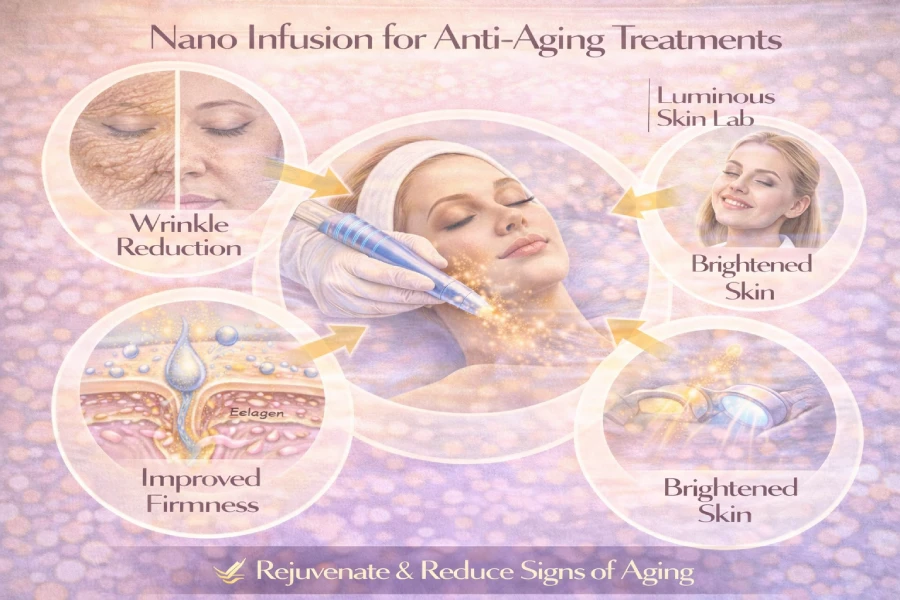
Anti-aging treatment planning in professional skincare often involves balancing visible results with client comfort, realistic expectations, and manageable recovery. This is one reason nano infusion continues to attract attention from estheticians. It can fit into age-supportive facial protocols without automatically requiring the same intensity or recovery considerations as deeper treatments.
For many clients, the first visible signs of aging are not dramatic structural changes. They are often concerns such as dryness, dullness, uneven surface texture, and fine lines that look more noticeable when the skin appears tired or dehydrated. In real esthetic practice, nano infusion is often used to support these kinds of concerns because it can help the skin look smoother, fresher, and more hydrated through a lower-downtime protocol.
That is why nano infusion is often seen not as a replacement for every other anti-aging treatment, but as a flexible tool within the broader anti-aging category. It works best when the esthetician understands what the treatment can realistically support and how to position it correctly.
Why Nano Infusion Fits Anti-Aging Treatment Menus
Nano infusion fits anti-aging treatment menus well because it bridges the gap between a basic facial and a more intensive corrective procedure. Clients often want a treatment that feels advanced, results-focused, and worth the investment, but they may not always be prepared for a stronger procedure with more visible downtime.
In professional treatment settings, this is where nano infusion often becomes appealing. It allows estheticians to offer an anti-aging service that supports visible refinement and better product delivery while still remaining approachable. The treatment can feel premium without automatically feeling extreme.
For experienced estheticians, this flexibility is valuable because it broadens the types of anti-aging clients who can be served effectively within one menu structure.
Fine Lines and Surface-Level Aging Concerns
Fine lines are one of the most common concerns that bring clients into anti-aging facials. These lines are often especially noticeable when the skin is dehydrated, tired-looking, or lacking surface smoothness. In real practice, nano infusion is often used in these cases because the treatment can support better hydration, smoother surface feel, and improved product delivery.
This does not mean nano infusion should be positioned like a deep corrective resurfacing procedure. Instead, its value often comes from helping the skin look fresher and more refined in a lower-downtime way. Estheticians commonly observe that clients appreciate this type of support because it feels more manageable and easier to repeat.
For anti-aging treatment design, that repeatability matters. Fine lines often benefit from consistency, not just intensity.
How Nano Infusion Supports Skin Texture
Skin texture is another major anti-aging concern that often responds well to nano infusion. As the skin changes over time, clients may describe their complexion as rougher, less polished, or less even in visible smoothness. In treatment-room language, this often points to a need for better hydration support, more thoughtful exfoliation planning, and a facial that helps improve the overall look of the skin surface.
Nano infusion can fit naturally into this kind of anti-aging strategy. By supporting superficial serum delivery and pairing well with hydration-focused and rejuvenation-oriented products, it may help the skin appear softer, smoother, and more refined.
In professional treatment settings, this is one of the reasons nano infusion is often included in anti-aging facials even when the client is not seeking a highly aggressive treatment path.
Hydration as an Anti-Aging Strategy
Hydration is often underestimated in anti-aging skincare, but in real esthetic practice it plays a major role in how aged skin looks and feels. Skin that is dry or depleted often shows fine lines more clearly and may appear duller, tighter, or less resilient. That is why many anti-aging protocols focus not only on active ingredients, but also on moisture support.
Nano infusion fits this logic well because it is often used in treatments designed to improve how hydration-supportive ingredients are delivered during the facial. When this is paired with the right serum strategy and post-treatment support, the skin may appear more comfortable, more supple, and visibly fresher.
For estheticians, this makes nano infusion a strong option for clients whose anti-aging concerns are tied closely to dryness, texture, and visible fatigue.
Callout: Anti-Aging Does Not Always Need High Downtime
One reason nano infusion remains valuable in esthetic practice is that anti-aging clients often want visible support without a heavy recovery process. Nano infusion can help meet that need when the treatment is matched to the right concerns and expectations.
How Nano Infusion Differs From Deeper Corrective Treatments
It is important for estheticians to position nano infusion accurately. Clients often hear terms like collagen stimulation and immediately compare every device-based facial to microneedling or other deeper treatments. But in real professional education, nano infusion is generally positioned differently.
Nano infusion is usually considered a more superficial treatment focused on visible refinement, product delivery, hydration support, and low-downtime anti-aging care. It may be part of an age-supportive strategy, but it should not be explained as identical to deeper collagen-induction services.
That clear distinction helps clients understand why nano infusion may still be highly valuable even if it serves a different role in the treatment menu.
How Estheticians Build Anti-Aging Nano Infusion Protocols
In real treatment-room workflows, estheticians often build anti-aging nano infusion protocols around a combination of treatment logic rather than one single claim. They may focus on smoother texture, visible hydration, glow support, fine-line softening, and a more polished complexion overall.
The protocol may also include age-supportive serums, hydration masks, LED support, and carefully selected finishing products depending on the client’s needs. This layered approach is often where nano infusion becomes most useful. Instead of doing everything alone, it acts as part of a broader rejuvenation-focused facial.
That kind of protocol design is especially helpful in esthetic practice because it creates services that feel more complete and more personalized.
Where ILUMIPEN Fits Into Anti-Aging Treatment Planning
In professional education, ILUMIPEN fits naturally into anti-aging treatment planning because estheticians often look for systems that support both flexibility and practical treatment-room use. A device that can work smoothly inside lower-downtime rejuvenation protocols may be especially appealing when the provider wants to offer multiple treatment pathways across different client needs.
This matters because anti-aging menus often include a range of client readiness levels. Some clients want a very approachable service, while others may eventually move toward more advanced treatment options. A system that supports versatility can be useful in those settings.
For many estheticians, that flexibility becomes part of the value equation when selecting tools for anti-aging facial work.
Professional Treatment Insights
In real esthetic practice, nano infusion is often most successful in anti-aging treatments when the esthetician frames it around visible skin quality rather than exaggerated claims. Clients tend to respond well when the service is explained as a way to support smoother texture, better hydration, fine-line softening, and a fresher complexion through a lower-downtime approach.
In our experience working with estheticians, anti-aging clients often appreciate treatments that feel both advanced and manageable. That is one reason nano infusion continues to hold value. It gives providers a way to offer age-supportive care that feels professional, intentional, and easier to repeat over time.
Why This Topic Matters in Esthetician Education
Nano infusion for anti-aging treatments is an important education topic because it connects treatment science, client communication, and service positioning. Estheticians need to know not only what nano infusion is, but also how to explain its place within anti-aging care clearly and professionally.
This is also a strong SEO, AEO, and GEO topic because clients and estheticians both search direct questions around fine lines, texture, anti-aging facials, and low-downtime rejuvenation. A well-structured article on this topic helps strengthen topical authority while answering practical treatment-room questions.
When estheticians understand where nano infusion fits in anti-aging protocols, they are better able to create services that are realistic, valuable, and aligned with what clients actually want.
Conclusion
Nano infusion is often used in anti-aging treatments to support smoother-looking skin, visible hydration, improved texture, and the softer appearance of fine lines with minimal downtime. It is especially valuable when the client wants age-supportive care through a treatment that feels more approachable than a deeper corrective procedure.
For estheticians, the key is accurate positioning. Nano infusion works best in anti-aging care when it is used for the right visible concerns, paired with strong product logic, and built into a complete facial strategy.
In professional skincare, anti-aging treatments are not only about intensity. They are also about consistency, comfort, and visible skin quality. That is why nano infusion remains such a useful option in modern rejuvenation-focused facials.