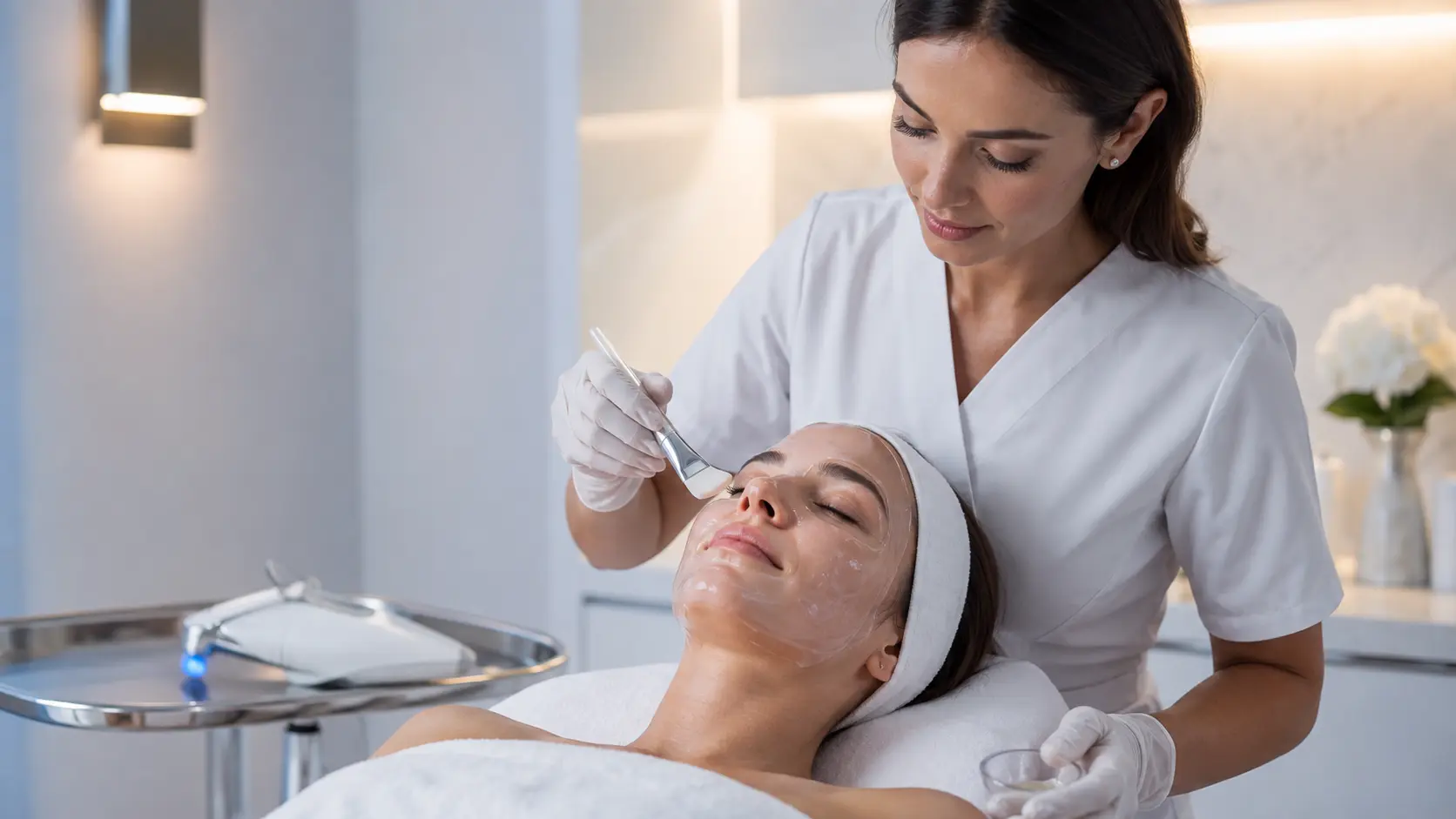
Can You Use a Jelly Mask After Nano Infusion — and How Should It Be Done?
Yes. Applying a professional jelly mask immediately after nano infusion is one of the most effective post-treatment protocol steps an esthetician can perform. Nano infusion creates temporary microchannels in the stratum corneum that dramatically increase ingredient permeability for a limited window. Applying an occlusive jelly mask over a freshly applied serum layer during that window seals the microchannels, locks active ingredients against the skin, prevents transepidermal water loss, and delivers additional humectant hydration simultaneously. The combination produces a measurably superior immediate hydration result compared to either treatment performed independently.
- Nano infusion’s temporary microchannels reach peak permeability immediately post-treatment — a jelly mask applied within this window amplifies absorption of any serum applied underneath it.
- The occlusive layer of a set jelly mask prevents transepidermal water loss during the most permeable phase of the skin cycle, compounding the hydration effect of the infused serum.
- Water-based serums containing hyaluronic acid, polyglutamic acid, peptides, or growth factors are the most compatible choices for layering under the jelly mask in a post-infusion protocol.
- Fragrance-free, clean-label jelly mask formulations are a professional safety requirement for post-nano infusion application because heightened skin permeability amplifies the penetration of every ingredient in the applied product.
- Unlike post-microneedling protocols that may require a stabilization window, jelly masks can be applied immediately after the final nano infusion pass without delay.
- LED therapy can be incorporated concurrently during the jelly mask’s set time, allowing estheticians to compress three treatment benefits into a single service window.
Among the treatment combinations available to professional estheticians, few are as scientifically logical — or as immediately rewarding for clients — as pairing nano infusion with a professional jelly mask. The underlying science explains why: nano infusion creates temporary access pathways in the outer skin layer that dramatically increase the absorption potential of topically applied ingredients. A jelly mask applied over a freshly infused serum layer during that window seals those pathways, locks actives against the skin surface, and delivers additional humectant hydration through an occlusive mechanism simultaneously. The synergy between these two modalities is not coincidental. It is a deliberate protocol design that any esthetician can execute with the right sequencing knowledge.
Yet despite how well these two treatments work together, many estheticians who perform both nano infusion and jelly masks independently have not fully integrated them into a coordinated protocol. The most common reason is uncertainty about the correct sequence — which step comes first, how long to wait, what serums to use, and how the jelly mask’s occlusive behavior interacts with the skin immediately post-infusion. This guide answers all of those questions with protocol-level precision, covering the relevant absorption science, step-by-step workflow, serum selection criteria, safety considerations, and how to position this combination as a premium service in your treatment menu.
What Matters Most When Combining Nano Infusion With a Jelly Mask
- Nano infusion’s temporary microchannels are the delivery mechanism — the jelly mask is the occlusive seal that locks in what was delivered and prevents loss during the most permeable phase.
- There is no required wait time between nano infusion and jelly mask application — apply immediately after the final infusion pass to capture peak microchannel permeability.
- Always apply a fresh layer of treatment serum to the skin before applying the jelly mask — the serum goes under the mask, not over it.
- Use only water-based serums — oil-based products prevent proper jelly mask adhesion and interfere with set behavior.
- Fragrance-free jelly mask formulations are a non-negotiable safety requirement in this protocol context.
- LED therapy can be added during the mask’s set time to deliver photobiomodulation benefits simultaneously without disrupting the protocol.
- This combination protocol creates a compelling, multi-benefit, premium service that justifies higher pricing and drives repeat bookings.
Why Nano Infusion and Jelly Masks Are Scientifically Compatible
Understanding why nano infusion and jelly masks work synergistically requires understanding what each modality does to the skin individually, and then recognizing how those effects compound when applied in the correct sequence.
What Nano Infusion Does to Skin Permeability
Nano infusion uses a device tipped with silicone or metal nano-scale points to create temporary, microscopic channels in the outermost layer of the stratum corneum. These microchannels are not true wounds — they do not break the skin barrier in the way that microneedling does, and they do not trigger the inflammatory cascade associated with genuine epidermal injury. What they do is temporarily disrupt the tight-junction architecture of the stratum corneum, creating transient pathways through which topically applied ingredients can penetrate far more efficiently than they would through intact skin.
The skin’s normal barrier function limits the penetration of even well-formulated topical ingredients to a fraction of what is applied. The stratum corneum is designed to be a selective barrier, and under normal conditions most large or hydrophilic molecules simply cannot cross it efficiently. Nano infusion temporarily overrides that selectivity for a window of time immediately following treatment, during which the penetration of molecular-weight-appropriate actives — hyaluronic acid, polyglutamic acid, peptides, growth factors, vitamin C — is dramatically enhanced.
That window closes progressively as the skin’s natural barrier repair mechanisms activate. The practical clinical implication is clear: the sooner a targeted active is applied to the skin after nano infusion, and the longer it remains in contact with the disrupted surface, the greater its effective penetration will be.
What a Jelly Mask Does After Nano Infusion
A professional jelly mask applied immediately following nano infusion accomplishes three simultaneous functions that compound the treatment’s effectiveness:
First, it creates an occlusive seal over the skin surface. The sodium alginate gel layer, once set, is physically impermeable to water vapor. This dramatically reduces transepidermal water loss (TEWL) during the treatment window, preventing the moisture drawn into the skin by the serum beneath it from evaporating back out through the still-disrupted microchannel pathways.
Second, it extends the contact time between the treatment serum and the skin surface. Under normal application conditions, a serum applied to the face begins to evaporate and absorb within minutes. Sealed under an occlusive jelly mask layer, that same serum remains in active contact with the skin for the full duration of the mask’s set time — typically 10 to 15 minutes — significantly extending the absorption window.
Third, the jelly mask itself contributes additional humectant actives to the skin through the same temporarily permeable surface. A dual-humectant jelly mask formulation containing both polyglutamic acid (PGA) and hyaluronic acid (HA) delivers these hydrating compounds directly to the skin during the enhanced-permeability window, compounding the hydration effect of the infused serum underneath.
The Occlusion-Absorption Amplification Effect
The combination of nano infusion microchannels plus jelly mask occlusion creates what practitioners working with this protocol consistently describe as an amplification effect: results that exceed what would be predicted from adding the two treatments’ individual benefits together. The mechanism is straightforward — microchannels create enhanced entry pathways, the occlusive layer seals those pathways from the outside and forces both the infused serum and the jelly mask actives inward simultaneously. The result is a bi-directional pressure differential that maximizes the absorption of every water-based active present on the skin surface at the time of mask application.
Clients receiving this combination consistently report more immediate visible skin improvement than from either treatment alone — a response pattern that translates directly into stronger retail recommendations, rebooking intent, and word-of-mouth referrals.
Step-by-Step Protocol: How to Combine Nano Infusion With a Jelly Mask Correctly
The following protocol sequence reflects standard professional practice for this combination treatment. Timing, product selection, and application order are all clinically relevant variables — deviating from this sequence reduces protocol effectiveness.
-
Step 1 — Skin PreparationDouble Cleanse and Optional Dermaplaning
Begin with a thorough double cleanse using a gentle, sulfate-free cleanser. Remove all traces of makeup, sunscreen, and surface debris. For clients who are candidates, dermaplaning performed before nano infusion further removes the physical barrier of vellus hair and dead skin cells, enhancing nano tip contact and subsequent ingredient absorption. Pat the skin completely dry before proceeding — moisture on the skin surface at this stage dilutes the treatment serum.
-
Step 2 — Treatment Serum ApplicationApply Water-Based Treatment Serum Before and During Infusion
Apply a thin, even layer of your selected water-based treatment serum to the face immediately before beginning the nano infusion pass. The device is run over the serum-coated skin, driving it into the microchannels created with each pass. Reapply serum as needed if the skin surface becomes dry during the infusion sequence. Keep the skin visibly wet with serum throughout the treatment pass to ensure continuous infusion with each device stroke.
-
Step 3 — Complete Nano Infusion PassFinal Treatment Pass and Serum Reapplication
Complete your full nano infusion treatment sequence across all intended zones. Upon finishing the final pass, apply a generous fresh layer of the treatment serum to the entire face. This fresh serum application is the layer that will sit directly under the jelly mask — it is not the same application used during the infusion pass. Apply immediately after the final infusion stroke to capture peak microchannel openness.
-
Step 4 — Mix and Apply Jelly MaskMix Immediately and Apply Over Fresh Serum Layer
Mix your professional jelly mask powder to water at the brand-specified ratio immediately after applying the post-infusion serum layer. Do not let the serum begin to dry or absorb before the mask is applied — the goal is to trap the serum under the occlusive mask layer while the microchannels are still at maximum openness. Apply the mixed jelly mask in smooth, even strokes from forehead to chin. Work quickly and consistently within your brand’s working time window.
-
Step 5 — Mask Set Time10 to 15 Minutes: Optional LED, Massage, or Client Education
Allow the jelly mask to set fully — typically 10 to 15 minutes depending on formulation, room temperature, and application thickness. During this window, you may perform scalp massage through the mask, position an LED panel over the client for concurrent photobiomodulation, or use the time for client education and retail recommendation. Avoid applying external pressure to the mask surface in a way that could disrupt even coverage.
-
Step 6 — Remove and Complete ProtocolSingle-Piece Removal and Post-Mask Finishing Steps
Loosen the mask edges gently and peel as a single intact piece from chin to forehead. Do not rinse the face — any residual jelly mask material remaining on the skin is simply nutrient-dense material that will absorb. Pat gently with a dry tissue if needed. Follow with a fragrance-free barrier repair moisturizer and broad-spectrum SPF (daytime appointments). Avoid recommending active exfoliants or retinoids for 24 to 48 hours post-treatment.
Which Serums Work Best in a Nano Infusion and Jelly Mask Protocol?
Serum selection is one of the most clinically meaningful decisions in a nano infusion protocol. Because microchannels dramatically increase ingredient penetration, the formulation and molecular weight of the serum applied during and after infusion directly determines what is delivered into the skin. Choosing the wrong product — or the wrong formulation type — can undermine the entire treatment.
Water-Based Serums Are the Only Compatible Choice
The categorical rule in nano infusion serum selection is straightforward: water-based formulations only. Oil-based serums and anhydrous products are incompatible with both the nano infusion device (oils can clog or damage nano tips) and the jelly mask application step (oils prevent proper adhesion of the alginate gel to the skin surface and interfere with set behavior). Any serum that creates an occlusive oil film on the skin before jelly mask application will also reduce the mask’s ability to draw moisture toward the skin surface through its humectant components.
Recommended Serum Categories for This Protocol
- Hyaluronic acid (HA) — all molecular weights
- Polyglutamic acid (PGA) — water-based
- Peptide serums — water-based carrier
- Growth factor serums — water-based
- Vitamin C (L-ascorbic acid or MAP) — water carrier
- Niacinamide serums — brightening protocols
- EGF and FGF growth factor blends
- Exosome serums — water-based formulations
- Any oil-based or anhydrous serum
- Facial oils or dry oil blends
- Retinol or retinoid serums
- AHA or BHA exfoliant serums
- Benzoyl peroxide formulations
- High-concentration vitamin A derivatives
- Products with synthetic fragrance
- Alcohol-heavy formulations
Matching Serum Choice to Client Skin Concern
Within the water-based serum category, the optimal choice depends on the primary skin concern being addressed. For dehydration and fine lines, hyaluronic acid and polyglutamic acid serums remain the most evidence-supported choices. For clients focused on anti-aging and collagen support, peptide serums — particularly those containing Matrixyl 3000, Argireline, or copper peptides — take advantage of nano infusion’s enhanced penetration to deliver larger molecules more effectively than they would penetrate on intact skin. For hyperpigmentation and brightening protocols, vitamin C serums are highly compatible with nano infusion delivery, particularly when followed by a cooling, occlusive jelly mask that prevents oxidation of ascorbic acid during the treatment window.
Practitioners working with sensitive skin clients should default to HA and PGA-only serum formulations for this protocol — simple, clean, and minimally irritating. The nano infusion microchannels increase the sensitization potential of every ingredient applied, which makes a more conservative active serum selection the appropriate professional standard for reactive skin types.
Why the Sequence Order Creates a Clinically Distinct Outcome
The temporal sequence of nano infusion followed immediately by jelly mask application is not arbitrary — it is designed around the biology of microchannel formation and closure. Microchannels created by nano infusion begin closing immediately after the final device pass as the skin’s natural barrier repair mechanisms activate. The window of peak permeability is narrowest immediately after the final pass and progressively narrows over the following 15 to 30 minutes.
Applying the jelly mask during this peak window accomplishes two things simultaneously: it delivers the jelly mask’s own humectant actives through the still-open channels, and it creates an external occlusive barrier that slows the evaporation of the treatment serum applied underneath — keeping that serum in active contact with the open channel pathways for the full duration of the mask’s set time.
The result is a compounded penetration advantage: the serum has both enhanced entry points (microchannels) and extended contact time (occlusion) simultaneously. Neither nano infusion alone nor jelly mask alone produces both effects at once. The combination is the mechanism that distinguishes this protocol from its component treatments performed independently.
Safety Considerations for Jelly Mask Application on Post-Nano Infusion Skin
Post-nano infusion skin operates in a temporarily heightened permeability state. Every ingredient applied during this window — whether from the treatment serum, the jelly mask, or any finishing product — has the potential to penetrate more deeply and at higher concentrations than it would under normal skin conditions. This creates both opportunity and responsibility. The same channel access that amplifies the delivery of beneficial humectants and peptides also amplifies the penetration of sensitizing compounds. Professional safety in this protocol is therefore built on ingredient discipline, not just technique.
Fragrance-Free Is Not Optional in This Context
Synthetic fragrances are among the most common dermal sensitizers in cosmetic formulations. Under normal skin conditions, their concentration and penetration are limited by an intact stratum corneum. On post-nano infusion skin, those limits no longer apply with the same effectiveness. Fragrance applied occlusively under a jelly mask over temporarily opened microchannels carries a meaningfully elevated sensitization risk — even at low concentrations that would be unremarkable on intact skin. Any jelly mask used in a post-nano infusion protocol must be confirmed fragrance-free through full INCI disclosure. “Naturally scented” or “lightly fragranced” formulations do not meet this standard.
Avoid Active Exfoliants in the Jelly Mask Formulation
Some jelly mask formulations on the professional market incorporate alpha-hydroxy acids, enzymes, or other chemical exfoliants as additional actives. These are inappropriate for post-nano infusion application where the skin barrier is temporarily disrupted. Chemical exfoliants applied occlusively to post-infusion skin carry an elevated risk of irritation, redness, and barrier compromise. Verify that any jelly mask selected for post-nano infusion use does not contain AHAs, BHAs, enzymes, or other exfoliating compounds in its INCI list.
Clients with Active Inflammatory Skin Conditions
Nano infusion is generally appropriate for sensitive and dehydrated skin types because it does not create epidermal injury in the way microneedling does. However, clients presenting with active inflammatory conditions — including active acne breakouts, perioral dermatitis, rosacea flares, or open wounds — should not receive nano infusion or jelly mask treatment in affected areas during active flares. The combination of microchannels and occlusion is not appropriate for compromised inflammatory skin even in the absence of true barrier injury.
Estheticians who regularly run nano infusion and jelly mask combination protocols report that product selection at the jelly mask step is where the most common safety errors occur — specifically, practitioners who use a jelly mask they stock for standard hydration facials without checking whether it is appropriate for post-infusion skin. The transition to Poly-Luronic™ Jelly Masks by Luminous Skin Lab in post-nano infusion protocols is driven specifically by the formulation’s confirmed fragrance-free status and clean INCI profile, which eliminates the sensitization risk that makes other formulations unsuitable in this context.
In practice, estheticians note that the Poly-Luronic™ PGA-forward formulation produces a noticeably more hydrated immediate skin response on post-infusion skin compared to HA-only alternatives — a result they attribute to the PGA’s hyaluronidase-inhibiting action protecting both the infused HA serum and the skin’s own HA reserves during the treatment window. The consistent 12-to-15-minute set window also reliably accommodates LED therapy positioning without rushing, allowing the practitioner to complete the full three-modality protocol within a standard 60-minute service slot. Practitioners performing this sequence on dehydrated skin clients report that clients frequently comment on the visible glow and plumpness immediately post-removal — a response that drives same-session retail sales and rebooking conversations.
Adding LED Therapy to the Nano Infusion and Jelly Mask Protocol
Many estheticians who have integrated nano infusion and jelly mask protocols into their treatment menu take the next step of incorporating LED therapy as a concurrent modality during the mask’s set time. This three-modality combination — nano infusion, jelly mask, and LED — compresses three distinct treatment benefits into a single service window without meaningfully extending the appointment duration.
Why LED During Jelly Mask Set Time Works
LED photobiomodulation operates through light wavelength absorption at the cellular level — a process that does not require penetration of the skin barrier in the way topical ingredients do. The jelly mask’s translucent gel layer does not block visible light wavelengths used in professional LED therapy. Red light (typically 630 to 660 nanometers), near-infrared light (typically 830 to 850 nanometers), and blue light (typically 415 to 425 nanometers) all pass through the gel layer and are absorbed at the target depths within the dermis and epidermis. The mask simply provides an additional layer of infrared warmth containment that some practitioners report enhances the subjective comfort and effectiveness of the concurrent LED exposure.
For post-nano infusion protocols specifically, red and near-infrared wavelengths support cellular repair processes and collagen synthesis signaling — complementary mechanisms to the hydration and barrier support being delivered simultaneously through the serum-jelly mask occlusion pathway. The combination of photobiomodulation plus hydration delivery plus barrier sealing in a single 15-minute window represents a highly efficient use of chair time and delivers a multi-benefit result that clients experience as genuinely exceptional.
Workflow Timing for the Three-Modality Protocol
The LED panel should be positioned over the client immediately after the jelly mask application is complete and before the mask begins to firm. Most professional LED devices used in esthetic settings can be positioned at the recommended treatment distance without disturbing the mask surface. The device runs for the duration of the mask’s set time — typically 10 to 15 minutes — and both modalities complete simultaneously. Remove the LED panel, allow the mask to reach full set, and proceed with removal as described in the protocol steps above.
How to Position the Nano Infusion and Jelly Mask Combination as a Premium Service
The nano infusion and jelly mask combination is not just a clinically superior protocol — it is a premium service positioning opportunity. Understanding how to communicate its value to clients and price it appropriately is as important as executing the technical protocol correctly.
What Clients Experience and Why They Rebook
From the client’s perspective, this combination treatment delivers a distinctively memorable sensory experience. The nano infusion device creates a light, non-painful tapping or gliding sensation that feels noticeably different from a standard facial massage. The immediate application of the cooling jelly mask provides a dramatic thermal contrast — from the warmth of the nano infusion device to the cooling occlusive seal of the mask. The single-piece removal of the set mask is a signature moment that clients frequently describe as satisfying in a way no other facial step produces. The visible result immediately post-removal — consistently described as “glowing,” “plump,” and “like my skin drank water” — creates a strong visual reinforcement of the treatment’s effectiveness at the exact moment the client is most likely to verbally commit to rebooking.
Pricing Considerations for This Combination
Estheticians who offer nano infusion and jelly masks as independent services and add them together linearly tend to undercharge for the combination. The combined protocol is not simply the sum of two services — it delivers a compounded clinical outcome that neither service produces independently. Pricing should reflect the elevated skill level required, the additional product cost of both the nano infusion serum and the professional jelly mask, and the premium positioning of the multi-modality treatment experience. Most estheticians running this protocol successfully position it as a signature hydration treatment or “advanced glow facial” at a price point that reflects its status as a premium differentiated service rather than a discounted bundle.
Retail Integration and Home Care Recommendations
The enhanced absorption window created by nano infusion makes the post-treatment home care recommendation conversation unusually productive. Clients whose skin has just received a high-hydration treatment through multiple amplified pathways are in a receptive state — both physically and psychologically — for home care recommendations that extend and protect those results. Recommending a PGA-containing serum for home use allows clients to continue the hyaluronidase-inhibiting and NMF-stimulating mechanisms of the treatment at home between appointments, supporting a compelling reason-to-rebook narrative tied to measurable cumulative improvement.
Professional and Scientific References
The treatment protocol and ingredient science referenced in this article draws from the following research and professional education sources:
- Transdermal drug delivery and skin permeability enhancement mechanisms. Journal of Controlled Release; International Journal of Pharmaceutics. Established literature on stratum corneum disruption and topical absorption enhancement.
- Gamma-PGA barrier strengthening, HAS-1/HAS-2/HAS-3 upregulation, and aquaporin-3 enhancement. MDPI, 2024. Peer-reviewed reconstructed skin model study demonstrating PGA mechanisms relevant to post-treatment application contexts.
- PGA moisture-binding capacity (up to 5,000 times its weight in water), surface microgel film formation, and hyaluronidase inhibition mechanism. Typology cosmetic chemistry literature, 2021–2025; Reviva Labs clinical review, 2025.
- Occlusive dressing and wound hydration science — mechanisms of TEWL reduction and ingredient absorption amplification under occlusion. Established dermatological and wound management literature.
- LED photobiomodulation and concurrent treatment protocols — red and near-infrared wavelength transmission through translucent occlusive gel layers. Photobiomodulation, Photomedicine, and Laser Surgery; professional esthetic device literature.
- Sodium alginate as a professional occlusive biomaterial: structural gelling properties. Established biomedical sciences literature.
For estheticians building a nano infusion and jelly mask combination protocol, the Poly-Luronic™ Jelly Mask by Luminous Skin Lab is the formulation our education team most frequently references for post-infusion application. The proprietary Poly-Luronic™ dual-humectant system — PGA surface seal, HA deep delivery, hyaluronidase inhibition, and NMF stimulation — was developed specifically for post-treatment contexts where heightened skin permeability amplifies both the benefits and the sensitization risks of applied products. The formulation is confirmed fragrance-free, clean-label, and formulated for protocol compatibility with nano infusion, dermaplaning, and LED-adjunctive workflows.
Explore the Poly-Luronic™ Jelly Mask Line →Frequently Asked Questions: Nano Infusion With Jelly Masks
Can you use a jelly mask after nano infusion?
Yes. A professional jelly mask is one of the most compatible post-nano infusion recovery steps available to estheticians. The occlusive layer seals the microchannels created during nano infusion, locking in the serums infused during treatment while simultaneously delivering additional humectant hydration. A fragrance-free, PGA and HA dual-humectant formulation applied immediately after nano infusion amplifies treatment outcomes and supports immediate visible results for clients.
How long after nano infusion should you wait before applying a jelly mask?
There is no required waiting period between nano infusion and jelly mask application in a standard professional protocol. Unlike microneedling, which creates actual epidermal injury and may require a brief stabilization window, nano infusion uses non-penetrating silicone or metal nano tips that create temporary microchannels without breaking the skin barrier. Most estheticians apply the jelly mask immediately following the final nano infusion pass, while the microchannels are still maximally open and absorption is at its peak.
What serums work best under a jelly mask after nano infusion?
Water-based serums formulated with hyaluronic acid, polyglutamic acid, peptides, growth factors, or vitamin C are the most compatible choices for layering under a jelly mask following nano infusion. Oil-based serums should be avoided because they create an occlusive film that prevents the jelly mask from adhering properly and can interfere with the mask's set behavior. The jelly mask's occlusive layer amplifies penetration of any water-based active applied underneath it during the treatment window.
Why does applying a jelly mask after nano infusion improve results?
Nano infusion creates temporary microchannels in the stratum corneum that dramatically increase topical ingredient absorption for a limited window after treatment. Applying an occlusive jelly mask over a freshly infused serum layer seals those channels, trapping the active ingredients against the skin surface and preventing transepidermal water loss during the most permeable phase of the treatment. The combination of heightened channel absorption plus occlusive sealing produces a measurably more hydrated, visibly radiant immediate result compared to either treatment performed independently.
Is it safe to use a jelly mask on skin right after nano infusion?
Yes, when using a fragrance-free, clean-label professional jelly mask formulation. Because nano infusion creates temporary microchannels that increase skin permeability, every ingredient in the post-treatment product is subject to enhanced penetration. Fragrance-free formulations are a professional safety requirement in this context, not a preference. Any jelly mask containing synthetic fragrance, artificial dyes, or undisclosed sensitizing compounds should not be used on skin immediately following nano infusion.
How does the jelly mask occlusion affect the serums infused during nano infusion?
The occlusive layer created by a set jelly mask prevents evaporation of the serum applied during nano infusion, extending the absorption window of the active ingredients. When a PGA-containing jelly mask is applied over a hyaluronic acid serum, the PGA's hyaluronidase-inhibiting action also protects the infused HA from enzymatic degradation during the treatment window, extending the effectiveness of the infused serum beyond what would occur without the occlusive layer.
Should the jelly mask be applied over the nano infusion serum or is the serum applied after the mask?
The standard professional protocol sequence is: nano infusion is performed with the treatment serum applied to the skin during the infusion pass, then immediately after the final pass, an additional layer of serum is applied to the face, and the jelly mask is mixed and applied on top. The serum goes under the jelly mask, not over it. This sequence allows the jelly mask's occlusive layer to seal the serum against the skin surface and amplify its absorption during the mask's set time.
Can you combine nano infusion, LED therapy, and a jelly mask in the same facial?
Yes. Many estheticians incorporate LED therapy as a concurrent or sequential step within a nano infusion and jelly mask protocol. One effective workflow sequence is: perform nano infusion with treatment serum, apply additional serum, apply jelly mask, then position an LED panel over the client during the mask's set time. This compresses three treatments into one service window. Verify that your specific jelly mask formulation is confirmed compatible with LED exposure, as some formulations may contain ingredients that interact with specific light wavelengths.
What makes the Poly-Luronic Jelly Mask a good choice for post-nano infusion protocols?
The Poly-Luronic Jelly Mask by Luminous Skin Lab is formulated with a PGA and HA dual-humectant system specifically suited for post-treatment application. PGA holds up to 5,000 times its weight in water, forms a surface occlusive film, and inhibits hyaluronidase to protect both applied and naturally occurring HA. The formulation is fragrance-free and clean-label, meeting the professional safety requirements for application on post-nano infusion skin where permeability is heightened and sensitizing ingredients present elevated risk.
The Protocol That Makes Both Treatments More Effective
Nano infusion and jelly mask application each deliver real clinical benefits independently. But the science of how they interact — microchannels creating temporary enhanced absorption pathways, occlusion sealing those pathways and extending active ingredient contact time, humectant delivery compounding through both mechanisms simultaneously — makes their combination genuinely greater than the sum of its parts.
For estheticians who already offer both treatments, integrating them into a coordinated protocol is one of the most impactful service improvements available without additional equipment investment. The protocol requires no new devices, no additional certifications, and no meaningful increase in appointment time. What it produces is a measurably superior client outcome, a more memorable treatment experience, and a compelling premium service positioning that supports higher pricing and stronger rebooking rates.
Apply the protocol correctly — serum under the mask, jelly mask applied immediately post-infusion at peak microchannel openness, fragrance-free formulation confirmed, LED optional during set time — and the results will speak clearly enough to make this combination a core part of your treatment menu.