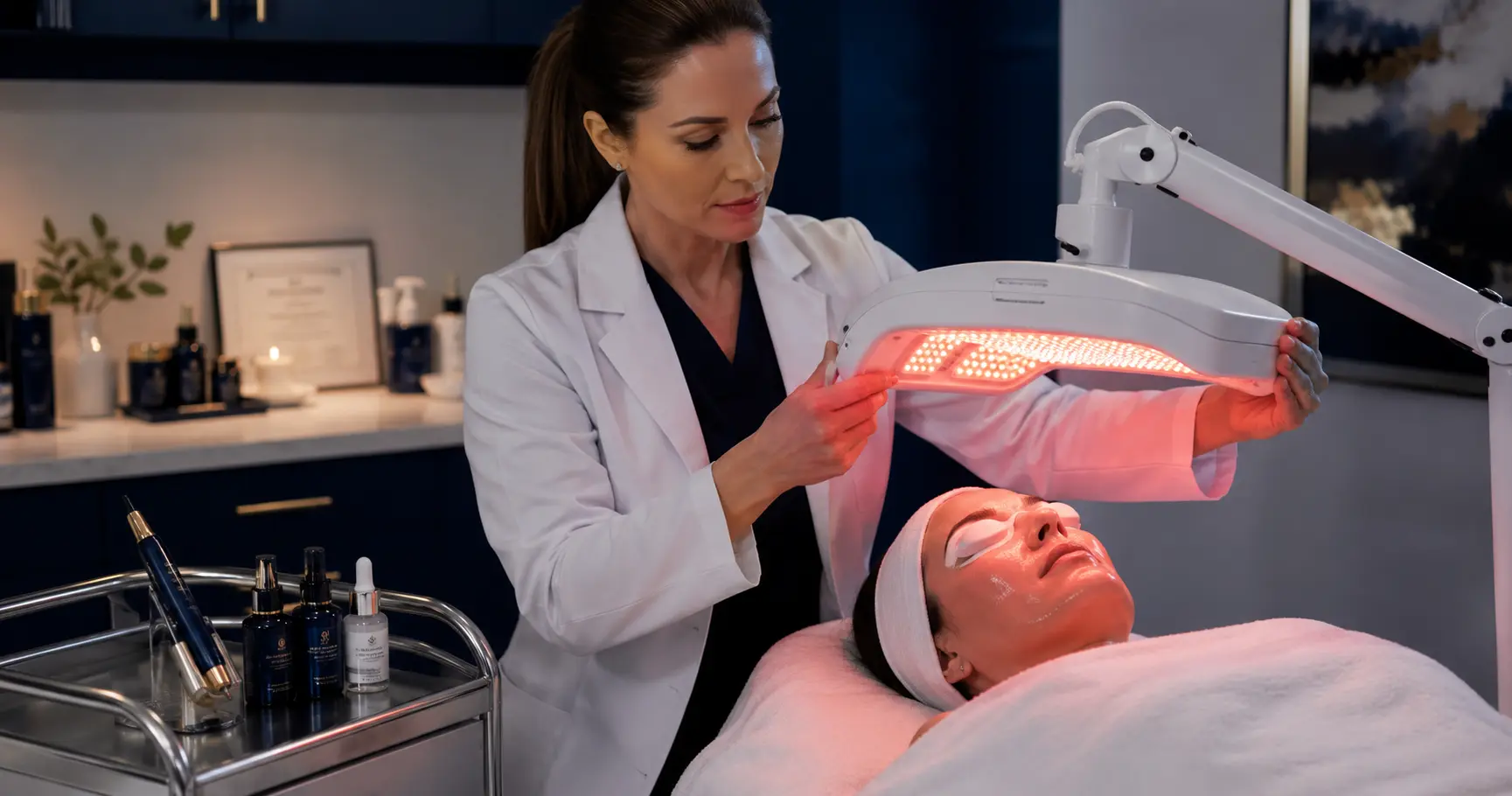
Can You Combine Nano Infusion and LED Therapy in the Same Treatment?
Yes. Nano infusion and LED light therapy are among the most compatible modalities available to estheticians working within standard scope of practice. They operate through entirely separate mechanisms — nano infusion creates temporary microchannels for enhanced serum penetration, while LED photobiomodulation stimulates mitochondrial ATP production and anti-inflammatory cellular pathways — which is precisely why combining them produces synergistic outcomes neither modality achieves alone.
- The standard sequence is nano infusion first, LED therapy second. Performing LED over freshly infused, serum-saturated skin amplifies both the photobiomodulation response and the cellular recovery process that nano infusion activates.
- Red light at 630 to 660 nm and near-infrared at 810 to 850 nm are the most clinically productive wavelengths for post-nano-infusion LED application — supporting ATP production, fibroblast activity, and post-treatment inflammation reduction.
- Serum selection is a critical safety variable — photosensitizing ingredients infused through open microchannels before LED exposure are contraindicated. Hyaluronic acid, polyglutamic acid, peptides, and growth factors are safe and effective choices for combined protocols.
- LED exposure time following nano infusion ranges from 10 to 20 minutes depending on device irradiance output and treatment goals.
- A three-stage protocol — nano infusion, LED therapy, occlusive hydration mask — represents the most complete combined workflow structure available to estheticians operating without medical-grade equipment.
Estheticians building advanced facial menus without crossing into medical scope of practice have two genuinely powerful modalities at their disposal: nano infusion and LED light therapy. Each delivers measurable outcomes independently. When combined in the correct sequence, the two modalities interact in ways that compress multi-session treatment results into a single professional appointment — a compelling clinical and business argument for any treatment room that does not yet offer both.
The rationale for combining them is not simply additive. It is mechanistic. Nano infusion creates a controlled window of heightened skin permeability and activates a mild tissue healing response. LED photobiomodulation amplifies the mitochondrial energy production and cytokine signaling that governs that healing response. Apply LED while the tissue is in its post-infusion activated state, and the photobiomodulation delivers into a more receptive cellular environment than it would on untreated skin.
This guide covers everything estheticians need to sequence these modalities correctly: the mechanism science behind each, how they interact, which LED wavelengths are most appropriate post-infusion, how to select serums for combined protocols, the contraindications that apply specifically to the combined treatment, and a complete step-by-step workflow that can be adapted to most professional treatment room settings.
What Estheticians Need to Know About Combining Nano Infusion and LED Therapy
- Nano infusion and LED therapy operate through different mechanisms and are directly complementary — the combination is not redundant, it is synergistic.
- Always perform nano infusion before LED. The post-infusion tissue state is more receptive to photobiomodulation than untreated skin.
- Red and near-infrared wavelengths are the recommended post-infusion LED choices. Blue light is not typically appropriate on freshly infused sensitized skin.
- Serum compatibility with LED light is a mandatory safety check in combined protocols — photosensitizing actives infused through open microchannels are contraindicated.
- Standard LED exposure post-infusion: 10 to 20 minutes depending on device output.
- Adding an occlusive hydration mask as the third and final stage of the protocol maximizes recovery outcomes and elevates the client experience.
- Document the combined protocol clearly in client records and obtain informed consent that includes all modalities used in the session.
How Does Nano Infusion Work and Why Does It Create an Ideal Window for LED?
Nano infusion uses a device fitted with a cartridge containing hundreds of microscopic silicon or metal nano-tips. When the device is moved across the skin surface with controlled pressure, these tips create temporary transient microchannels in the stratum corneum — the outermost protective layer of the epidermis. These microchannels are not true wounds; they do not penetrate to the dermis, and they do not trigger the significant inflammatory cascade that microneedling does. They close within 15 to 30 minutes in most skin types.
During the window while microchannels are open, the skin’s permeability to topically applied serums increases substantially. Humectants, peptides, growth factors, antioxidants, and other water-soluble actives penetrate far more effectively than they do through intact stratum corneum. This is the primary clinical rationale for nano infusion: the controlled permeability window is a delivery mechanism, not merely a surface treatment.
Beyond the enhanced delivery function, nano infusion also produces a mild, controlled activation of the skin’s surface healing pathways. Keratinocytes in the treated area register the micro-disruption and initiate signaling that includes cytokine release, mild localized inflammation, and upregulation of cellular repair processes. This activation state is short-lived compared to deeper modalities like microneedling, but it is real — and it is the tissue state into which LED photobiomodulation delivers its photons most productively.
Why the Timing Overlap Matters
The nano infusion activation window — the period during which microchannels remain open and the surface healing response is active — typically spans 15 to 45 minutes post-treatment, depending on skin type and the intensity of the infusion pass. Beginning LED therapy immediately after completing nano infusion positions the photobiomodulation delivery during the peak of this activation window. The LED’s anti-inflammatory and ATP-stimulating photons reach tissue that is already in a heightened cellular response state, producing an amplified effect compared to LED applied to resting untreated skin.
Estheticians who have not yet combined the two modalities frequently report that adding LED as the second stage of a nano infusion treatment produces a visibly different immediate post-treatment skin response — more luminosity, faster visible redness resolution, and more consistent client feedback about skin comfort and glow — compared to nano infusion followed by standard finishing products alone.
How Does LED Photobiomodulation Work and What Does It Add to a Nano Infusion Treatment?
LED light therapy — or photobiomodulation — delivers specific wavelengths of light to the skin at doses that stimulate biological responses at the cellular level without generating damaging heat. The primary mechanism is the absorption of specific photon wavelengths by chromophores within mitochondria, most notably cytochrome c oxidase, a key enzyme in the mitochondrial electron transport chain.
When cytochrome c oxidase absorbs photons in the red and near-infrared range, it temporarily enhances the production of adenosine triphosphate (ATP) — the cellular energy currency that powers virtually every repair and regeneration process in living tissue. Elevated ATP production in treated keratinocytes and fibroblasts translates into accelerated cellular repair, increased collagen and elastin synthesis over successive treatments, reduced production of pro-inflammatory cytokines, and enhanced mitochondrial function that persists for hours to days following a single exposure.
The Anti-Inflammatory Role That Makes LED Essential Post-Infusion
One of the most clinically significant effects of red and near-infrared LED therapy for post-infusion protocols is its documented ability to modulate the inflammatory response. LED at 630 to 660 nm has been shown to reduce prostaglandin E2, interleukin-1 beta, and tumor necrosis factor alpha — pro-inflammatory mediators that contribute to the post-treatment redness and temporary discomfort that nano infusion can produce in reactive skin types.
For estheticians, this anti-inflammatory action translates directly into a faster visible resolution of post-treatment erythema, a more comfortable immediate post-treatment experience for clients, and a reduced window during which the skin needs cautious aftercare management. These outcomes improve the client’s perception of the treatment, support rebooking, and reduce the likelihood of post-treatment reactive calls or concerns.
Why Red and Near-Infrared Light Amplify Post-Infusion Tissue Response
The key chromophore in photobiomodulation is cytochrome c oxidase in the mitochondrial electron transport chain. When photons in the 630 to 850 nm range are absorbed by cytochrome c oxidase, they dissociate inhibitory nitric oxide, restore electron transport chain efficiency, and drive a cascade of downstream effects including elevated ATP production, increased reactive oxygen species signaling at sub-damaging levels, activation of transcription factors including NF-kB, and upregulation of cytoprotective gene expression.
In post-nano-infusion skin, these effects are delivered into tissue that is in a controlled activated healing state. The combination of mechanical activation from nano infusion and photochemical amplification from LED creates a treatment response that compresses what would otherwise require multiple visits to achieve — enhanced serum delivery, accelerated cellular recovery, anti-inflammatory modulation, and collagen synthesis stimulation — into a single professional session.
Minimum effective dose for photobiomodulation: Research consensus places effective therapeutic photon dosing in the range of 10 to 60 joules per square centimeter (J/cm²) depending on treatment target. Professional-grade LED panels with irradiance outputs of 50 to 100 mW/cm² achieve this dose in approximately 10 to 20 minutes of continuous exposure — aligning precisely with the standard nano infusion post-treatment recovery window.
Which LED Wavelengths Should You Use After Nano Infusion?
Not all LED wavelengths are equally appropriate following nano infusion. The choice of wavelength should be guided by the primary treatment goal and the skin’s post-infusion condition. Here is a professional assessment of the four primary LED wavelengths used in esthetic practice and their specific role in combined post-infusion protocols.
Primary Choice for Post-Infusion Protocols
Red light is the most well-researched and widely used LED wavelength in esthetic post-treatment protocols. It stimulates ATP production in surface keratinocytes, reduces pro-inflammatory cytokines, supports fibroblast activity, and accelerates the resolution of post-treatment erythema. Safe and appropriate for virtually all skin types immediately following nano infusion.
Recommended — First ChoiceDeep Tissue Recovery and Microcirculation
Near-infrared penetrates beyond the epidermis into the dermis and subcutaneous tissue, stimulating deeper fibroblasts and increasing microcirculation. Particularly valuable for anti-aging and collagen-stimulating protocol goals. Most effective when combined with red light in a dual-wavelength panel. Safe post-infusion and enhances deeper recovery processes.
Recommended — Pair With RedRedness and Vascular Calming
Amber and yellow wavelengths are particularly effective for targeting superficial vascular redness and supporting lymphatic drainage. For clients with rosacea-prone or highly reactive skin presenting with significant post-infusion erythema, adding amber to a red-dominant protocol can accelerate visible calming. Use selectively based on skin presentation.
Selective Use — Reactive SkinNot Recommended Immediately Post-Infusion
Blue light targets P. acnes bacteria via porphyrin photosensitization and has genuine utility in acne treatment protocols. However, immediately following nano infusion on sensitized skin, blue light’s shorter wavelength and higher energy per photon can exacerbate surface irritation. Blue light is best reserved for pre-infusion or standalone acne-focused treatments rather than the immediate post-infusion window.
Not Recommended Post-InfusionRed and Near-Infrared as the Standard Post-Infusion Combination
Professional treatment rooms offering combined nano infusion and LED protocols most commonly use dual-panel or combination devices that deliver red (630 to 660 nm) and near-infrared (810 to 850 nm) simultaneously. This pairing covers both surface recovery and deeper tissue stimulation in a single LED exposure phase — maximizing the clinical value of the post-infusion window without requiring multiple wavelength passes or sequential device changes that disrupt service flow.
How Do You Choose the Right Serum for Combined Nano Infusion and LED Protocols?
Serum selection for combined nano infusion and LED protocols carries a safety dimension that does not apply to either modality used independently. When nano infusion creates open microchannels, ingredients applied to the skin surface penetrate more deeply than they would through intact stratum corneum. If those ingredients include anything that creates photosensitivity — and LED light exposure follows immediately — the combination can produce adverse reactions including heightened inflammation, hyperpigmentation risk, or surface irritation that neither modality would cause on its own.
Serums That Are Safe and Effective for Combined Protocols
- Hyaluronic acid (HA) serums: Water-based, non-photosensitizing, and highly effective for delivering deep hydration through open microchannels. Multi-molecular weight HA formulations enhance penetration across multiple skin layers simultaneously.
- Polyglutamic acid (PGA) serums or PGA + HA combinations: PGA’s surface microgel behavior makes it well-suited to infusion protocols — it seals surface hydration while the HA component is delivered into open channels. The anti-hyaluronidase mechanism of PGA means applied HA retains its activity longer during the treatment window.
- Peptide serums: Collagen-stimulating, signal peptide, and carrier peptide formulations are well-suited to combined protocols — they benefit from enhanced post-infusion penetration and their cellular signaling effects are complementary to LED photobiomodulation.
- Growth factor serums: Epidermal growth factor (EGF) and fibroblast growth factor (FGF) formulations are frequently used in nano infusion protocols for anti-aging indications. They are LED-compatible and represent a high-value combined protocol for mature or post-procedure skin.
- Stabilized vitamin C (ascorbyl phosphate, sodium ascorbyl phosphate): Stable vitamin C derivatives are antioxidant, non-photosensitizing, and contribute to collagen synthesis. Avoid raw L-ascorbic acid at concentrations above 10% immediately before LED exposure on sensitized skin.
Serums to Avoid in Combined Protocols
- Retinol and retinoids: Known photosensitizers. Never combine with LED light immediately post-infusion. Retinol-containing serums should not be applied to skin that will receive LED exposure within the same session.
- High-concentration AHAs (glycolic acid, lactic acid above 10%): Significant photosensitivity risk when infused through open microchannels and exposed to light. Reserve AHA applications for sessions without LED or use in pre-treatment phases only with full channel closure time before LED exposure.
- BHAs at therapeutic concentrations: Salicylic acid above 2% introduces photosensitivity risk in combined protocols.
- Essential oils and botanical extracts with known photosensitivity: Bergamot, lime, and several citrus extracts are contraindicated. Review all botanical ingredients in any serum being used before combining with LED.
Step-by-Step Combined Nano Infusion and LED Protocol for Professional Treatment Rooms
The following protocol represents the standard professional workflow for combining nano infusion and LED therapy in a single facial service. Timing assumes a 60-minute total service window with a 75-minute premium option that includes the optional jelly mask recovery phase.
Remove all makeup, SPF, and surface debris using a double cleanse protocol appropriate to the client’s skin type. A first cleanse with an oil-based balm to remove surface cosmetics, followed by a water-based professional cleanser, ensures the skin surface is completely clean before serum application and infusion. Any residual product on the skin surface during nano infusion will be driven into open microchannels — contamination at this stage is a genuine safety concern.
3–5 minutesFor non-reactive skin types, a brief enzyme mask application of 5 minutes softens the stratum corneum and improves the evenness of serum absorption during the infusion phase. Remove completely before proceeding. This step is skipped for sensitive, reactive, or post-treatment skin to avoid additional barrier compromise before infusion.
5–8 minutes (optional)Apply a generous layer of the selected treatment serum to the full treatment area. Confirm before every session that the serum contains no photosensitizing ingredients. Apply evenly — the serum provides the slip and substrate for the nano infusion device pass. For combined protocols, HA + PGA serums, peptide formulations, or growth factor serums are the most clinically productive choices.
2–3 minutesPerform the complete nano infusion pass across the treatment area using your device’s prescribed pressure setting and movement pattern. Work systematically across the face in consistent sections — forehead, cheeks, chin, nose, and periorbital area where device size permits. Reapply serum to any areas that become dry during the pass. The infusion phase should not be rushed; consistent, thorough coverage determines the outcome quality.
15–20 minutesApply a second thin layer of the same LED-compatible serum immediately after completing the infusion pass. Microchannels remain open for a short window post-treatment — this second application delivers an additional dose of actives into the freshly treated tissue. Pat gently to distribute; do not massage aggressively over freshly treated skin. Proceed to LED therapy immediately.
1–2 minutesPosition your professional LED panel at the manufacturer’s prescribed distance from the client’s face. Ensure client and practitioner eye protection is in place. Deliver red at 630 to 660 nm and near-infrared at 810 to 850 nm for the full prescribed exposure time based on your device’s irradiance output. The client should remain still with eyes closed. Use this time to perform hand, arm, or neck massage or to conduct a client consultation and home care education conversation.
15–20 minutesFor the full three-stage protocol, apply a professional-grade occlusive hydration jelly mask as the finishing step immediately following LED therapy. The occlusive layer seals in the serums infused during the nano infusion phase, supports barrier recovery, and provides a cooling sensory finish that clients consistently identify as one of the most memorable aspects of the treatment. This optional phase converts the service from a 60-minute to a 75-minute premium appointment with a meaningful increase in both perceived and actual clinical value.
+15 minutes (optional)What Are the Contraindications Specific to Combined Nano Infusion and LED Protocols?
Combined protocols carry the combined contraindication profiles of both modalities, plus the interaction-specific considerations created by performing them in sequence. Estheticians should complete a thorough intake and skin assessment before every combined session.
Contraindications for Nano Infusion
- Active acne pustules or open inflamed lesions in the treatment area
- Active cold sore outbreak (HSV-1) — nano infusion can spread the virus
- Open wounds, sunburn, or compromised skin barrier from other recent treatments
- Fitzpatrick skin types V and VI may require additional caution around post-inflammatory hyperpigmentation risk at higher infusion intensities
- Uncontrolled skin conditions including active eczema flares, psoriasis, or rosacea in acute stage
Contraindications for LED Therapy
- History of photosensitive epilepsy
- Current use of systemic photosensitizing medications (tetracycline antibiotics, isotretinoin, St. John’s Wort, and others)
- Active cancer or undergoing cancer treatment (defer to medical professional)
- Thyroid conditions in the treatment area — avoid direct LED exposure over the thyroid gland
- Pregnancy — while LED is generally considered low-risk, many practitioners defer combined treatments during pregnancy out of caution
Interaction-Specific Considerations Unique to Combined Protocols
- Photosensitizing serums infused through open microchannels before LED exposure, as covered in the serum selection section — this is the most clinically significant combined-protocol-specific risk
- Skin that has been recently treated with professional chemical peels or microneedling within the past two weeks may not be appropriate for combined nano infusion and LED in the same session
- Highly reactive skin presenting with significant post-infusion erythema should have the LED intensity monitored carefully, particularly if the client has a history of rosacea or reactive skin conditions
Estheticians running combined nano infusion and LED protocols consistently report that the most common sequencing error they observe in practitioners new to the combination is applying the LED panel before confirming serum compatibility — or skipping the post-infusion serum reapplication step because the skin looks “already treated.” Both errors reduce outcomes meaningfully. The post-infusion serum layer is not optional in a combined protocol: it is the delivery substrate that the LED phase amplifies.
Practitioners using the ILUMIPEN by Luminous Skin Lab in combined protocols specifically note that the device’s consistent stamping mechanics allow them to complete the infusion pass with predictable timing — they know reliably when the infusion phase ends and the LED phase should begin. This timing certainty matters more in combined protocols than in standalone treatments because the post-infusion activation window is finite. Estheticians who have tested the ILUMIPEN alongside alternative devices report that inconsistent tip pressure in other devices creates uneven post-infusion skin response, which translates to less uniform LED outcomes in the subsequent phase. Consistent mechanical delivery at the infusion stage is a foundational requirement for combined protocol optimization.
How Do You Communicate the Value of This Combined Protocol to Clients?
One of the practical challenges of offering a combined nano infusion and LED protocol is communicating its value clearly without requiring clients to understand photobiomodulation science. The most effective esthetician communication frames the combination in terms of client outcomes and the unique service experience rather than mechanism explanations.
Simple Client-Ready Language That Works
The framing that consistently resonates in treatment room consultations positions the combination as two steps that each make the other more effective. A straightforward explanation: “Nano infusion opens very small temporary pathways in the skin’s surface that let the serum we’re using absorb far more deeply than it normally would. The LED light therapy we do immediately after works with the skin’s natural recovery process — it helps calm any redness, supports collagen production, and enhances the results we just created with the infusion. The two steps together consistently produce better outcomes than either one on its own.”
Clients who understand that the combination is mechanistically integrated — not simply two separate treatments packaged together — are more likely to commit to the combined service and to rebook it as a series. They also have more confidence in recommending it to others.
Positioning as a Premium Service Tier
Combined nano infusion and LED protocols occupy a natural premium position in a treatment menu. They deliver measurably better outcomes than standalone facials, require specialized equipment and training, and produce immediate visible results that clients notice in the mirror before leaving the treatment room. Estheticians who price this service appropriately — typically 30 to 50 percent above the standalone nano infusion or LED service — and who communicate the combined mechanism clearly consistently see high rebook rates from clients who experience the full three-stage protocol with jelly mask recovery finish.
Series Recommendations and Home Care
For clients with anti-aging, hydration deficit, or uneven skin tone goals, combined nano infusion and LED protocols are most effective as a series of four to six treatments spaced two to three weeks apart. The collagen synthesis stimulus from each session compounds across successive treatments, and the cumulative effect is significantly more visible than a single session. Home care between sessions should focus on barrier support, daily SPF, and the use of serum formulations containing PGA or HA to maintain the hydration gains initiated in the treatment room.
Professional and Scientific References
The photobiomodulation and nano infusion science referenced in this article draws from peer-reviewed dermatological, photomedicine, and cosmetic chemistry research:
- Cytochrome c oxidase as the primary chromophore in photobiomodulation and the mechanism of LED-induced ATP production enhancement. Hamblin MR, Demidova TN. Mechanisms of Low Level Light Therapy. SPIE, 2006; Photobiomodulation, Photomedicine, and Laser Surgery, multiple editions 2014–2024.
- Anti-inflammatory effects of red light at 630 to 660 nm — reduction of prostaglandin E2, IL-1 beta, and TNF-alpha in treated tissue. Enwemeka CS et al. The efficacy of low-power lasers in tissue repair and pain control. Photomedicine and Laser Surgery, 2004; subsequent confirmatory literature 2010–2024.
- Near-infrared penetration depth and fibroblast activation at 810 to 850 nm. Karu T. Photobiology of low-power laser effects. Health Physics, 1989; updated review literature through 2024.
- Nano infusion transient microchannel formation and enhanced topical delivery. Professional device manufacturer clinical literature; esthetician scope-of-practice research, 2018–2024.
- Polyglutamic acid moisture-binding capacity, hyaluronidase inhibition, NMF stimulation, and HAS upregulation. MDPI, 2024; Typology, 2021–2025; Reviva Labs, 2025.
- Minimum effective photon dose for clinical photobiomodulation: 10 to 60 J/cm². Huang YY et al. Biphasic dose response in low level light therapy. Dose Response, 2009; subsequent LED dosimetry literature.
For estheticians building combined nano infusion and LED protocols into their treatment menu, the quality and consistency of the nano infusion device is a foundational variable. The ILUMIPEN by Luminous Skin Lab is the device our education team most frequently references in combined protocol contexts — engineered specifically for esthetician scope-of-practice use, the ILUMIPEN delivers consistent nano-tip pressure and systematic coverage that makes the critical timing handoff to LED therapy reliable and repeatable across every session. It is not classified as a medical device, requires no medical director oversight in the majority of U.S. states where nano infusion falls within esthetician scope of practice, and is designed with the realities of professional treatment room workflow in mind rather than home or spa-consumer use.
Explore the ILUMIPEN Professional DeviceFrequently Asked Questions: Combining Nano Infusion With LED Therapy
Can you do nano infusion and LED therapy in the same treatment?
Yes. Nano infusion and LED light therapy are highly compatible and are frequently combined in professional treatment room protocols. The two modalities work through entirely different mechanisms — nano infusion creates temporary microchannels that enhance serum penetration, while LED photobiomodulation stimulates cellular energy production and anti-inflammatory pathways at the mitochondrial level. When sequenced correctly, the combination produces synergistic outcomes that neither modality delivers as effectively on its own.
Should LED come before or after nano infusion in a facial?
The standard professional sequencing is nano infusion first, LED therapy second. Nano infusion is performed while microchannels are open and serums are actively absorbing. LED therapy is then applied over the freshly treated, serum-infused skin. The photobiomodulation delivered by LED amplifies the anti-inflammatory and cellular recovery processes in the tissue that nano infusion has already activated. Performing LED before nano infusion is not incorrect but misses the enhanced synergy that the post-infusion window provides.
What LED wavelength works best after nano infusion?
Red light at 630 to 660 nanometers is the most widely used wavelength following nano infusion for its ability to stimulate ATP production, support fibroblast activity, and reduce post-treatment inflammation. Near-infrared light at 810 to 850 nanometers penetrates deeper and is particularly effective for accelerating tissue recovery and increasing microcirculation. Red and near-infrared combined is considered the most clinically productive pairing for post-nano-infusion LED application. Blue light at 415 to 445 nanometers is not typically recommended immediately after nano infusion on sensitized skin.
How long should you do LED therapy after nano infusion?
The standard professional LED exposure time following nano infusion ranges from 10 to 20 minutes, with most treatment rooms defaulting to a 15-minute protocol. The exact duration depends on the specific LED device, its irradiance output, and the treatment goals. Higher-irradiance professional devices may achieve effective photon dosing in 10 minutes. Lower-power consumer-grade devices require significantly longer exposure times to reach the 10 to 60 joules per square centimeter range considered therapeutically meaningful.
What serums work best for nano infusion when you are also doing LED?
For combined nano infusion and LED protocols, water-based serums formulated without photosensitizing ingredients are the professional standard. Hyaluronic acid, polyglutamic acid, peptides, growth factors, and antioxidant vitamin C formulations (stabilized, not raw ascorbic acid) are all well-suited to this combination. Avoid serums containing retinol, high-concentration AHAs, or any ingredient that creates photosensitivity risk, as LED light exposure immediately following infusion of photosensitizing actives is contraindicated.
Why does combining nano infusion with LED produce better results than doing them separately?
Nano infusion temporarily increases skin permeability and activates a mild controlled healing response in the tissue. LED photobiomodulation amplifies the mitochondrial ATP production and anti-inflammatory cytokine response in that already-activated tissue. The combination compresses two phases of treatment optimization — delivery and recovery amplification — into a single session. Clients receive enhanced serum penetration from nano infusion and accelerated cellular recovery from LED in a treatment window that would otherwise require two separate visits to achieve.
Is it safe to do LED on skin right after nano infusion?
Yes, when the protocol is performed correctly. LED light therapy is non-thermal, non-ablative, and does not further compromise the skin barrier. It is one of the safest modalities to apply immediately following nano infusion. The key contraindication is the serum used during infusion — photosensitizing ingredients infused into open microchannels before LED exposure can cause an adverse reaction. Ensure all infused serums are LED-compatible before combining the modalities.
Can you use a jelly mask after nano infusion and LED in the same treatment?
Yes. Many estheticians build a three-stage combined protocol: nano infusion first, LED therapy second, and a professional-grade hydration jelly mask as the recovery finishing step. The jelly mask provides occlusive hydration that seals in the serums infused during the nano infusion phase and supports the barrier recovery process amplified by LED. This sequencing — infusion, photobiomodulation, occlusive recovery — represents one of the most complete and effective facial workflow structures available to estheticians working without medical-grade equipment.
How does the ILUMIPEN work for combined nano infusion and LED treatment room protocols?
The ILUMIPEN by Luminous Skin Lab is a professional nano infusion device designed for treatment room use, delivering controlled nano-tip microchanneling for enhanced serum penetration. Estheticians using the ILUMIPEN in combined protocols report that its consistent tip pressure and glide mechanics make the transition from nano infusion to LED therapy seamless — the device completes the infusion phase with predictable skin response, leaving skin in an optimal state for immediate LED application. The ILUMIPEN is engineered for esthetician scope-of-practice use and is not classified as a medical device.
The Combined Protocol That Compresses Multi-Session Results Into a Single Appointment
Nano infusion and LED light therapy represent the two most accessible and effective evidence-based modalities available to estheticians operating within standard professional scope of practice. Their mechanisms are genuinely complementary: nano infusion opens and activates; LED amplifies and accelerates recovery. Sequencing them correctly within a single treatment session is not a marketing claim — it is a mechanistic reality that produces measurably better outcomes for clients and a more compelling and premium service offering for the esthetic practice.
The keys to successful combined protocol delivery are consistent: serum selection that eliminates photosensitizing ingredients, reliable nano infusion device mechanics that create predictable skin response, immediate LED delivery in the post-infusion activation window, and the optional but highly effective jelly mask recovery phase that seals everything in and elevates the client experience to a level that drives rebooking and word-of-mouth referral.
For estheticians who have been offering nano infusion and LED therapy as separate menu items, combining them into a structured premium protocol is one of the highest-leverage service evolution decisions available — requiring no additional certification in most jurisdictions, minimal additional supply investment, and delivering outcomes that clients can see and feel before they leave the treatment room.