What Are the Infection Control Standards Estheticians Must Follow for Nano Infusion?
Infection control for nano infusion requires estheticians to follow a structured set of safety protocols that prevent cross-contamination between clients, protect the skin barrier during and after treatment, and comply with state board sanitation requirements and OSHA guidelines. While nano infusion does not penetrate the dermis or cause bleeding under proper technique, it transiently disrupts the stratum corneum — creating a window where pathogen introduction is possible if sanitation protocols are not rigorously applied.
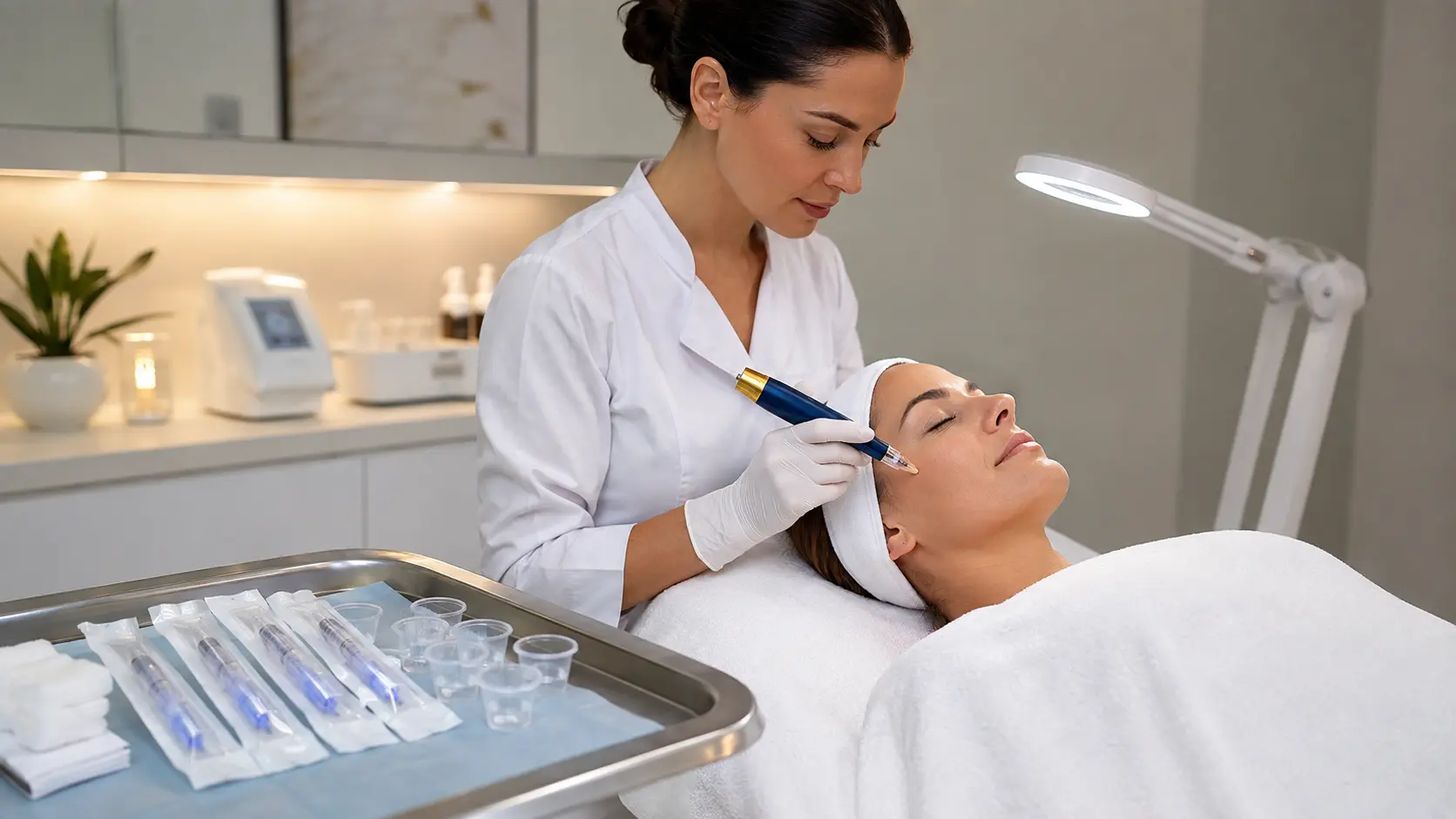
- Nano infusion tips must be treated as single-use items for each client unless the device manufacturer explicitly provides a validated high-level disinfection reprocessing protocol for reusable tips.
- The device body must be disinfected with an EPA-registered hospital-grade disinfectant between every client, using the contact time specified on the product label.
- Serums used during nano infusion must be decanted into single-use cups before treatment — the device tip must never re-enter a shared product container.
- Gloves must be worn throughout the entire service and changed immediately if contamination occurs.
- Proper hand hygiene with soap and water for a minimum of 20 seconds is required before gloving for any nano infusion service.
- A written infection control protocol specific to nano infusion should be maintained in your treatment room and available for state board inspection.
Nano infusion occupies a particular position in the professional esthetics landscape: it is an advanced enough treatment to elevate a service menu and deliver genuinely meaningful skin results, yet it sits within the esthetician scope of practice in most states precisely because it does not create the dermal injury associated with medical-grade microneedling. That positioning, however, sometimes creates a false sense that infection control requirements for nano infusion are correspondingly relaxed.
They are not. Any treatment that creates temporary microchannels in the skin — however superficial — carries an obligation to prevent pathogen introduction, cross-contamination between clients, and device-mediated transmission of bacteria or viruses. The fact that nano infusion stays within the epidermis does not eliminate those obligations. It simply means the consequences of failure are more localized than they would be with a dermal-penetrating device. Skin infections, folliculitis, post-treatment breakouts, and sensitization reactions following nano infusion are almost always traceable to protocol failures, not to the treatment modality itself.
This guide gives licensed estheticians a thorough, practice-level understanding of infection control requirements specific to nano infusion: what standards apply, what specific protocols they require, where the most common failures occur, and how to build a treatment room infection control system that protects clients, protects your license, and meets both state board and OSHA-adjacent standards.
Infection Control for Nano Infusion: What Every Esthetician Needs to Know
- Nano infusion disrupts the stratum corneum transiently — this is sufficient to create infection risk if sanitation protocols are not followed rigorously.
- Single-use tip protocols are the professional standard and the simplest path to eliminating cross-contamination risk entirely.
- Device body disinfection between clients is mandatory and must use an EPA-registered hospital-grade disinfectant at the label-specified contact time.
- Serums must be decanted before treatment — dipping the device tip into shared containers is a cross-contamination violation and a client safety failure.
- Written infection control protocols give you compliance documentation and protect your practice in the event of a state board inquiry or client complaint.
- OSHA Bloodborne Pathogens Standard principles should be applied as a baseline even when bleeding is not anticipated during nano infusion.
- The most common infection control failures in nano infusion are tip reuse between clients, improper serum handling, and incomplete device disinfection contact time.
Why Infection Control Matters Specifically for Nano Infusion
Understanding the infection risk profile of nano infusion requires a clear picture of what the treatment actually does to the skin. Nano infusion devices use tips containing hundreds of microscopic silicone or metal projections — nanotips — that oscillate or stamp against the skin surface, creating temporary microchannels in the stratum corneum. These channels are not needle punctures into the dermis; they are transient disruptions of the outermost skin layer that typically close within minutes to hours of treatment, depending on skin type and tip configuration.
That distinction matters for understanding risk level — but it does not eliminate the infection control obligation. The stratum corneum serves as the skin’s primary physical barrier against environmental pathogens. When it is transiently disrupted, even for a short window, the pathogen resistance of that treated skin is reduced. In a treatment room environment where a single device contacts multiple clients, or where serums are handled carelessly, or where tip sterilization is inconsistent, that window is sufficient for bacterial transfer, viral transmission, or contact dermatitis-inducing contamination to occur.
Several categories of adverse event are specifically associated with inadequate infection control in nano infusion and similar superficial skin-channeling treatments:
- Bacterial skin infections: Staphylococcal or streptococcal folliculitis or cellulitis can follow barrier disruption when skin surfaces or devices carry bacterial contamination.
- Viral activation: Herpes simplex virus (HSV) can be reactivated by treatment-induced trauma in susceptible clients, and can theoretically be transmitted via contaminated device tips if tip hygiene is inadequate.
- Fungal transfer: Compromised barrier skin is more susceptible to opportunistic fungal colonization if treatment surfaces or products are contaminated.
- Chemical contamination: Serums or treatment products that have been contaminated by repeated device tip dipping can introduce microorganisms or degraded product chemistry directly into the treatment zone.
These are not theoretical concerns. Estheticians working in high-volume treatment rooms who have experienced post-nano infusion adverse events almost invariably trace them to one of three protocol failures: tip handling, serum contamination, or device sanitation gaps. Understanding each of these in operational detail is the foundation of a safe nano infusion practice.
Nano Infusion Tip Protocols: Single-Use vs. Reusable Systems
The question of whether nano infusion tips must be single-use or can be disinfected and reused is one of the most frequently misunderstood infection control questions in nano infusion practice. The answer depends on tip material, device design, and state board regulations — but the professional standard is increasingly unambiguous: single-use disposable tips per client are the simplest, safest, and most legally defensible approach.
Silicone Tips: Single-Use Classification
Silicone nanotips are porous at the microscopic level. The small crevices between silicone projections can trap organic material — serum, skin cells, sebum, or trace blood — that standard disinfection protocols cannot reliably reach or eliminate. High-level disinfection of porous surfaces requires validated chemical contact times and concentration levels that are difficult to achieve reliably in a treatment room setting without specialized equipment. For this reason, silicone nanotips are best treated as single-client, single-session consumables and disposed of after each treatment. Attempting to reprocess silicone tips with alcohol wipes or standard surface disinfectant is not equivalent to high-level disinfection and does not meet professional safety standards.
Metal Tips: Reprocessing Requires Validation
Some nano infusion devices use stainless steel or titanium metal tips designed for reprocessing and reuse. Metal surfaces are non-porous and theoretically amenable to high-level disinfection. However, “theoretically amenable” and “actually safe in a treatment room context” are not the same claim. Metal tips designed for reuse must be reprocessed using an EPA-registered hospital-grade disinfectant with documented efficacy against bacterial spores, viruses, and fungi, applied at the full contact time specified on the label and maintained for the full contact duration. A wipe with an alcohol pad does not constitute high-level disinfection and should never be represented as such.
If you use a reusable metal tip system, verify that your state board regulations permit tip reprocessing for the device category you are using, confirm the specific EPA-registered disinfectant required for your device with the manufacturer, and maintain written logs of each disinfection cycle including product lot number, contact time, and date. That documentation is your compliance record in the event of a complaint or inspection.
A nano infusion tip that has contacted one client’s skin must never contact another client’s skin under any circumstances — regardless of tip material, regardless of how the tip looks visually, and regardless of how the device was marketed. This is a fundamental cross-contamination standard with no exceptions.
Tip Handling During a Single Session
Within a single client session, the same tip can be used across treatment areas as long as the tip does not contact any potentially contaminated surface between passes. In practice, estheticians should handle tips only at the device interface, avoid setting the device tip-down on any surface during the session, replace the tip immediately if it contacts a contaminated surface, and keep the device pointed upward or in a sterile holder between application passes. These protocols prevent within-session contamination of the tip from environmental surfaces or cross-treatment-area transfer.
Device Body Disinfection: What “Clean Between Clients” Actually Means
Disinfecting the nano infusion device body between clients is a mandatory professional standard, but the phrase “disinfecting the device” is often applied so loosely that it fails to achieve actual pathogen reduction. Infection control standards require a specific product type, a specific application method, and a specific contact time — all three are required for effective disinfection. Missing any one of them renders the process non-compliant regardless of how thorough it appears.
What Qualifies as an Appropriate Disinfectant
For non-porous device surfaces, the appropriate disinfectant is an EPA-registered hospital-grade disinfectant effective against bacterial, viral, and fungal pathogens. Isopropyl alcohol at 70% concentration is widely used for device body surface disinfection and is effective against enveloped viruses and vegetative bacteria. Quaternary ammonium compound wipes (“quat wipes”) registered for hospital-grade use are also commonly appropriate for smooth device body surfaces. Standard fragrance-free hand sanitizer, household cleaning sprays, or low-concentration alcohol products are not appropriate substitutes. Always verify that your chosen disinfectant is compatible with your specific device surface material to avoid degradation of seals, coatings, or electronic components.
Contact Time Is Not Optional
The single most commonly violated aspect of device disinfection in treatment room practice is contact time. EPA registration of a disinfectant product is based on efficacy at a specific wet contact time — the period during which the surface must remain visibly wet with the disinfectant to achieve the kill claim. Contact times for hospital-grade disinfectants range from 30 seconds to 10 minutes depending on the product. Wiping a surface with a disinfectant wipe and immediately wiping it dry does not constitute disinfection; it constitutes spreading the product across the surface and removing it before it has had any meaningful antimicrobial effect. Read the label of your specific product. Apply the disinfectant. Allow it to remain wet for the full labeled contact time. Then proceed.
What Cannot Be Submerged or Sprayed
The electronic device body of a nano infusion pen must never be submerged in disinfectant solution or sprayed with high-volume liquid sprays. Both approaches risk liquid ingress into the device electronics, which can cause device damage and is not required for surface disinfection. Wipe application of a disinfectant product to all external non-porous surfaces of the device body is the appropriate method. The tip attachment interface, any grip surfaces, and the power button area should all be included in the wipe-down protocol.
Serum Handling and Product Contamination Prevention
Serum contamination is one of the most commonly overlooked vectors for cross-contamination in nano infusion practice, yet it is entirely preventable with a single disciplined protocol: decant before you treat, and never re-dip.
Why Shared Containers Create Cross-Contamination Risk
When a nano infusion tip contacts a client’s skin and is then dipped back into a shared serum bottle or jar, organic matter from the client’s skin — including dead skin cells, sebum, bacteria, and potentially viral particles — is introduced into the shared product. That contaminated product is then applied to the next client. This contamination pathway is not visible to the naked eye, which is precisely what makes it dangerous. An esthetician who has been dipping their nano tip into shared bottles for years without apparent adverse events has not been operating safely — they have been operating unsafely and getting away with it. The risk is real and cumulative.
The Decant Protocol
Before beginning any nano infusion treatment, pour or pipette the session’s entire serum requirement into a single-use cup or container. Use that decanted portion for the treatment. Discard the cup and any remaining serum after the session. Never return excess serum from the decant cup to the original container. This protocol takes approximately fifteen seconds and eliminates the shared-container contamination pathway entirely. Estheticians treating higher-volume clients may consider pre-decanting multiple single-use portions at the start of each day and storing them sealed until the relevant session.
Pump and Dropper Systems
Serums in airless pump or dropper systems present lower cross-contamination risk than open-mouth jars because the product is dispensed onto a clean surface rather than requiring a tool to be inserted into the container. However, pump dispensers do not eliminate contamination risk if the dispensed product is touched by a gloved hand that has already contacted client skin and the dispenser nozzle is then reused without cleaning. Pumping directly into a decant cup and treating the dispensed portion as single-use remains best practice regardless of container type.
OSHA Standards and the Bloodborne Pathogens Framework for Nano Infusion
OSHA’s Bloodborne Pathogens Standard (29 CFR 1910.1030) is written for occupational settings where workers face reasonably anticipated exposure to blood or other potentially infectious materials (OPIM). The standard is most clearly applicable to medical procedures that routinely cause bleeding, but its principles and framework represent the baseline safety architecture that all practitioners — including estheticians — should apply to skin-penetrating or skin-disrupting treatments.
Does the Standard Directly Apply to Estheticians Performing Nano Infusion?
This question has a technically complex answer that varies by state and by employment classification. In states where estheticians are classified as employees of a spa or salon, OSHA standards generally apply to the employer. In states where estheticians work as independent contractors or booth renters, OSHA enforcement is more limited. Nano infusion does not typically cause bleeding, which means the “reasonably anticipated exposure” trigger for the Bloodborne Pathogens Standard is debatable for nano infusion under ideal technique. However, most esthetician educators and state board compliance advisors recommend following Bloodborne Pathogens Standard principles as a baseline for any treatment involving skin disruption, because incidental skin penetration can occur, and because following a higher standard of care is always preferable to meeting a lower one.
Applying Bloodborne Pathogens Principles in Practice
Whether or not OSHA formally requires it for your specific employment situation, the following Bloodborne Pathogens Standard principles should be integrated into every nano infusion infection control protocol:
- Universal precautions: Treat all clients as potentially infectious for bloodborne pathogens, regardless of their disclosed health history.
- Personal protective equipment (PPE): Nitrile gloves are the minimum PPE for all nano infusion treatments. Consider eye protection if serum splatter is a possibility with your device and technique.
- Engineering controls: Use sharps containers for any metal-tipped consumables that could cause puncture injury during disposal. Place used tips directly into designated disposal containers rather than reaching into trash bags.
- Work practice controls: Do not recap tips by hand. Do not place fingers over the tip interface during device handling.
- Exposure incident protocol: Know in advance what your protocol is in the event of accidental skin puncture or blood contact — who to notify, what first aid steps to follow, and how to document the incident.
State Board Sanitation Requirements and Nano Infusion
State cosmetology and esthetics board sanitation regulations are the primary regulatory framework directly applicable to esthetician practice in most states. These regulations vary considerably in their specificity regarding advanced devices such as nano infusion tools, because the regulatory language in many states was written before nano infusion became common in esthetics practice.
General principles that apply across most states: Tools and implements that contact the skin must be disinfected or disposed of after each client. Single-use items may not be reused. Treatment surfaces must be disinfected between clients. Practitioners must maintain clean technique and sanitary conditions at all times.
What varies by state: Whether nano infusion tips are classified as single-use sharps, whether specific disinfectant product types are required, whether nano infusion falls under additional licensing requirements, and whether written infection control protocols are specifically required for device-based treatments. Always verify current requirements with your specific state board directly, as regulations are updated regularly and this guide cannot substitute for jurisdiction-specific legal advice.
Pre-Treatment Skin Assessment as Infection Control
Infection control begins before the device touches the skin. A thorough pre-treatment skin assessment is not just a consultation protocol — it is an infection control function. Identifying contraindications that make nano infusion unsafe for a particular client on a particular day prevents adverse events that would not be recoverable through any subsequent sanitation measure.
Contraindications That Must Pause Nano Infusion Treatment
Estheticians must postpone or decline nano infusion treatment when any of the following conditions are present or suspected:
- Active acne pustules or cysts in the treatment area — the device tip can spread bacterial content from active lesions across the treatment zone
- Active cold sores, fever blisters, or any visible herpes simplex outbreak — nano infusion over an active HSV lesion is contraindicated and can spread the infection across the face
- Open cuts, wounds, or compromised skin integrity of any kind in the treatment area
- Active rosacea flare with visible pustules or significant vasodilation
- Suspected or known skin infection of any type in the treatment zone
- Recent severe sunburn or significant thermal injury in the treatment area
- Known allergy to any ingredient in the serums to be used during treatment
Clients with a history of herpes simplex should be asked specifically about their outbreak frequency and the last occurrence. Some practitioners require clients with frequent HSV outbreaks to be pre-treated with antiviral medication by their physician before receiving any treatment that disrupts the skin barrier — including nano infusion. This is a clinical decision that falls outside the esthetician scope of practice and should involve a medical referral rather than esthetician self-management.
Pre-Treatment Skin Cleansing Protocol
Thorough skin cleansing immediately before nano infusion treatment is both an efficacy requirement and an infection control measure. Sebum, cosmetics, sunscreen, and surface microorganisms should be removed from the skin before the device contacts it. A double cleanse using a professional-grade cleanser appropriate for the client’s skin type, followed by a pH-balancing toner, is the standard pre-treatment cleansing approach. Ensure the skin is thoroughly dry before nano infusion device application — residual product on the skin surface can dilute the treatment serum and alter device tip behavior.
Estheticians integrating the ILUMIPEN by Luminous Skin Lab into their nano infusion protocols note a specific operational workflow advantage: because the device is designed for single-use disposable tip application, the pre-treatment setup and post-treatment teardown sequences are meaningfully faster and more straightforward than with reusable tip systems that require disinfection logging and contact time management. In a high-volume treatment room where three to five nano infusion services are performed consecutively, the elimination of the tip reprocessing workflow — and the cognitive load of tracking disinfection contact times across multiple clients — translates to reduced protocol error risk and more consistent infection control compliance across every session.
Practitioners using the ILUMIPEN also report that the device’s non-porous exterior surface responds cleanly to standard EPA-registered hospital-grade disinfectant wipe protocols between clients, with no residue accumulation or surface degradation observed across extended use. The seam-reduced device body design limits the number of surface features where organic material could accumulate between disinfection cycles — a practical infection control consideration that is easy to overlook when evaluating devices on specification sheets alone.
Building a Written Infection Control Protocol for Your Nano Infusion Practice
A written infection control protocol is one of the most professionally defensible documents an esthetician can maintain. In the event of a client complaint, a state board inspection, or an adverse event investigation, your written protocol demonstrates that infection control was a considered, systematic part of your practice — not an afterthought. It also serves as a training document if you hire or mentor other estheticians in your practice.
What a Written Nano Infusion Infection Control Protocol Should Include
Device and Equipment Identification
Name and model of the nano infusion device used, tip system classification (single-use or reusable), and manufacturer contact information for device-specific cleaning guidance.
Disinfectant Products Used
EPA registration number, product name, concentration, labeled contact time, and application method for each disinfectant product used in the protocol. Attach current Safety Data Sheets (SDS).
Pre-Treatment Protocol Steps
Step-by-step sequence: hand hygiene, gloving, device disinfection, sterile field setup, skin assessment, and contraindication screening protocol.
During-Treatment Safety Rules
Serum decanting requirement, tip contamination response, glove change protocol, and bleeding response protocol written as explicit operational rules.
Post-Treatment Teardown Protocol
Tip disposal, device re-disinfection, surface disinfection, disposable waste handling, and session log entry procedure.
Exposure Incident Protocol
Step-by-step response for accidental skin puncture, blood contact, or other potential exposure events. Include first aid steps, documentation requirements, and notification contacts.
Session Logs: Your Documentation of Compliance
For every nano infusion session, maintain a brief written log entry that includes the date and time of the service, an anonymized or coded client identifier, the tip system used including lot number if applicable, the disinfectant product used and the contact time observed, and any unusual events or protocol deviations that occurred. These logs take approximately two minutes per session to complete and provide you with a demonstrable compliance record that extends across your entire nano infusion practice history.
Store these logs for a minimum period consistent with your state board record-keeping requirements — typically three to five years. Maintain them in a format that is readily accessible for inspection — a dedicated binder in the treatment room is appropriate.
The Most Common Infection Control Failures in Nano Infusion Practice
Understanding where infection control failures most commonly occur in nano infusion practice is as important as understanding what the correct protocols are. The following categories represent the patterns that appear most consistently when adverse events or state board inquiries follow nano infusion services.
Tip Reuse Between Clients
The most serious and most consequential infection control failure in nano infusion practice is reusing a tip between two different clients — whether by design, oversight, or confusion about which tips are single-use versus reusable within a given device system. This failure is unacceptable under any professional standard and carries significant liability exposure in addition to direct client safety risk. Implement a physical system that makes tip reuse impossible in practice: open a new tip in front of each client, and discard used tips immediately after the session in a clearly marked disposal container so that they cannot be accidentally retrieved and reused.
Incomplete Device Disinfection Contact Time
Wiping the device with a disinfectant wipe and immediately moving to the next client is the second most common failure. The contact time printed on the product label is not a suggestion — it is the minimum time required for the disinfectant to achieve its EPA-registered kill claim. In a busy treatment room, the pressure to turn over quickly can make contact time compliance feel inconvenient. It is not optional. Set a visible timer if needed. The ten minutes that a quat compound wipe requires to achieve its kill claim is time that can be used for treatment room reset, documentation, or client consultation preparation.
Serum Re-Dipping
Re-dipping the nano infusion device tip into shared serum bottles during or after skin contact is a widespread practice that practitioners frequently do not recognize as an infection control violation because it “seems clean” in the moment. It is not. The decant protocol is simple, takes seconds, and eliminates this vector entirely. Make it a non-negotiable operational habit from the first nano infusion session you perform.
Failure to Screen Contraindications
Performing nano infusion over an active cold sore or across an active acne pustule field is both a client safety failure and a treatment outcome failure. Contraindication screening before every treatment is not a bureaucratic formality — it is a practical infection control measure that prevents device-mediated spread of active skin infections across the treatment zone.
Absence of Written Protocol Documentation
Estheticians who perform nano infusion without a written, maintained infection control protocol have no compliance record in the event of a state board inspection or client complaint. The absence of documentation does not mean the absence of liability — it often amplifies it, because it implies that infection control was not a systematized part of the practice. Write your protocol. Maintain your logs. These documents are your professional protection.
Professional and Regulatory References
The infection control standards and regulatory frameworks referenced in this article draw from the following sources:
- OSHA Bloodborne Pathogens Standard (29 CFR 1910.1030) — U.S. Occupational Safety and Health Administration. Current standard text and interpretation guidance available at osha.gov.
- EPA Registered Disinfectant Products List (List N) — U.S. Environmental Protection Agency. EPA registered disinfectant database for verification of specific product registration numbers and kill claims.
- State Cosmetology and Esthetics Board Sanitation Requirements — Individual state board regulations vary. Contact your specific state board for current device-specific sanitation requirements applicable to nano infusion services.
- CDC Guidelines for Infection Control in Healthcare Settings — Centers for Disease Control and Prevention. Infection control principles applicable to skin-disrupting treatments in clinical and professional settings.
- Associated Skin Care Professionals (ASCP) and National Coalition of Estheticians Associations (NCEA) — Professional body guidance on advanced device infection control standards for licensed estheticians.
- Manufacturer-specific device cleaning and disinfection guidance — Always reference the current cleaning instructions provided by your specific nano infusion device manufacturer as the primary authority on device body disinfection compatibility.
[[DEVELOPER OPTIONAL]] — Add specific regulation citations and effective dates upon editorial review.
For estheticians building a nano infusion practice with infection control compliance as a foundational priority, device selection matters as much as protocol design. The ILUMIPEN by Luminous Skin Lab was developed by a licensed esthetician for professional treatment room use, with a single-use disposable tip system that eliminates the reprocessing complexity, documentation burden, and cross-contamination variables associated with reusable tip architectures. Its non-porous exterior surface is compatible with standard EPA-registered hospital-grade disinfectant wipe protocols, and the device design supports clean, efficient between-client sanitation workflows in high-volume practice settings. For estheticians who want an advanced nano infusion tool that integrates cleanly with professional infection control standards from day one, the ILUMIPEN represents the architecture our education team recommends.
Learn More About the ILUMIPEN →Frequently Asked Questions: Infection Control for Nano Infusion
Does nano infusion break the skin barrier and create infection risk?
Nano infusion creates temporary microchannels in the stratum corneum using silicone or metal nanotips, but it does not pierce the dermis or cause bleeding under standard technique. While the skin barrier is transiently disrupted during treatment, the depth of penetration remains within the epidermis. This means infection risk is lower than with microneedling, but proper infection control is still required because any transient barrier disruption creates a pathway for potential pathogen introduction if sanitation standards are not followed.
Do nano infusion tips need to be single-use or can they be disinfected and reused?
Whether nano tips must be single-use or can be reused and disinfected depends on the tip material and your state board regulations. Most professional standards recommend single-use disposable tips for each client to eliminate cross-contamination risk entirely. Some metal tip systems are designed for disinfection and reuse, but only with a validated, high-level disinfection protocol using an EPA-registered hospital-grade disinfectant. Always verify your specific state board rules before adopting a reuse protocol.
What disinfectant should I use to clean my nano infusion device between clients?
The device body should be wiped with an EPA-registered hospital-grade disinfectant appropriate for non-porous surfaces after each client. Quaternary ammonium compounds or isopropyl alcohol at 70% or higher concentration are commonly used for device body disinfection. The tip or cartridge must be handled separately according to its single-use or reprocessing classification. Never submerge the electronic device body in disinfectant solution and always follow the manufacturer’s cleaning instructions to avoid device damage.
Does OSHA’s Bloodborne Pathogens Standard apply to nano infusion?
OSHA’s Bloodborne Pathogens Standard applies whenever there is reasonably anticipated contact with blood or other potentially infectious materials. Because nano infusion does not typically cause bleeding, full Bloodborne Pathogens Standard obligations may not technically apply in all states. However, most state esthetician boards and professional standards bodies recommend following Bloodborne Pathogens Standard principles as a baseline safety practice for any treatment involving skin penetration, including nano infusion, because incidental skin disruption can occur.
What should I do if a client’s skin bleeds during a nano infusion treatment?
If bleeding occurs during a nano infusion treatment, stop the treatment immediately at that site. Apply gentle pressure with a clean, sterile gauze pad. Do not continue treating over the area. Change gloves before continuing treatment on unaffected areas. Document the incident in your client records. Review your technique and pressure settings before the next session. Bleeding during nano infusion may indicate excessive pressure, incorrect tip selection, a compromised skin barrier, or an undisclosed contraindication that should be addressed before future treatments.
How should I prep my treatment room for a nano infusion service to prevent cross-contamination?
Treatment room preparation for nano infusion should include a freshly disinfected treatment surface with clean draping, a sterile field for device tips and serums, gloves on before handling any tools or products, decanted single-use serum portions to avoid product contamination, and all non-disposable tools pre-disinfected with EPA-registered disinfectant. Never dip the nano infusion tip back into shared product containers during treatment. Dispose of all single-use items immediately after each client.
Can I reuse the same nano tip on a client during a single treatment session?
Yes, the same tip can be used on one client throughout a single treatment session as long as it does not contact contaminated surfaces, open skin, or shared product containers between passes. If the tip contacts any potentially contaminated material during the session, replace it before continuing. Tips must never be reused between different clients under any circumstances, as this constitutes a serious cross-contamination and infection control violation.
What hand hygiene protocol should estheticians follow during nano infusion treatments?
Estheticians should wash hands thoroughly with soap and water for at least 20 seconds before gloving for any nano infusion treatment. Gloves must be worn throughout the entire service. If gloves are removed or torn during treatment, hands must be washed again before applying fresh gloves. Hand sanitizer with at least 60% alcohol is appropriate for interim hand hygiene during treatment but does not replace pre-treatment handwashing with soap and water.
How does the ILUMIPEN nano infusion device support infection control compliance in a professional treatment room?
The ILUMIPEN by Luminous Skin Lab is designed with professional infection control standards in mind. Its tip system is engineered for single-use disposable application, eliminating the reprocessing complexity and cross-contamination risks associated with reusable tip systems. The device body features a non-porous, smooth exterior surface compatible with standard EPA-registered hospital-grade disinfectant wipe protocols between clients. For estheticians building a compliant nano infusion practice, a device architecture that integrates cleanly with single-use workflows reduces both protocol complexity and liability exposure.
Infection Control Is the Foundation of a Sustainable Nano Infusion Practice
Nano infusion is one of the most exciting additions to the professional esthetician’s toolkit: an advanced skin-channeling treatment that delivers meaningful clinical results, sits within esthetician scope in most states, and creates genuine service differentiation. But the sophistication of the treatment modality does not reduce the importance of the fundamentals — it increases it. Every client who sits in your treatment room for a nano infusion service is trusting you with a transiently compromised skin barrier. That trust demands rigor.
The infection control standards outlined in this guide — single-use tip protocols, EPA-registered device disinfection with full contact time compliance, serum decanting, thorough pre-treatment contraindication screening, and written protocol documentation — are not burdensome requirements designed to slow you down. They are the professional infrastructure that makes nano infusion safe for clients, legally defensible for your license, and sustainable as a treatment room staple.
Estheticians who build their nano infusion practice on a rigorous infection control foundation from the start do not need to retrofit safety into an established workflow. They operate from confidence at every session, with the documentation and protocols to demonstrate their professionalism to any client, inspector, or insurer who asks. That foundation is what separates a practiced professional from an operator who has been getting away with cutting corners — and in this profession, that distinction matters every single time a client sits down in your chair.