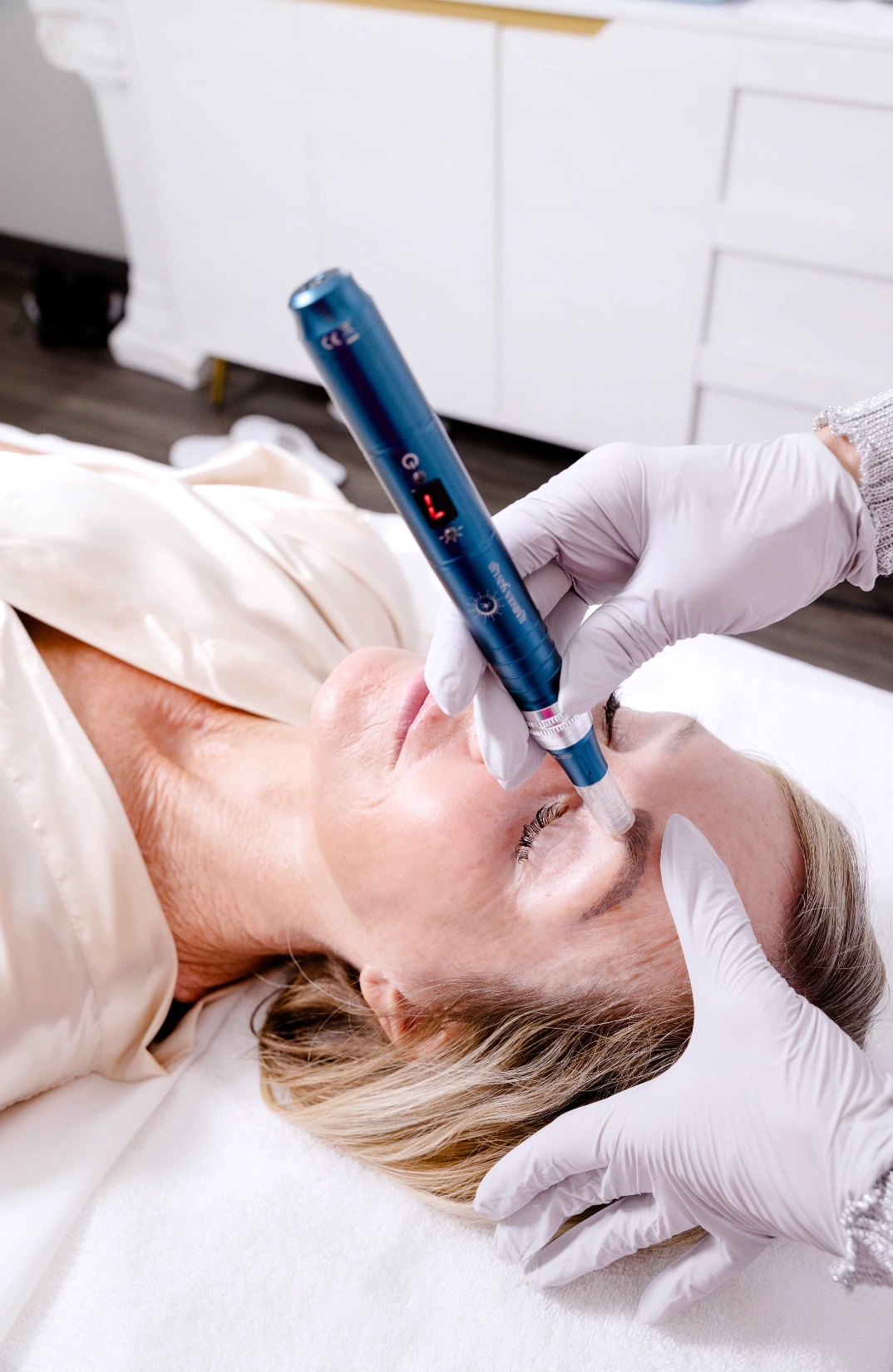
How Does Microneedling Stimulate Collagen and Improve Skin Texture?
Microneedling creates precise micro-channels at controlled depths within the skin. These micro-injuries trigger the body’s natural repair mechanisms, leading to new collagen and elastin formation. Through this process, skin structure strengthens, and as a result, you get skin texture improvement over time.
Collagen Induction Therapy Explained
With age, the skin’s natural repair cycle and collagen synthesis rate decline. Collagen induction therapy (CIT) restores these biological processes by creating controlled micro-channels that activate fibroblast function. Once stimulated, these cells produce new collagen and elastin, strengthening the skin’s internal structure.
Induction therapy benefits extend beyond surface rejuvenation. Consistent treatment improves dermal density, elasticity, and firmness while reducing visible signs of aging. The result is smoother, more resilient skin with a balanced tone and refined texture.
What Is Collagen Induction Therapy?
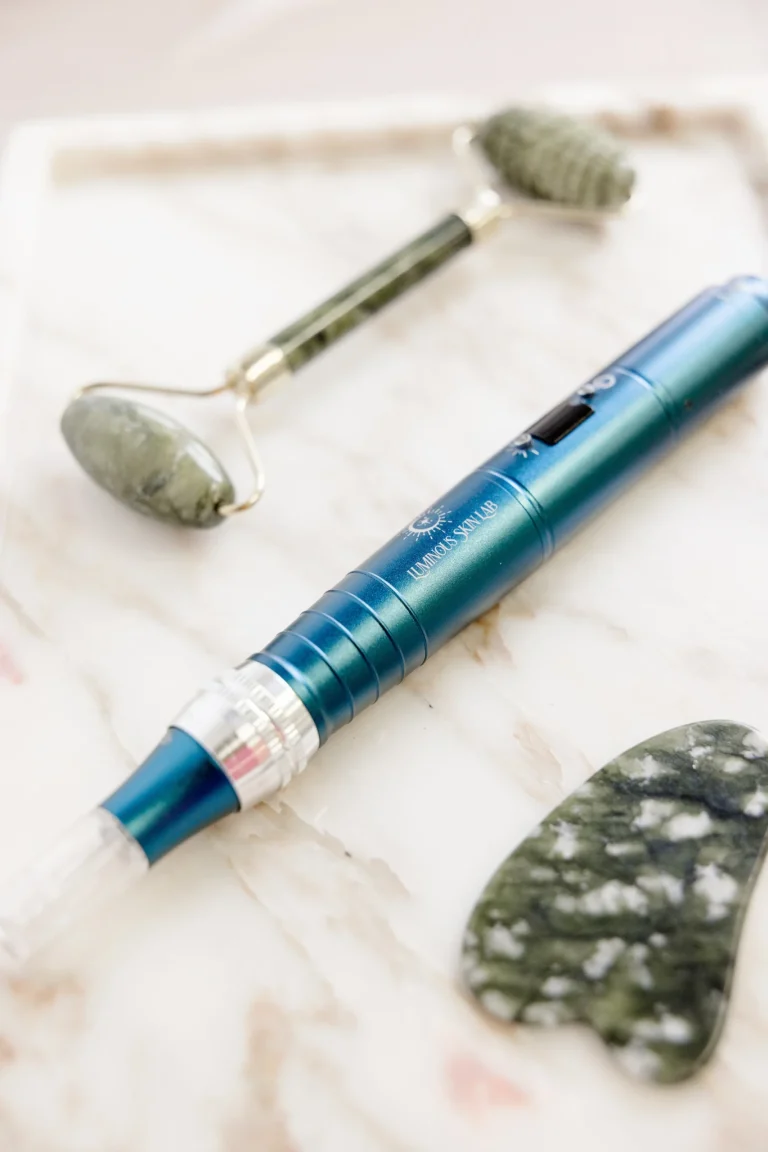
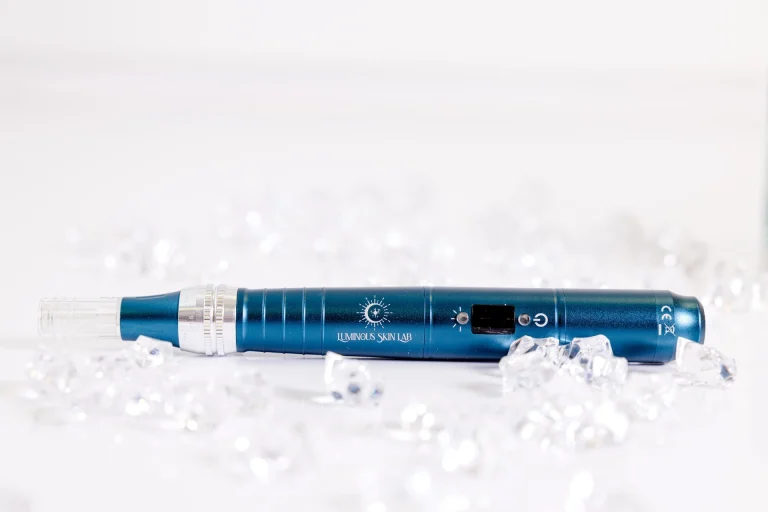
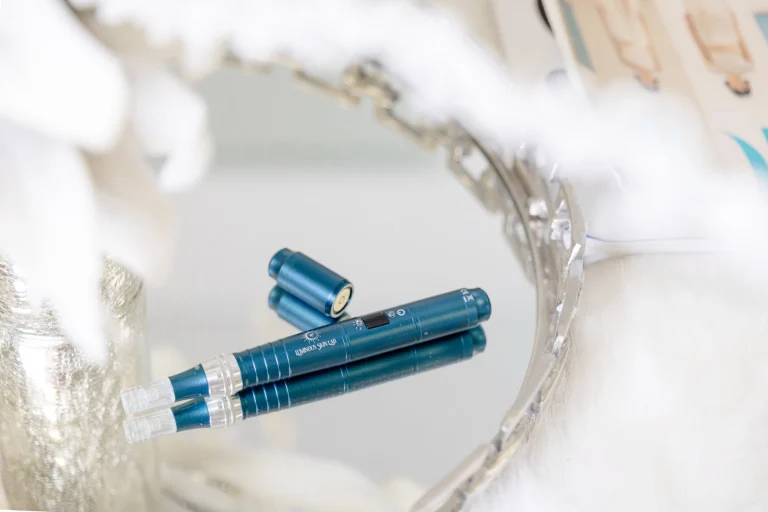
Collagen induction therapy is a controlled method of dermal remodeling that enhances the skin’s structural integrity. The ILUMIPEN microneedling pen creates precise micro-channels at a defined depth within the dermis. This action activates fibroblast cells responsible for collagen and elastin formation. Once stimulated, these cells restore the skin’s internal support network and improve overall firmness.
The process unfolds through several key biological stages that define how the skin renews and strengthens itself:
- Controlled micro-injury. Fine sterile needles reach the upper dermis and initiate a repair response.
- Cell activation. Fibroblasts migrate to the treated zone and begin structural protein synthesis.
- Collagen synthesis. Newly formed fibers strengthen the dermal matrix and replace weaker tissue.
- Matrix remodeling. Collagen and elastin networks reorganize, creating denser and more uniform support.
How Does Microneedling Activate Fibroblasts to Make New Collagen?
Fibroblasts are located within the dermal connective tissue and serve as the main source of collagen types I and III, as well as elastin. The microneedling procedure creates controlled micro-injuries that trigger a localized healing cascade. In response, fibroblast cells migrate to the treated zone and begin new collagen formation.
During this stage, fibroblasts release essential growth factors that attract additional repair cells, stimulate microcirculation, and initiate matrix rebuilding. This sequence leads to significant collagen production after microneedling, which improves the skin’s elasticity, density, and overall texture.
PubMed Central data show that microneedling activates platelet-derived growth factors and vascular responses. As a result, a sequence of regenerative mechanisms begins, which rebuilds and strengthens the dermal structure.
Does Microneedling Thicken Skin or Just Smooth the Surface?
In fact, microneedling makes it possible to achieve both results. The key lies in controlled fibroblast stimulation, which strengthens the dermal matrix. As a result, the skin’s density increases, and the improvement becomes truly significant. It is not a temporary surface enhancement — it reflects deeper, long-term positive changes. This happens because structural integrity develops beneath the surface.
At the same time, the smoothness is not only visible. This result reflects deep biological changes. And they are substantial. Collagen fibers become denser, the epidermis gains stronger support, and elastin aligns more evenly. Because of this, the effect is not short-lived or fleeting. The skin remains firmer for a long time, and its texture continues to improve.
Consistent treatment with the ILUMIPEN microneedling pen maintains optimal skin performance without the need for aggressive procedures or extended downtime.
Skin Rejuvenation Cycle and Cell Turnover
The skin functions as a self-renewing organ. Each day, it replaces aged cells, repairs microdamage, and maintains a balanced surface environment. Over time, intrinsic aging, external stressors, and environmental exposure reduce the efficiency of this process.
Microneedle therapy with the ILUMIPEN device restores the skin’s natural rhythm of renewal. The controlled microchannels reactivate cellular communication, accelerate epidermal turnover, and enhance nutrient exchange between layers.

Each phase within the repair cycle performs a distinct function. Understanding these biological stages allows professionals to guide post-treatment recovery and optimize visible outcomes.
What Happens to the Skin in the First Week After Microneedling
The initial week after microneedle therapy focuses on repair and protection. Proper post-care ensures safe healing and optimal treatment results.
During the first 48 to 72 hours, the skin enters a controlled inflammatory phase. Circulation increases, and growth factors move toward the treated areas. It is worth noting that temporary erythema may appear. Or there may be a feeling of tightness. But this will pass. In fact, it indicates that collagen has begun to form actively.
Then the regeneration phase begins. At this stage, attentiveness is essential. Gentle care is very important. The skin must stay stable. Therefore, it is necessary to include hydrating serums, barrier-repair creams, and mineral-based sunscreens in the daily routine. In addition, during this period, it is necessary to avoid exfoliants, acids, and products with strong active ingredients.
The post-treatment process follows three distinct biological stages:
- The first 0–72 hours represent the inflammation phase. During the first three days, microchannels close, and tissue restoration begins.
- Days 3–14 mark the proliferation phase. Over the next two weeks, new epidermal cells appear. During this period, collagen synthesis begins, and microcirculation improves.
- The following few weeks to several months represent the remodeling phase. This is when the most visible and significant transformations occur. Collagen and elastin fibers go through reorganization. The dermal structure becomes stronger, and the skin appears firmer.
How Microneedling Affects Cell Turnover and Renewal
The human body has a remarkable ability to renew itself continuously. However, with age, this process becomes slower and less active. In youth, the cell turnover cycle takes about 28 days, but factors such as stress, time, and environmental exposure inevitably affect it. Renewal slows down, and the level of structural proteins decreases. Microneedle therapy helps reverse these changes. It accelerates epidermal renewal and reactivates the regenerative processes within the dermis.
This mechanism defines how microneedling works—it restores the natural rhythm of renewal and enhances oxygen, nutrient, and growth factor delivery to active cells.
Among the main collagen induction therapy benefits is its ability to enhance elasticity, refine texture, and support long-term structural renewal. It provides visible results for clients with early wrinkles or superficial scars. Experts also emphasize its effectiveness for those with uneven skin texture. This improvement occurs due to several biological mechanisms:
- Improves circulation. The deeper skin layers receive more oxygen and nutrients.
- Activates fibroblasts. These cells stay active for 2–3 weeks, which supports a high level of collagen synthesis.
- Enhances absorption. Professional ampoules and serums reach target zones more accurately through microchannels.
- Promotes balanced renewal. As old keratinocytes shed efficiently, the skin texture becomes smoother and the tone more even.
To reinforce results, estheticians may combine microneedle therapy with sterile ampoules that contain peptides, vitamins, or hyaluronic acid. These active ingredients nourish the skin and strengthen its renewal process.
When Collagen Remodeling Begins After a Session
Visible changes after microneedle therapy develop gradually as the skin transitions from surface recovery to structural renewal. Collagen remodeling does not occur immediately; it typically begins around the third or fourth week following treatment, once the initial repair phase has stabilized.
During this period, fibroblast cells become active. They replace older collagen fibers with new ones — and the result, as they say, is visible. The dermal matrix becomes denser, providing stronger support for the epidermis. This process creates the biological foundation for noticeable skin texture improvement. Elasticity also increases as the structure gains stability.
However, the improvements continue beyond this stage. The collagen and elastin networks continue to strengthen in the following months. As flexibility and resilience increase, the skin becomes firmer and smoother. An additional advantage is that this regeneration does not happen instantly. It unfolds gradually and, most importantly, naturally. There are no abrupt changes. The final result appears balanced and authentic.
Many clients notice visible improvement in both skin texture and elasticity after 3–6 months. The skin retains its firmness without regression. This period shows the main advantage of collagen remodeling. The body’s own regenerative mechanisms start to work actively. These natural processes ensure long-term stability of results and provide a lasting rejuvenation effect. Not a short-lived cosmetic improvement.
Timeline of Results and Post-Treatment Expectations
Microneedle therapy works gradually, which is one of the main advantages that ensures long-lasting visible results. The skin does not just receive a temporary boost of nutrients — it goes through phases of healing, regeneration, and structural strengthening. Visible improvement does not appear immediately, but it begins to develop steadily. Step by step, the skin achieves long-term enhancement.
However, this does not mean clients must wait too long to notice a change. The initial glow usually appears within the first few weeks. As the collagen remodeling process starts, deeper transformations begin to show. So, it is important to keep this timeline in mind to maintain realistic expectations and approach each recovery stage with confidence that results will appear soon. And they truly do.
How Long Does it Take to See Results from Microneedling?
The effect of microneedle therapy develops step by step. First, after about two weeks, the skin begins to reflect light more evenly and feels smoother and more refined to the touch. Next, the natural process of collagen renewal becomes active, gradually strengthening and densifying the skin’s structure.
These changes follow a structured biological rhythm known as the microneedling results timeline, where each stage contributes to stronger, more balanced skin over time. The table below outlines typical progress after a session.
| Timeframe | Visible Changes |
| 0–3 days | Mild erythema and a feeling of tightness |
| 1–2 weeks | Smoother surface and more even tone with an initial glow |
| 4–6 weeks | Noticeable texture refinement; pores and fine lines appear softer |
| 8–12 weeks | Firmer, more resilient skin with clear structural improvement |
How Many Sessions Do You Need for Noticeable Refinement?
A single microneedle session can initiate collagen renewal, but consistent results require a structured treatment plan. The total number of sessions depends on the client’s skin condition, response rate, and desired outcome.
Recommendations for the number of sessions are always personalized, but there are general guidelines worth following:
- If the skin has slightly lost its smoothness or looks dull, three sessions spaced about four weeks apart are usually sufficient.
- When working with fine lines or early signs of aging, a course typically includes four to six procedures performed every five weeks.
- For visible scarring or pronounced uneven texture, specialists usually recommend six to eight sessions with intervals of around six weeks.
After completing the main course, it is advisable to schedule maintenance sessions two or three times a year. This approach helps the skin remain firm for longer, supports ongoing collagen synthesis, and allows the achieved results to last over time.
What Is the Typical Microneedling Before-and-After Timeline?
To see how visible improvement actually occurs at each stage, it is enough to look at the microneedling before and after timeline. At first, there may be slight redness or a mild feeling of warmth. These signs indicate that the regeneration process has already begun. Gradually, everything subsides. But the improvements continue, and the regeneration process does not stop. Step by step, the skin becomes smoother. It appears more hydrated and refreshed. The tone becomes more even.
Over the following couple of weeks, the dermal matrix continues to strengthen, and collagen density increases. Progress remains steady, as do the visible improvements. It is important to understand that the overall effect is cumulative — with each new session, the skin becomes firmer, looks healthier, and shows better texture refinement.
A lasting result depends not only on the procedure itself. Post-treatment care plays an equally important role. It does not require complex steps, but following a few simple guidelines helps the skin recover faster and maintain the achieved effect. It is best to avoid makeup for 24 hours after the procedure. Add a mineral-based sunscreen and gentle moisturizing products to your daily skincare routine. In addition, avoid exfoliants and retinoid products for at least one week to allow the skin to fully restore its balance.
Conclusion – Collagen Renewal, Made Precise
Effective skin rejuvenation depends on balance — refinement of the surface and restoration of structure within deeper layers. The ILUMIPEN microneedling pen provides professionals with precise depth control and uniform pulse delivery, ensuring accuracy in every treatment area. This precision results in consistent outcomes and predictable improvement across the skin.
A structured treatment plan combined with proper aftercare maintains this progress. Calm, hydrated, and well-protected skin continues to strengthen over time. With consistent sessions, clients achieve smoother texture, improved firmness, and visibly renewed tone supported by their own natural collagen network.