Microneedling Cartridges Explained: 2026 Guide for Estheticians
What Are Microneedling Cartridges, and How Do You Choose One?
Microneedling cartridges are the single-use needle tips that attach to a microneedling pen. They come in different pin counts — commonly 9, 12, 24, 36 and 42 pins — and the pin count sets how focused or how gentle the treatment is. Nano-infusion cartridges are a needle-free variation: sphere-shaped silicone tips that open the skin’s surface to drive serums in with no downtime. Choosing the right cartridge means matching the pin configuration to the treatment goal and the area, and changing the cartridge for every client.
- Pin count = intensity & coverage. Fewer pins (9–12) concentrate energy for focused work; more pins (36–42) spread it for gentler passes.
- Needle depth is separate. Depth is dialed on the pen; the cartridge sets how many channels per pass.
- Microneedling vs. nano. Needled cartridges build collagen; nano cartridges are needle-free infusion with no downtime.
- Single-use, always. One cartridge per client — never reused.
- Match to the menu. A 12-pin plus a Round Nano covers most everyday protocols.
Every microneedling treatment comes down to the cartridge on the end of the pen. The device sets the speed and the needle depth, but the cartridge decides how many channels you create per pass, how focused or diffuse the treatment is, and whether you are needling at all or running a needle-free nano-infusion. For a licensed esthetician, knowing the cartridge system is what separates a protocol built for a specific client from a one-size pass. This guide explains what the pin counts mean, how microneedling and nano cartridges differ, how to match a cartridge to the treatment, and the economics of stocking them.
Microneedling Cartridges at a Glance
- Pin count sets intensity and coverage: 9 & 12-pin = focused; 24-pin = balanced; 36 & 42-pin = gentle/superficial.
- Needle depth is set on the pen, independently of the cartridge.
- Nano cartridges (Round, Square 5D, Small Square 3D) are needle-free infusion with no downtime.
- Single-use: a fresh cartridge for every client, every time.
- Stocking: replacement cartridges come in customizable 25-packs; keep your highest-use pin counts in depth.
Microneedling Cartridges by Pin Count
Pin count is the number of ultra-fine needles in the cartridge. More pins mean more micro-channels spread across a wider contact area per pass; fewer pins concentrate the same work into a tighter, more intensive footprint. It changes intensity and coverage — it does not change needle depth, which you set on the pen.

| Cartridge | Profile | Best for |
|---|---|---|
| 9-Pin | Most focused | Intensive protocols targeting the look of scarring and stretch marks |
| 12-Pin MOST POPULAR | Versatile | Fine lines, texture and overall rejuvenation protocols |
| 24-Pin MOST POPULAR | Balanced coverage | Texture, tone and preventative-aging protocols |
| 36-Pin | Gentler | Fine lines, the look of enlarged pores and overall refinement |
| 42-Pin | Most superficial | Maintenance, texture refinement and minimal downtime |
Nano-Infusion (Nano-Needling) Cartridges
Nano cartridges are needle-free. Instead of needles, they use sphere-shaped silicone tips that gently separate the cells of the skin’s surface to create temporary micro-channels for product absorption — microchanneling. There is no controlled injury and effectively no downtime, which makes them the go-to for infusion facials, pre-event glow, and sensitive clients.
- Round Nano MOST POPULAR — full-face infusion for hydration, brightening and barrier-support protocols.
- Square Nano 5D — covers larger areas efficiently for advanced infusion protocols.
- Small Square Nano 3D — precision work around the eyes, lips and other targeted areas.
How to Match the Cartridge to the Treatment
Start from the goal, then the area. Decide whether the client needs collagen stimulation (needled) or product infusion with no downtime (nano). Then pick the pin configuration or nano shape that fits the area and the intensity you want. Depth is set separately on the pen according to the zone and the client’s skin.
Focused vs. superficial. Scar- and stretch-mark-focused work leans on the 9-pin; maintenance and refinement passes lean on the 36 or 42-pin; the 12 and 24-pin cover the broad middle of most rejuvenation menus.
One cartridge, one client. Cartridges are single-use. They are changed for every client without exception — this is both an infection-control requirement and the reason cartridge stocking is a real line item in a treatment-room budget.
The Economics of Stocking Cartridges
Because cartridges are single-use, cartridge cost is a recurring cost of doing microneedling, not a one-time purchase. The practical approach is to stock your two or three highest-use pin counts in depth and keep a smaller supply of the focused and superficial options for specific protocols. ILUMIPEN replacement cartridges are sold in customizable 25-packs, so you can build a pack around the configurations your menu actually uses rather than buying fixed assortments you won’t run through.
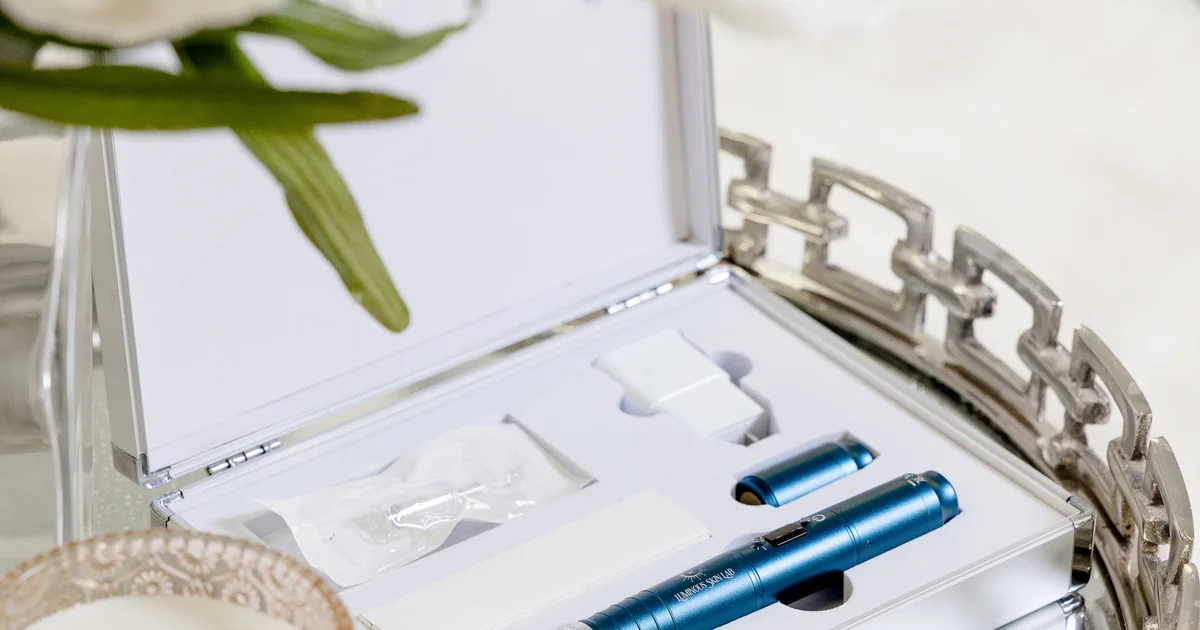
A cartridge system is only as good as the pen it runs on and the range it offers. The ILUMIPEN® takes all five microneedling pin counts (9, 12, 24, 36, 42) and all three nano cartridges (Round, Square 5D, Small Square 3D), so one device covers focused scar work, everyday rejuvenation, and needle-free infusion without a second machine. Replacement cartridges come in customizable 25-packs, and every ILUMIPEN ships with a full cartridge and treatment guide so your team can match the tip to the protocol with confidence.

Frequently Asked Questions
What do the pin numbers on microneedling cartridges mean?
The pin number is how many needles the cartridge has. Fewer pins (9 or 12) concentrate the energy into a smaller area for more focused, intensive work; more pins (36 or 42) spread it out for a gentler, more superficial pass. Pin count changes the intensity and coverage of the treatment, not the needle depth, which is set separately on the pen.
What is the difference between a microneedling cartridge and a nano-infusion cartridge?
A microneedling cartridge uses ultra-fine needles to create controlled micro-injuries that stimulate collagen. A nano-infusion (nano-needling) cartridge uses needle-free, sphere-shaped silicone tips that gently open the skin’s surface to drive products in, with no downtime. The same pen takes both by swapping the cartridge.
How often do microneedling cartridges need to be replaced?
Cartridges are single-use and must be changed for every client — never reused between clients. Stock enough cartridges for your treatment volume and the specific pin counts your protocols call for. ILUMIPEN replacement cartridges come in customizable 25-packs.
Which microneedling cartridge should an esthetician start with?
A 12-pin is the most versatile starting point for fine lines, texture and general rejuvenation, and a Round Nano cartridge covers full-face hydration and brightening infusions. Together they handle the majority of everyday treatment-room protocols; add focused (9-pin) and superficial (42-pin) options as your menu grows.
By Luminous Skin Lab Education Team · Reviewed by Katelyn Fitzgerald, Licensed Master Esthetician, 16-Year Industry Veteran & Founder, Luminous Skin Lab · Updated 2026