Both nano-infusion and microneedling help the skin absorb products more effectively and support overall rejuvenation. Their different levels of depth and results allow professionals to choose the best treatment for each client.
Nano-infusion is a non-invasive treatment that works on the surface layer of the skin. It improves how serums penetrate and helps restore hydration. It causes the skin to look brighter and feel more balanced right after the session. There is no downtime, and it’s suitable for every skin type, even sensitive or reactive skin.
Microneedling, also known as collagen induction therapy (CIT), uses sterile micro-needles to create tiny, controlled channels in the dermis. It activates fibroblast cells and triggers new collagen and elastin production. Over time, the skin becomes smoother, more even, and firmer.
Nano-Infusion vs. Microneedling — Mechanisms and Benefits
Each treatment supports skin renewal differently. Nano-infusion enhances the skin’s surface permeability. With its help, active ingredients can penetrate more effectively.
Microneedling focuses on the deeper dermal layers. There, it triggers the skin’s natural repair response and promotes collagen production. It’s the best facial treatment for anti-aging.
What Nano-Infusion Actually Does
Nano-infusion uses sterile, needle-free cartridges with silicone or crystal tips that measure about 0.25 to 1.5 mm in depth. These tips create even channels across the stratum corneum. This makes it possible for the skin to absorb active serums such as peptides, hyaluronic acid, and antioxidants with much greater efficiency.
Because the treatment stays within the epidermal layer, it always remains completely comfortable.
Key professional nano infusion facial benefits include:
- Better absorption of topical and hydrating serums;
- Restored moisture balance within the epidermis;
- Safe for sensitive or rosacea-prone skin;
- No downtime or risk of post-inflammatory hyperpigmentation.
What Makes Microneedling Different
Microneedling targets the deeper layers of the skin. It uses fine, sterile needles that range from 0.25 to 2.5 mm in depth. These needles create precise micro-injuries that activate fibroblast cells and stimulate new collagen production within the dermis.
This natural repair process strengthens the structure of the skin. It enhances elasticity and smooths uneven texture.
Clinical research has shown that microneedling effectively remodels collagen and improves concerns such as fine lines, acne scars, and enlarged pores.
Some of the crucial benefits of microneedling are:
- Stimulation of collagen and elastin renewal;
- Improvement in texture and skin tone;
- Reduction in the appearance of scars and early wrinkles;
- Support for long-term firmness and structural balance.
The Advantages of ILUMIPEN’s Dual System
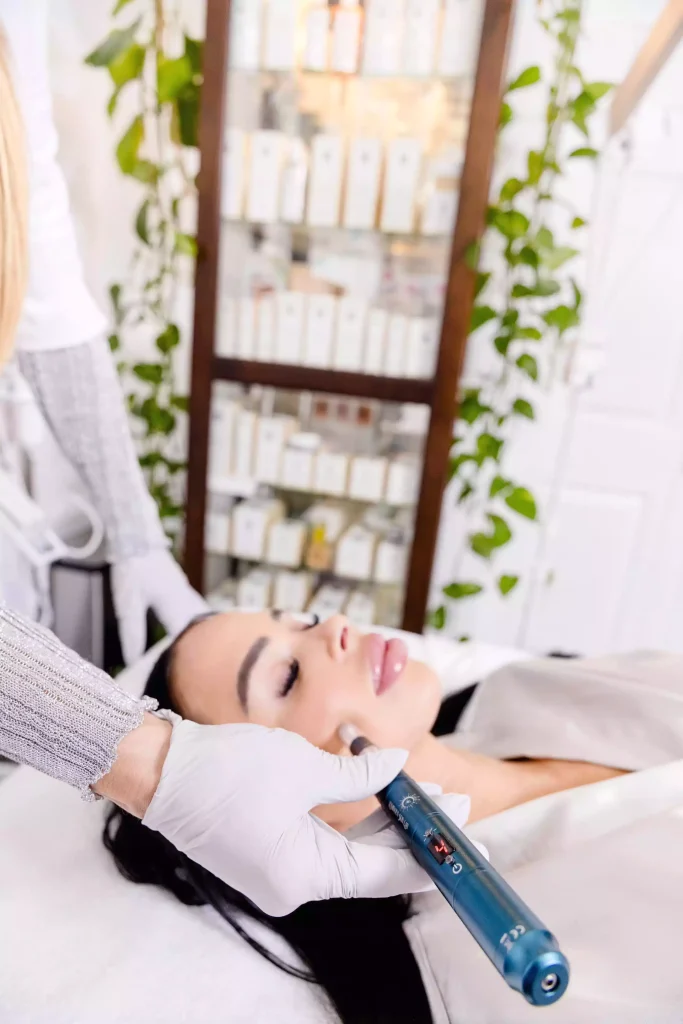
The ILUMIPEN microneedling pen combines two advanced modalities in one professional device. This design allows estheticians to target a range of skin concerns with accuracy and safety. With one quick adjustment, the device can move from nano-infusion to microneedle mode — from surface hydration to deeper collagen induction.
This level of control makes it possible to design a plan that matches each client’s skin state and comfort level.
| Feature | Nano-Infusion | Microneedle |
| Depth | 0.25 to 1.5 mm (epidermal) | 0.25–2.5 mm (dermal) |
| Main Goal | Enhanced serum delivery and hydration | Collagen and elastin renewal |
| Downtime | None | Mild erythema for 12–48 hours |
| Ideal For | Dehydration, dull tone, sensitivity | Uneven texture, scar tissue, fine lines, laxity |
Depth, Technique, and Result — Epidermal vs Dermal Stimulation
The skin has multiple layers, and each layer reacts in a unique way based on treatment depth. The two key zones for clinical skin renewal are the epidermis and the dermis. It’s important to understand how both work when comparing nano-infusion vs microneedling.
The Role of the Epidermis
The epidermis acts as the skin’s first line of defense. It helps retain moisture, supports cell renewal, and protects the layers beneath from external harm. Because this layer renews itself often, it may lead to surface issues such as dryness, dull tone, and uneven texture.
Gentle stimulation of the epidermis boosts keratinocyte activity. It encourages faster cell renewal and a smoother surface. The barrier then becomes stronger, and topical ingredients reach deeper layers with greater ease.
Epidermal renewal is suitable for clients who need visible surface improvement without redness or recovery time.
Professional benefits include:
- Faster cell renewal for smoother texture and brighter tone;
- Stronger lipid barrier with better moisture retention;
- Improved penetration of professional serums;
- Immediate surface glow with minimal redness.
The Role of the Dermis
The dermis forms the deeper framework of the skin. It contains fibroblast cells, collagen, elastin, and a web of tiny capillaries. With proper stimulation, this layer can create fresh collagen and elastin. Its purpose is to rebuild internal strength and restore firmness over time.
A microneedle procedure reaches this layer through precise microinjury. It activates fibroblasts and starts a natural repair phase. As new fibers develop, the dermal structure becomes thicker and more stable. The surface appears firm, smooth, and even.
Dermal renewal benefits are:
- Reduced loss of firmness or elasticity;
- Fewer fine lines and early wrinkles;
- Diminished acne or atrophic scar;
- Smoother texture through deep restoration.
Precision and Customization
Exact control of depth is what ensures safe and reliable outcomes. A shallow depth may fail to awaken fibroblast activity. Going too deep can also cause discomfort or inflammation. Professional tools such as the ILUMIPEN allow full control of penetration depth, so each treatment matches the client’s goal and skin state.
The microneedle depth chart below can help professionals choose exact depths for specific results.
| Treatment Type | Depth (mm) | Main Effect |
| Nano Infusion | 0.25–1.5 | Boosts absorption and moisture retention |
| Light Microneedle | 0.3–0.5 | Smooths mild surface texture and uneven tone |
| Medium Microneedle | ~1.0 | Softens fine lines and light scars |
| Deep Microneedle | Up to 2.5 | Activates fibroblast to rebuild collagen |
Depth precision supports:
- Custom approach for each individual need;
- Balance between visible surface renewal and deep tissue repair;
- Strong results with minimal irritation and recovery time.
Which Treatment Fits Each Skin Goal — Hydration & Glow vs Texture & Firmness
Every treatment method has a unique role in skin renewal. The choice between nano-infusion and microneedle therapy depends on what the client needs. If their goal is surface hydration and natural glow, nano-infusion is a good choice. It targets the upper layer for quick revitalization.
However, if they are interested in repair, improved texture, and stronger firmness, microneedle treatment is the better pick. It reaches the dermal layer to rebuild collagen and restore structure.
Hydration and Glow — When the Surface Needs Renewal
A dull look or tight feel is often a sign of dehydration in the surface of the skin. When the barrier is weak, light will reflect less, and the surface will lose its natural brightness.
Epidermal-focused care, such as nano-infusion, helps to restore moisture and improve permeability. This allows nutrient-rich formulas to reach the skin without harming the barrier.
Professional results include:
- Better moisture balance and smoother surface;
- Brighter tone with more even color;
- Safe for dry, reactive, or redness-prone skin;
- Instant glow after treatment with no downtime.
Nano-infusion often includes low-molecular hyaluronic acid, peptides, or vitamin blends. These ingredients strengthen the barrier and refine texture. The treatment works well as a pre-event boost for instant glow or as a maintenance option between deeper rejuvenation sessions.
Texture and Firmness — When the Skin Needs Structural Renewal
Loose texture, fine lines, and mild acne scars often show a drop in collagen inside the deeper skin layer. When this happens, microneedle treatment will help rebuild the base and bring back firmness.
Controlled channels wake up fibroblast cells and start the creation of new collagen and elastin. With time, the inner structure grows stronger, and the skin looks more stable and refined.
Professional results include:
- Renewal of the dermal layer through fresh collagen;
- Higher density and flexibility in deeper tissue;
- Noticeable softening of lines, wrinkles, and old scars;
- Long-term firmness that keeps improving after each session.
The deeper action of microneedle therapy matches well with the surface repair from nano-infusion. Together, they give a balanced path to full skin rejuvenation.
How ILUMIPEN Connects Both Goals
The ILUMIPEN microneedling pen combines two high-level skin methods into one smart device. It allows professionals to go from surface work to deep collagen repair in one move.
With this versatility, each session can be tailored to the client’s exact needs — hydration, glow, firmness, or full renewal.
The main benefits are:
- Smooth transition between surface and deeper treatment modes;
- Depth control for targeted treatment;
- Even coverage on the treated area;
- More time and fewer device swaps during sessions.
Each mode has a specific purpose. The table below shows how each goal aligns with the right mode and outcome.
| Skin Goal | Primary Focus | ILUMIPEN Mode | Visible Result |
| Hydration & Glow | Surface revitalization | Nano Mode | Instant glow and soft finish |
| Texture & Firmness | Collagen renewal | Micro Mode | Gradual lift and smoother tone |
ILUMIPEN combines surface infusion and deep collagen work. It gives estheticians a complete solution to refine both the look and function of their clients’ skin.
Conclusion – Two Complementary Modalities, One Precision Device
Nano-infusion and microneedle therapy are professional skin renewal techniques. Nano-infusion increases epidermal permeability and moisture, instant radiance, and strengthens the skin barrier.
Microneedling treatment works deeper in the dermis to rebuild collagen and elastin. It gives lasting improvement in tone, firmness, and texture.
ILUMIPEN brings both into one precise, adjustable platform. It lets you design custom protocols for any client — from gentle hydration maintenance to full structural repair — all with control, comfort, and consistent results.
Frequently Asked Questions
Nano-infusion works on the surface, 0.25 to 1.5 mm deep. It boosts product absorption and moisture without harming the barrier. Microneedle therapy goes deeper, 0.25–2.5 mm. It triggers collagen and repairs skin structure.
Nano-infusion does. The clients will notice an instant glow and smoother texture after each session they have. Microneedle therapy will take more time, but it offers better lasting results.
Yes. Microneedling therapy, especially with the ILUMIPEN microneedling pen, reduces fine lines and mild sagging. Nano-infusion makes sure the skin is hydrated and stable between sessions.
No. This may cause irritation. You should only use nano-infusion between microneedle sessions to maintain moisture and barrier strength.
Nano-infusion suits all skin types. This includes even dry or sensitive skin. Microneedle therapy is effective for thicker or uneven skin that needs correction for texture, scars, or visible aging.
A nano-infusion session typically takes around 30 to 40 minutes. A microneedle therapy session may take as long as an hour. The exact duration may vary. It depends on the size of the treated area, the chosen depth, and your client’s current skin condition.